Family Fabaceae · pea family Life cycle Perennial Blooms July–September (Upper Midwest) Height 2–6 feet Light & habitat Sun; average to moist sandy or rocky soil; prairies, along shores, along roads, railroads, open woods
Common names Showy Tick-trefoil · Hoary Tick-trefoil · Canada Tick-clover
Bloom timing and mature height vary with location and growing conditions. Sources: Minnesota Wildflowers.
Illinois Tick-trefoil is a close look-alike. It usually has looser flower clusters, longer stalks supporting the whole compound leaf, and larger stipules at the leaf bases.
Compare leaves and mature pods as well as flowers. Showy Tick-trefoil’s pod segments are more rounded below; Illinois Tick-trefoil’s are rounded along both edges.
How to recognize it
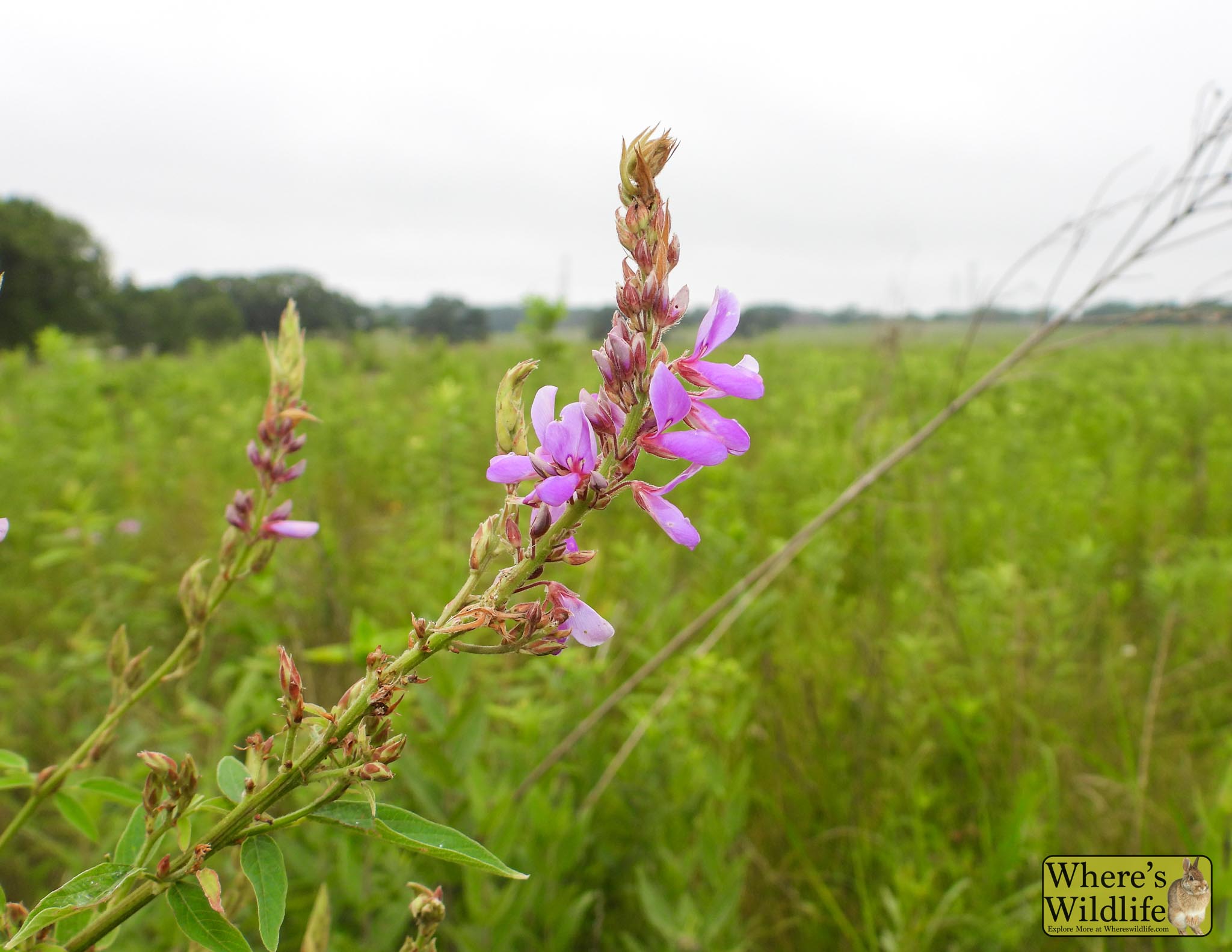
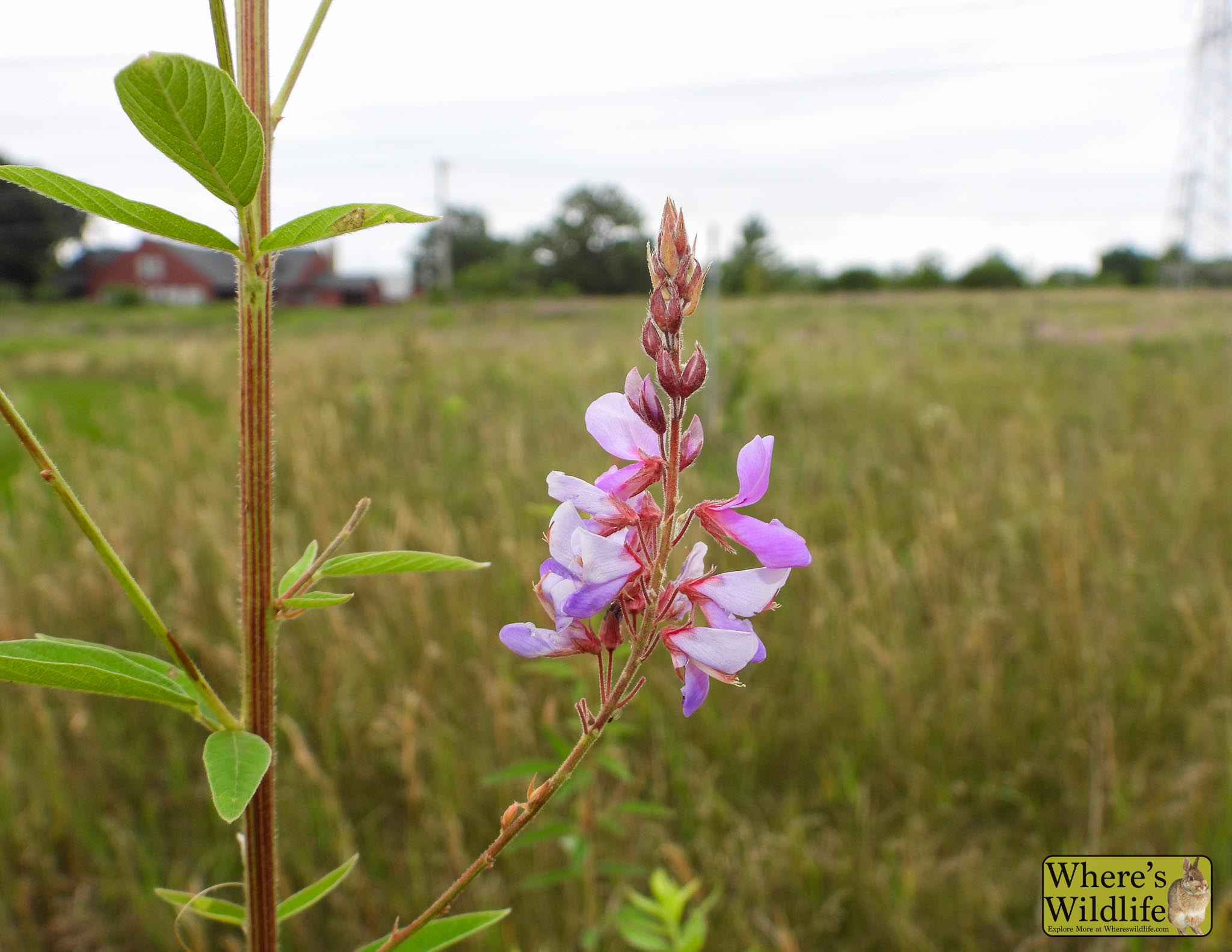
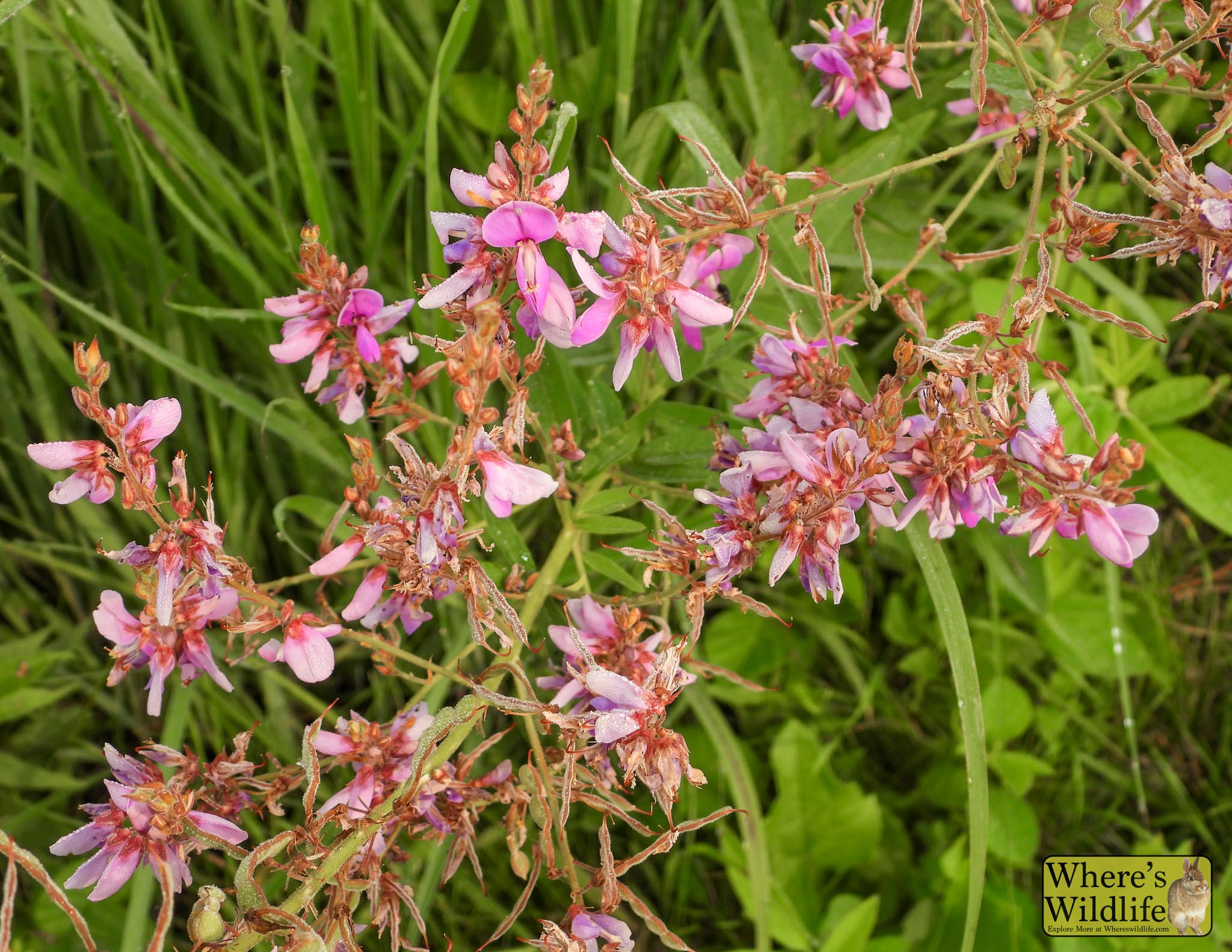
Rose-purple pea flowers: look for crowded clusters branching near the stem tips.
Three leaflets: each leaf has a pair of side leaflets and a longer-stalked end leaflet.
Short leaf stalks: the stalk of the whole leaf is usually shorter than the end leaflet’s stalk; lower leaves may differ.
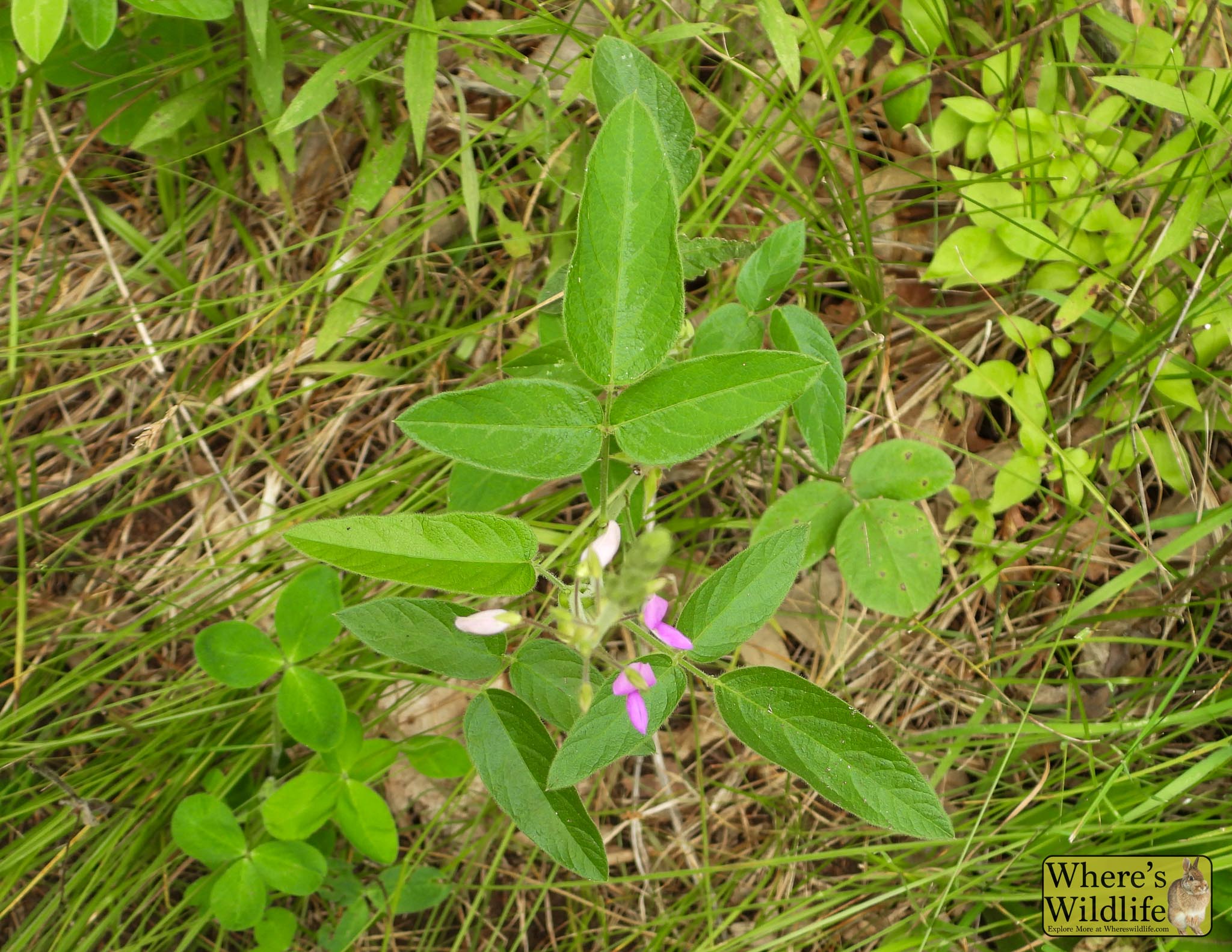
Showy Tick-trefoil: three-part leaves along the flowering stem.
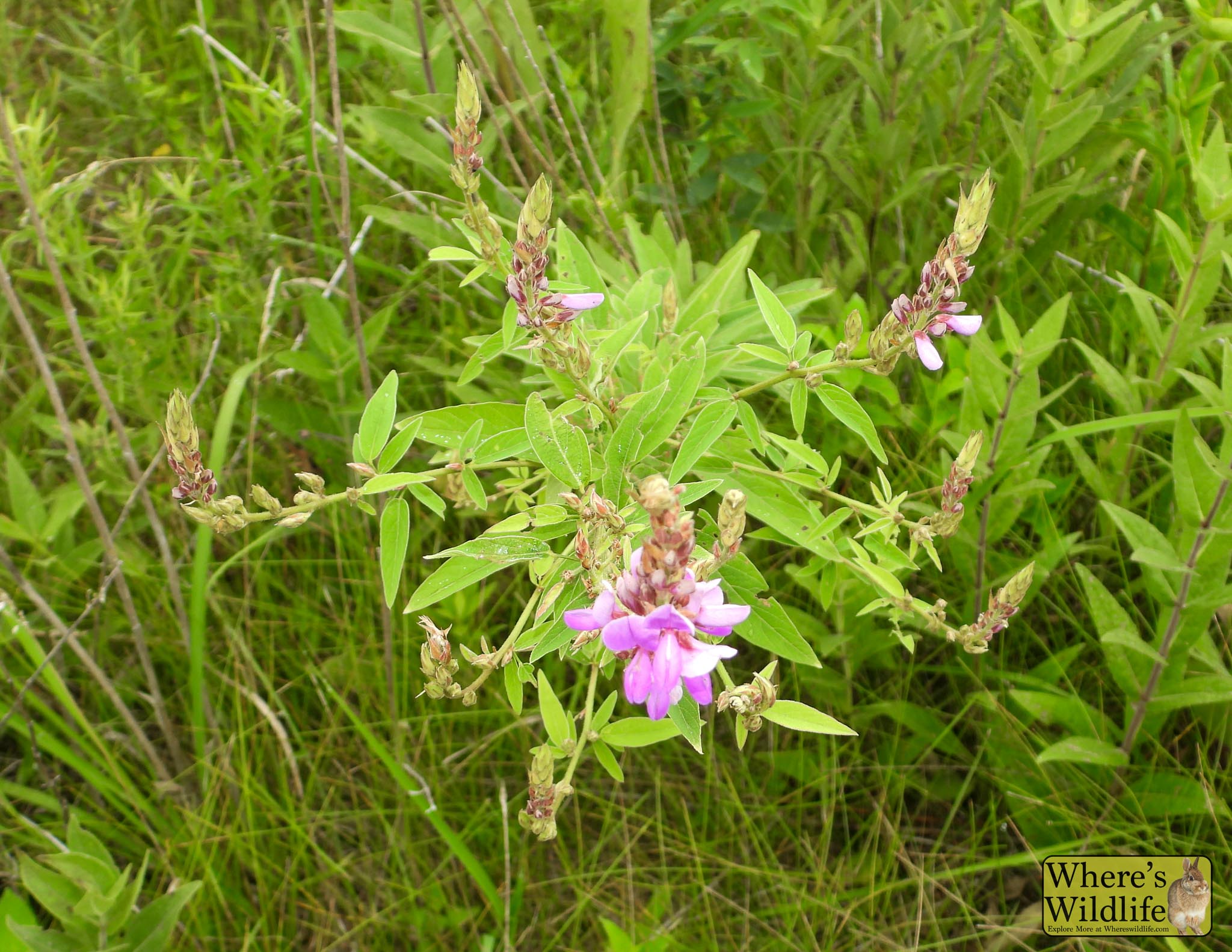
Showy Tick-trefoil flowering among grasses and other meadow plants.
Where and when to look
Search sunny prairies, meadows, shores and open woodland edges in July–September in the Upper Midwest.
Look for the pink-purple clusters rising among grasses. Photograph the whole plant, a complete leaf and mature pods to capture several identification clues.
Seeds that hitch a ride
The flattened pods break into individual seed-bearing segments. Tiny hooked hairs help these pieces catch on fur or clothing, carrying seeds away from the parent plant.
Look for a chain of several joints with a relatively shallow upper edge and a more deeply rounded lower edge.
Range & sightings
Native to parts of North America, including the United States.
Reported U.S. distribution AR, CT, DE, IA, IL, IN, KS, KY, MA, MD, ME, MI, MN, MO, ND, NE, NH, NJ, NY, OH, OK, PA, RI, SD, TX, VA, VT, WI, WV
State records describe documented distribution, not presence in every county. A state record alone does not establish that every population there is native. The observation map shows reported sightings and may include cultivated plants.