WHERE’S WILDLIFE • WILDFLOWER FIELD GUIDE

Large-bract Tick-trefoil

Desmodium cuspidatum

Pronounced (approximate): dez-MOH-dee-um kus-pih-DAY-tum

NATIVE · PERENNIAL WILDFLOWER

At a glance

Family   Fabaceae · pea family
Life cycle   Perennial
Blooms   July–August (Upper Midwest)
Height   1–3 feet
Light & habitat   Part shade, shade, sun; dry to average moisture; woods, thickets, river banks

Common names
Large-bract Tick-trefoil · Big Tick Trefoil

Bloom timing and mature height vary with location and growing conditions. Sources: Minnesota Wildflowers.

Range Map

Explore photographed sightings and their locations.

View photos & full species guideHide photos & full species guide

Field photographs

Compare flowers, foliage and the plant in its habitat. Select any photo to enlarge it.

Compare Showy Tick-trefoil

Desmodium cuspidatum

Desmodium canadense

Showy Tick-trefoil usually has fuller flower clusters and much shorter whole-leaf stalks.

Compare leaf attachments as well as blossoms. Large-bract Tick-trefoil’s long leaf stalk and more angular pod segments provide useful additional clues.

How to recognize it

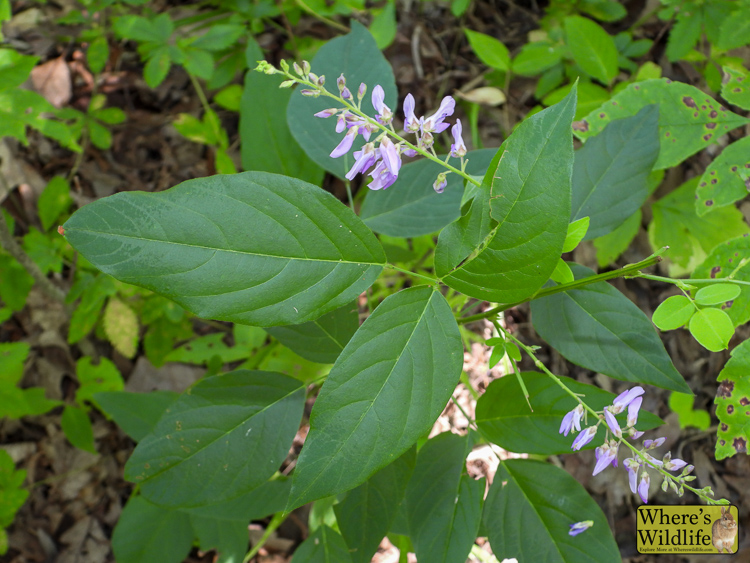
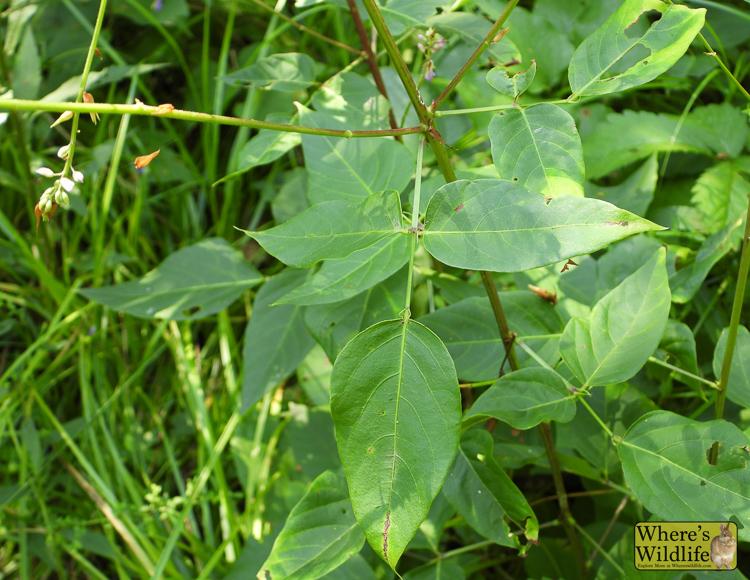
  • Three pointed leaflets: toothless, with the largest leaflet at the end.
  • Long whole-leaf stalk: trace it back to the stem; it is much longer than the end leaflet’s short stalk.
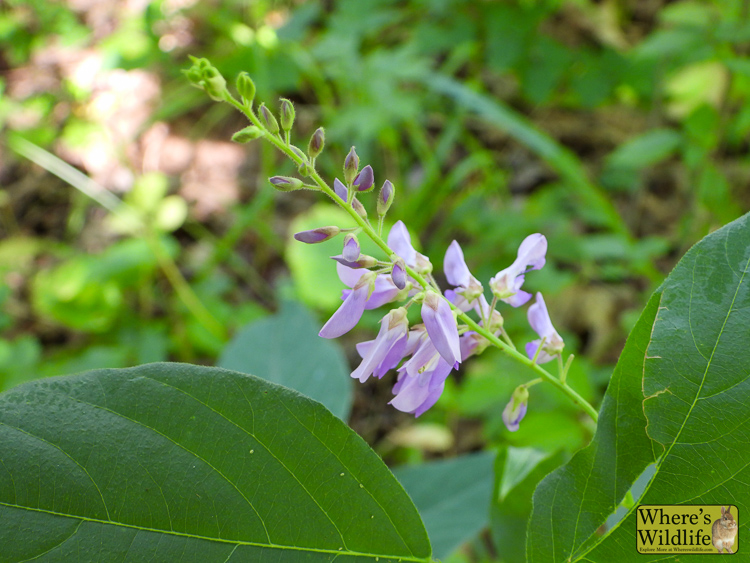
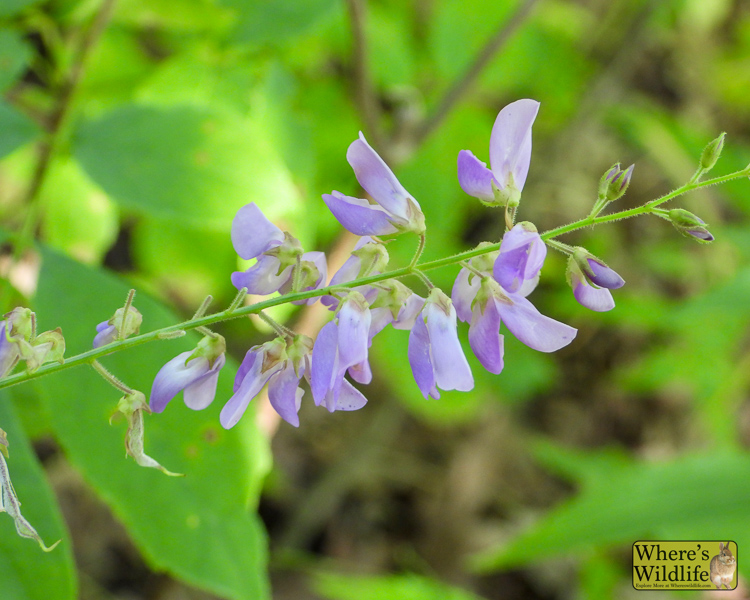
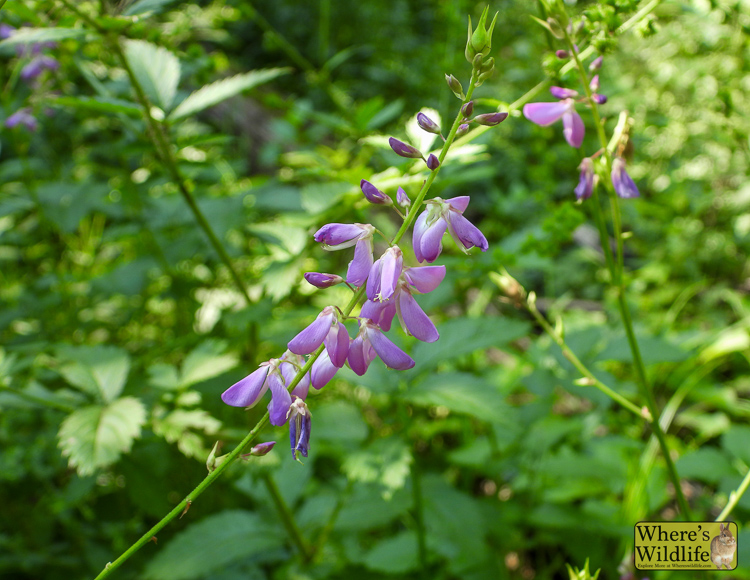
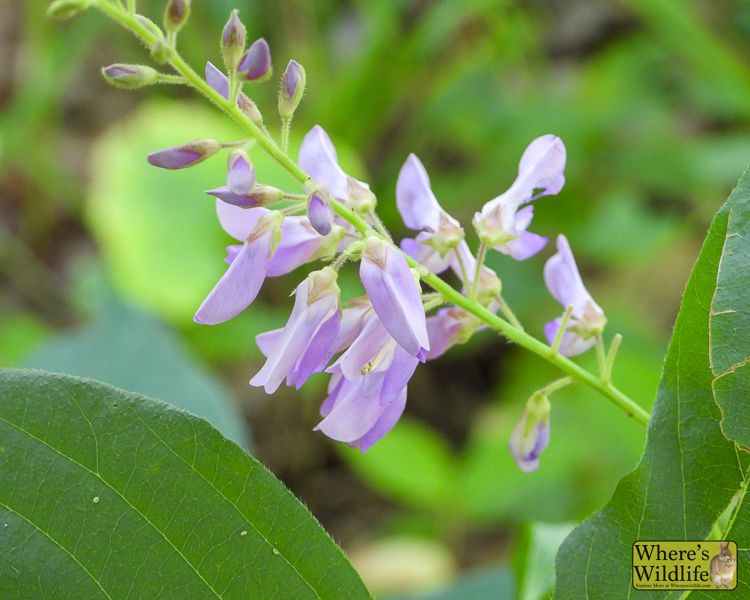
  • Loose flower clusters: small pink-purple pea flowers sit along slender flowering stems.
  • Persistent stipules: narrow, pointed appendages at the leaf bases offer another clue.
Large-bract Tick-trefoil: three-part leaves and their attachment to the stem.
Large-bract Tick-trefoil flowering among surrounding vegetation.

Where and when to look

Look in woodland openings, thickets and along river banks. July–August is the usual Upper Midwest flowering period.

Include the surrounding vegetation in a photograph, then move closer for the leaf attachment and flower spacing.

Read the shape of the pods

Mature pods form flattened chains of three to seven seed-bearing sections. Each section is nearly triangular, with a shallow upper edge and a lower edge tapering to a rounded point.

Tiny hooked hairs help pods cling to passing animals or clothing. Photograph several intact pods: their outlines help distinguish similar tick-trefoils.

Range & sightings

Native to parts of North America, including the United States.

Reported U.S. distribution
AL, AR, CT, DC, DE, FL, GA, IA, IL, IN, KS, KY, LA, MA, MD, MI, MN, MO, MS, NC, NE, NH, NJ, NY, OH, OK, PA, RI, SC, TN, TX, VA, VT, WI, WV

State records describe documented distribution, not presence in every county. A state record alone does not establish that every population there is native. The observation map shows reported sightings and may include cultivated plants.

Distribution source: USDA PLANTS.
Observations show reported sightings; they do not define the plant’s complete native range.

Keep learning

Study the photographs and field notes for Large-bract Tick-trefoil, then practice identifying this and other wildflowers in the quiz.

Share this:

Like this:

Like Loading…