Family Asteraceae · aster family Life cycle Perennial Blooms Summer into early fall Height About 2–5 feet Habitat Roadsides, fields, edges and disturbed ground
Common names Common Mugwort
Bloom timing and height vary with location. Native status refers to North America; see the regional range below.
Explore reported observations. Sightings are not a complete range map.
View photos & full species guideHide photos & full species guide
Field photographs
7 field photographs. Select a photograph to enlarge it.
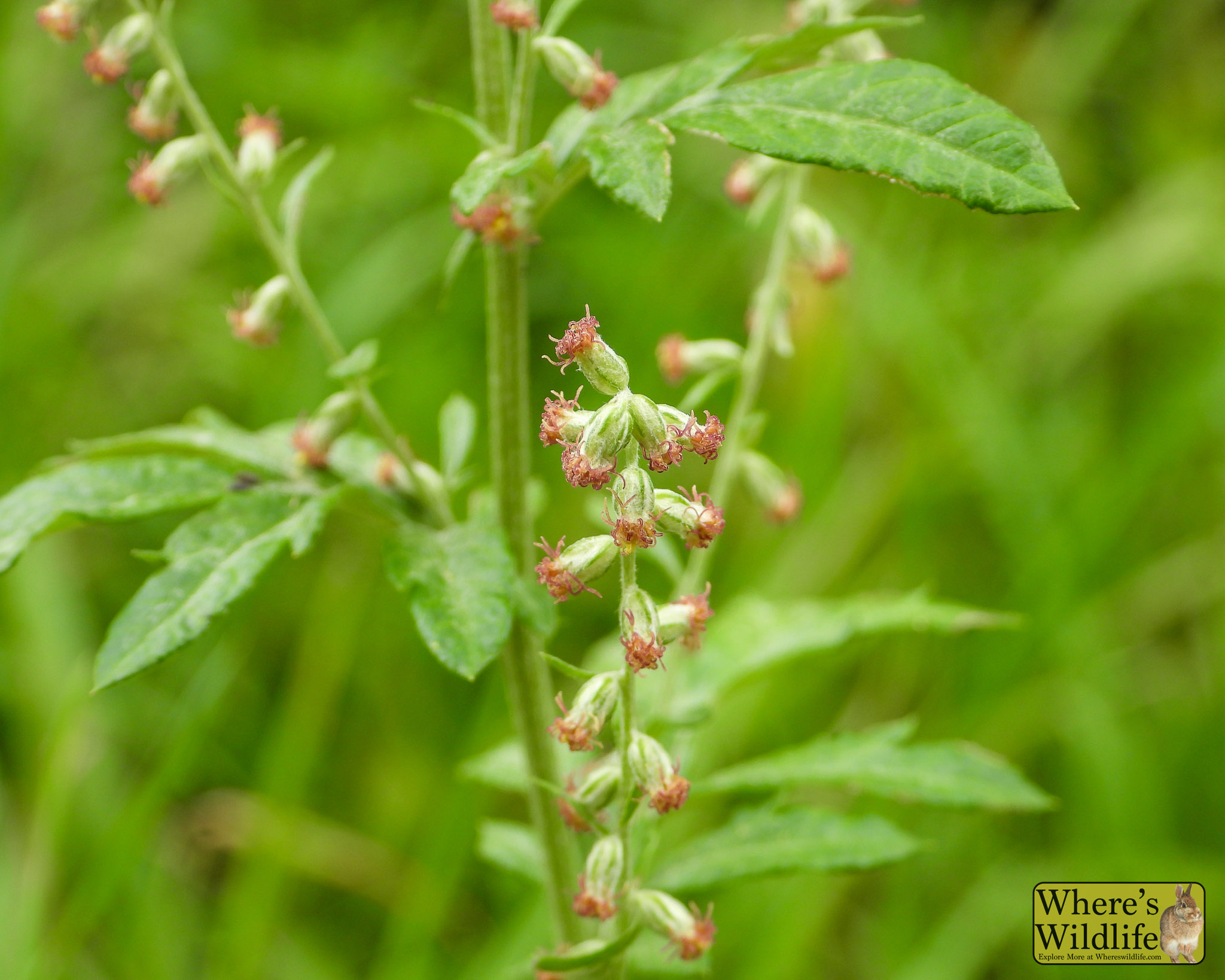
Reddish florets emerging from woolly flower heads.
Close view of woolly flower heads.
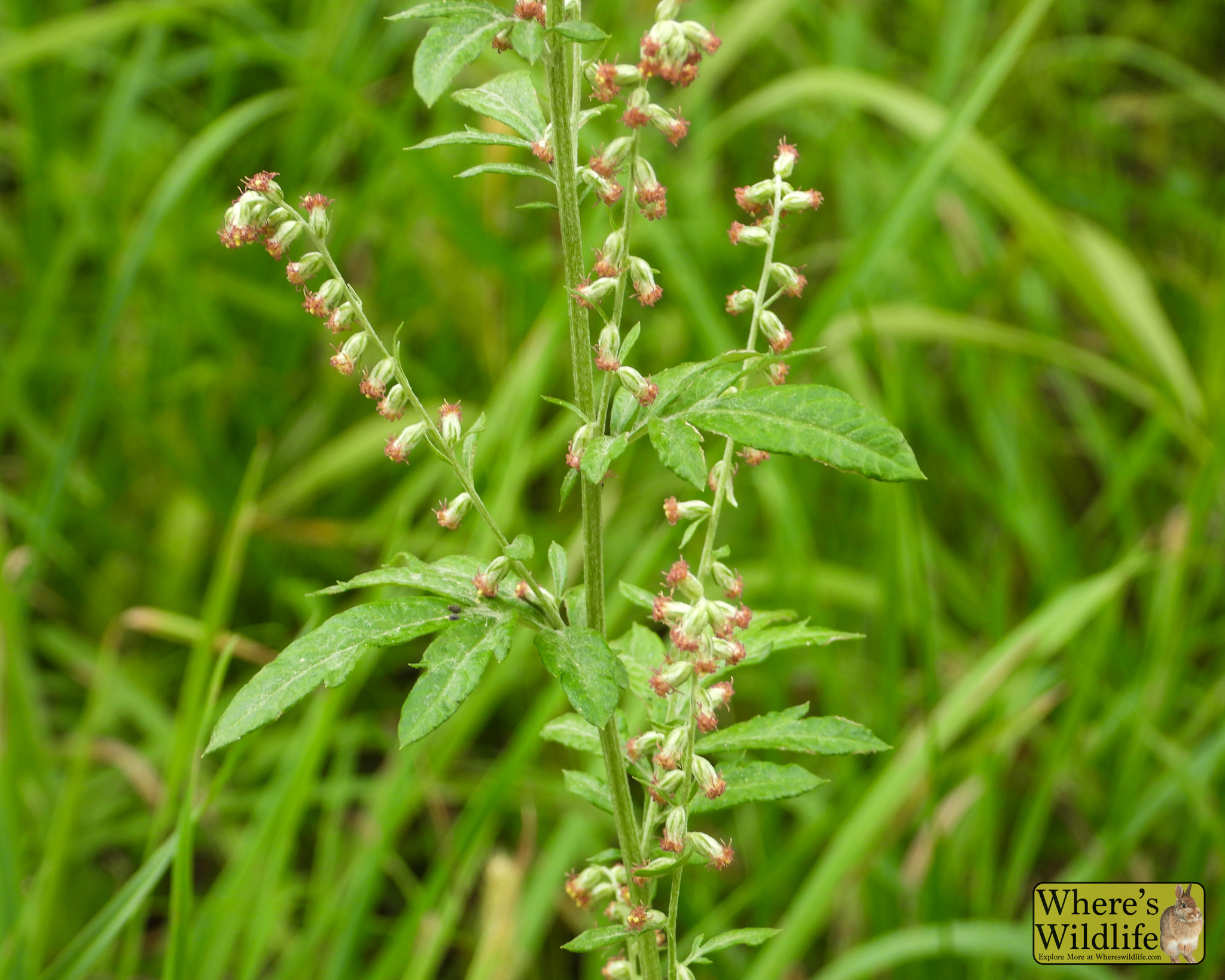
Branching flower stalks and lobed leaves.
Small, nodding flower heads along a stem.
Leafy shoots with narrow flowering branches.
Deeply lobed leaves below the flower clusters.
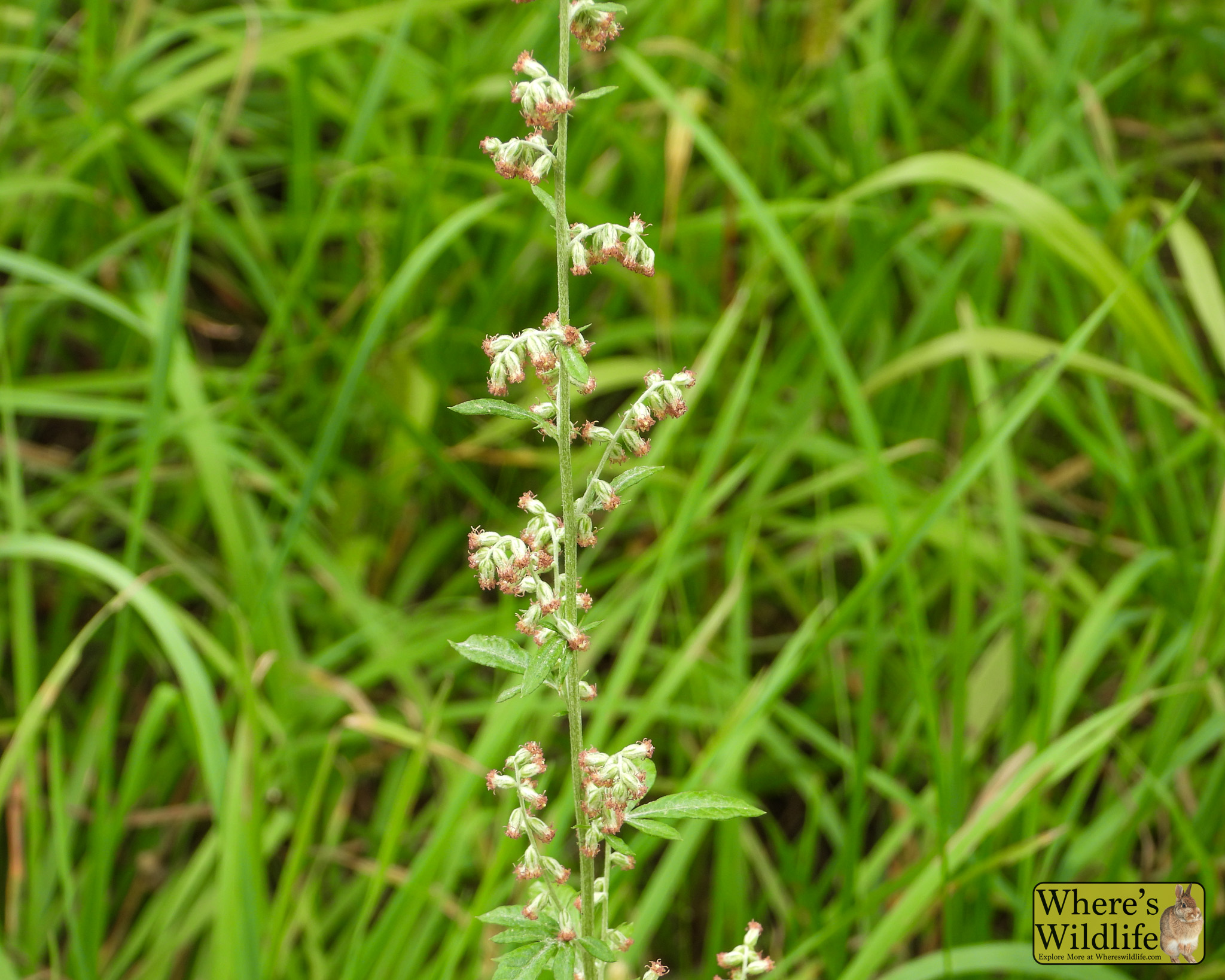
Slender flowering stalk among grasses.
How to recognize it
Deeply lobed leaves below the flower clusters.
Leaves & stems
Start with the leaves. Leaves alternate along the stem and usually have deep, pointed lobes. Their upper surfaces are green; dense pale hairs cover the undersides. Leaves near the flower clusters become smaller and narrower.
Flowers
Look closely at the flowers. Tiny oval heads occur along branched flowering stems. Pale, hairy bracts surround yellowish to reddish-brown florets. There are no showy, daisy-like rays.
Where and when to look
Look along roadsides, field edges, vacant ground and other open, disturbed places. Established plants can form dense patches. In the Midwest, the inconspicuous flowers are easiest to find from summer into early fall.
Range & sightings
Artemisia vulgaris is an accepted member of the aster family. Its native range includes temperate Eurasia, parts of Southeast Asia and northern Africa. It is introduced in much of North America, including Wisconsin and Illinois.
Non-native and invasive: Spreading colonies can crowd out other vegetation in fields and disturbed habitats.
Mugwort is wind-pollinated. Its small flower heads do not need large, colorful rays to attract pollinators. The perennial plant spreads mainly through underground rhizomes, producing new shoots and expanding patches; it can also reproduce by seed.