Family Asteraceae · aster family Life cycle Annual Blooms Summer into early fall Height Usually 1–4 feet; sometimes taller Habitat Field edges, roadsides and disturbed ground
Common names Common Ragweed
Bloom timing and height vary with location. Native status refers to North America; see the regional range below.
Explore reported observations. Sightings are not a complete range map.
View photos & full species guideHide photos & full species guide
Field photographs
9 field photographs. Select a photograph to enlarge it; use Load more photos to see the rest.
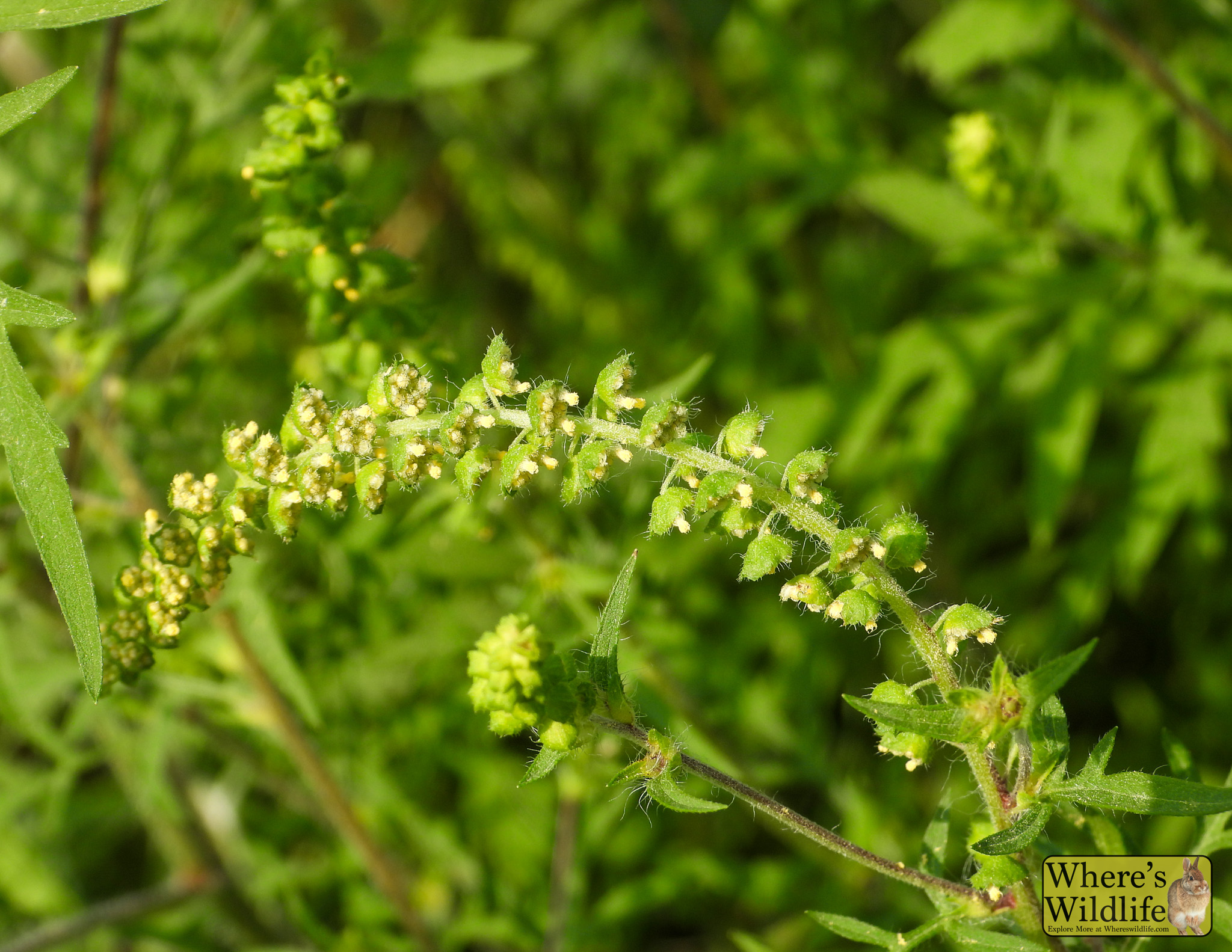
Flowering shoot with deeply divided leaves.
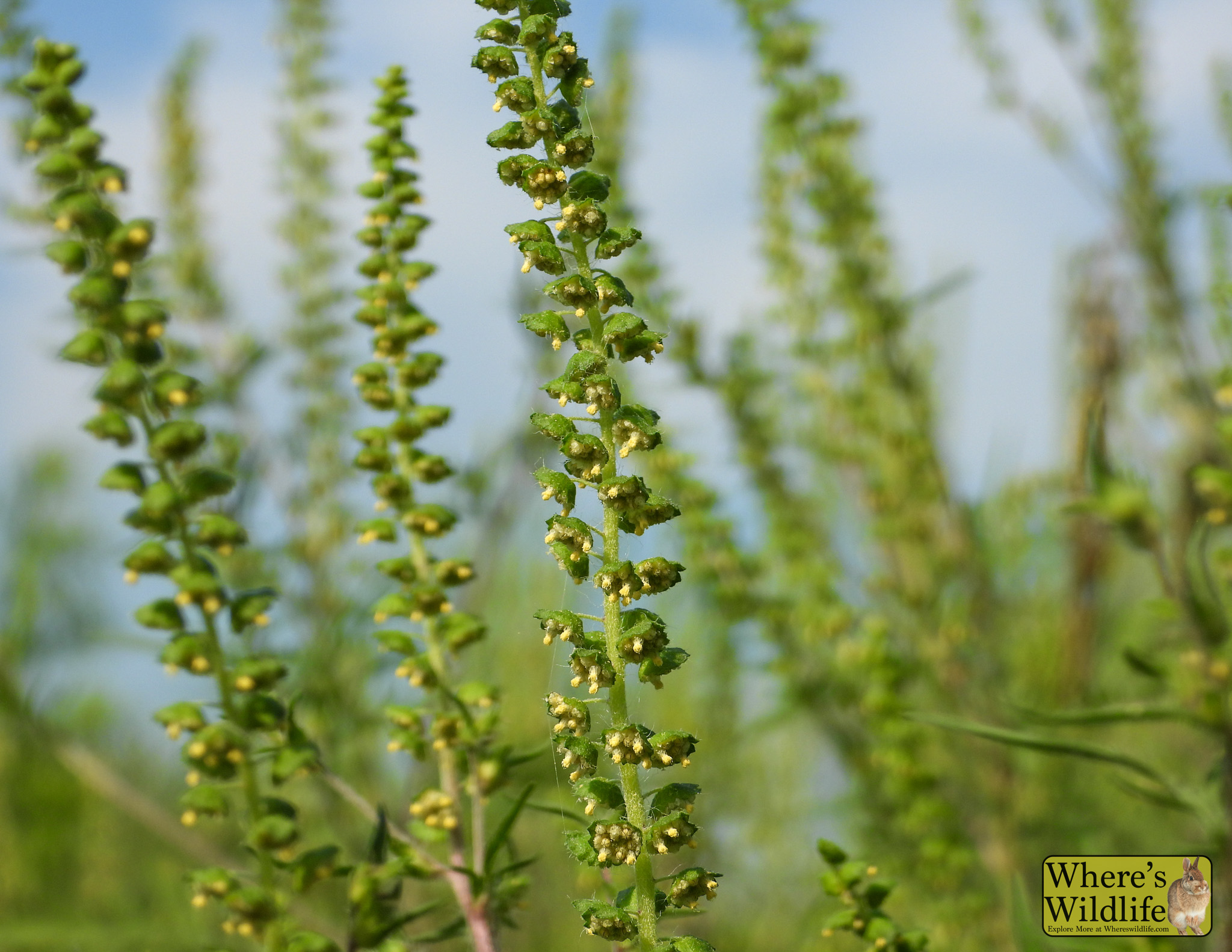
Upright spikes of male flower heads.
Male flower heads releasing yellow pollen.
Small green male flower heads along a spike.
Deeply divided leaf.
Bushy, branching growth.
Divided leaves and hairy stems.
Tall flowering plant at a field edge.
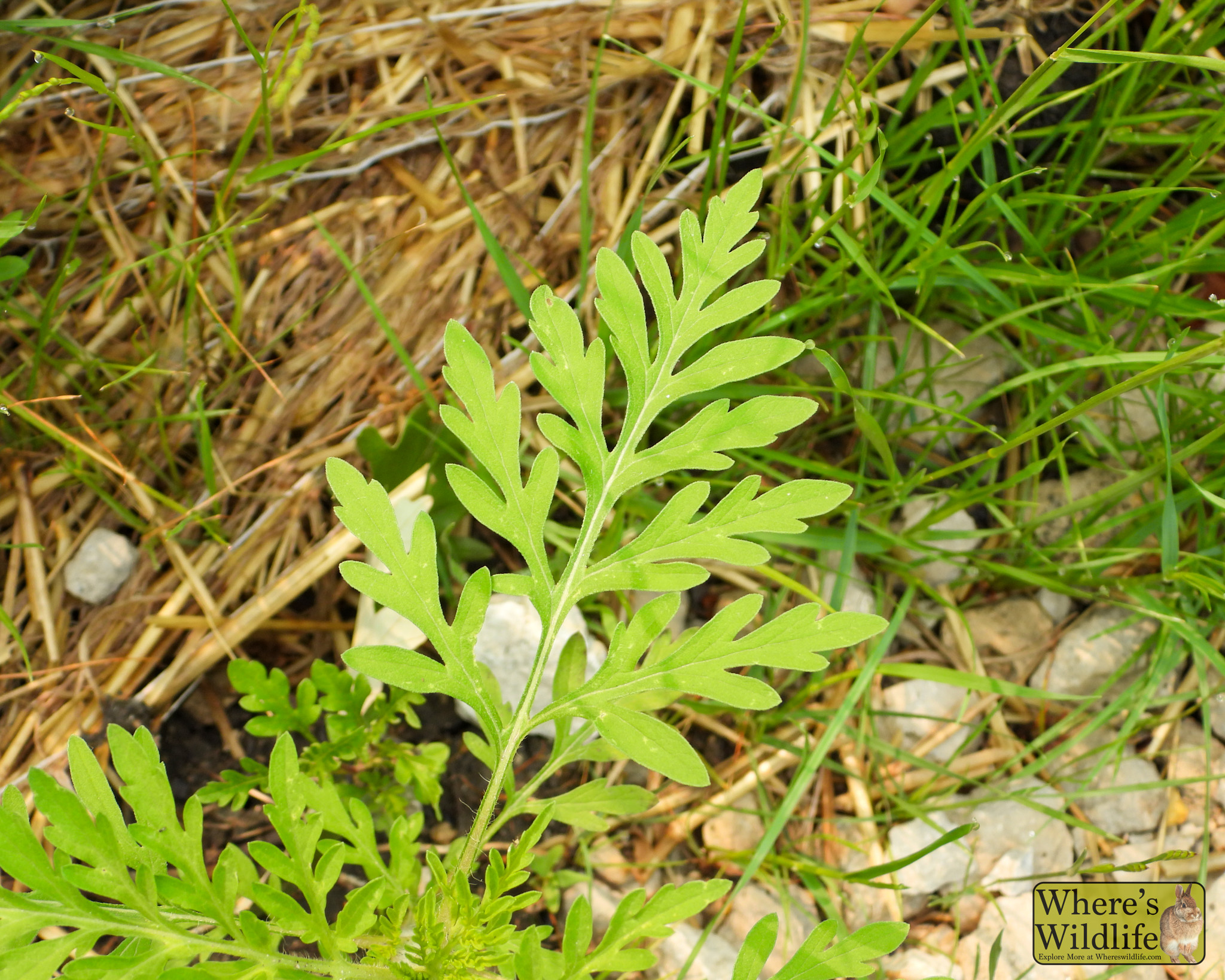
Fernlike leaf with pointed lobes.
How to recognize it
Fernlike leaf with pointed lobes.
Leaves & stems
Start with the leaves. The fernlike blades are cut deeply into narrow lobes, often divided again. Lower leaves are usually opposite; upper leaves become alternate. Stems bear fine hairs.
Flowers
Check the flower spikes. Small green, nodding male heads line slender spikes at the tips of branches. Tiny female flowers occur separately in leaf axils below. The leaves and branching habit together are more useful than a flower spike alone.
Where and when to look
Look in sunny, disturbed soil beside fields, roads and paths. Plants may be small and nearly unbranched or form tall, bushy growth. Flowering is most conspicuous in late summer and early fall.
Range & sightings
Ambrosia artemisiifolia is a native annual in the aster family, widespread across the contiguous United States. It is native in Wisconsin and Illinois. Its ability to colonize exposed soil makes it a familiar agricultural weed as well as a wild plant.
The male heads shed pollen into the wind; female flowers develop the fruits. Ragweed pollen is a major cause of late-summer hay fever. Despite that reputation, the plant supports many insects, and its seeds feed sparrows, gamebirds and small mammals. As an annual, it returns from seed rather than spreading by perennial rhizomes.