WHERE’S WILDLIFE • WILDFLOWER FIELD GUIDE

Pennsylvania Smartweed

Persicaria pensylvanica
NATIVE • WILDFLOWER

At a glance

Family   Polygonaceae · buckwheat family
Life cycle   Annual
Blooms   June–September (Upper Midwest)
Height   18–36 inches
Light & habitat   Part shade, sun; moist disturbed soil; shorelines, ditches, waste places, seasonal agricultural basins

Common names
Pennsylvania Smartweed

Bloom timing and mature height vary with location and growing conditions. Sources: Minnesota Wildflowers.

Range Map

Explore photographed sightings and their locations.

View photos & full species guideHide photos & full species guide

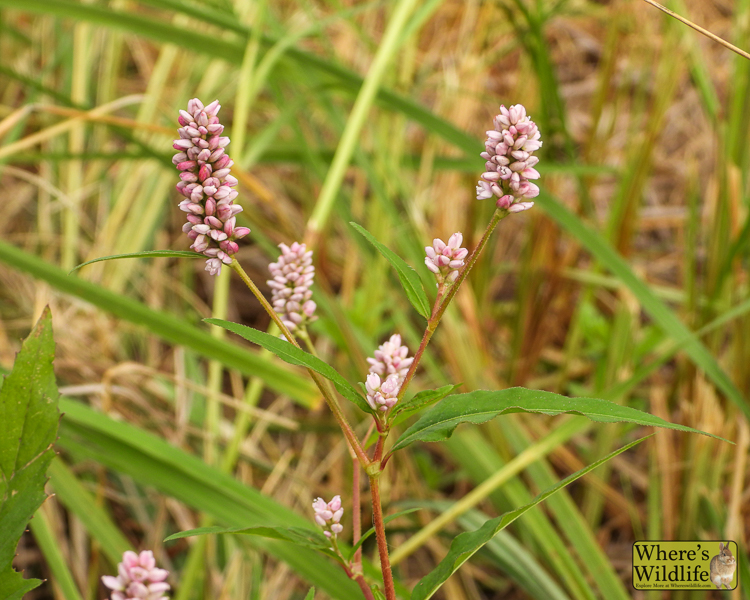
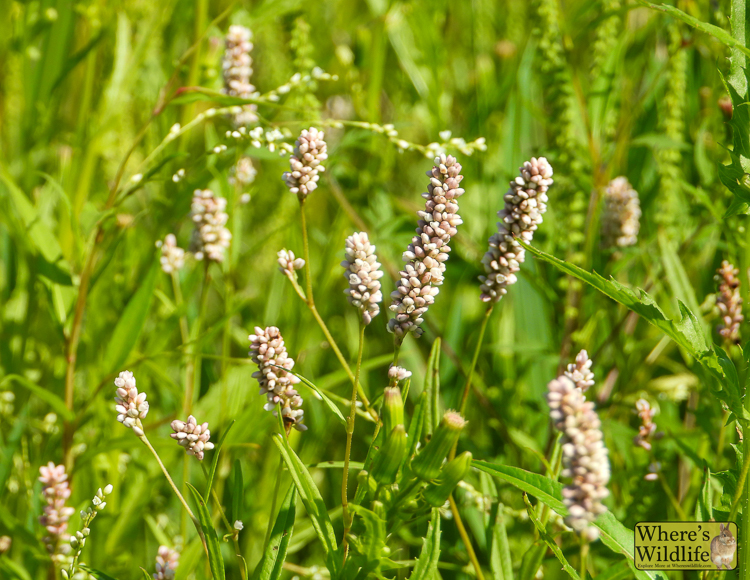
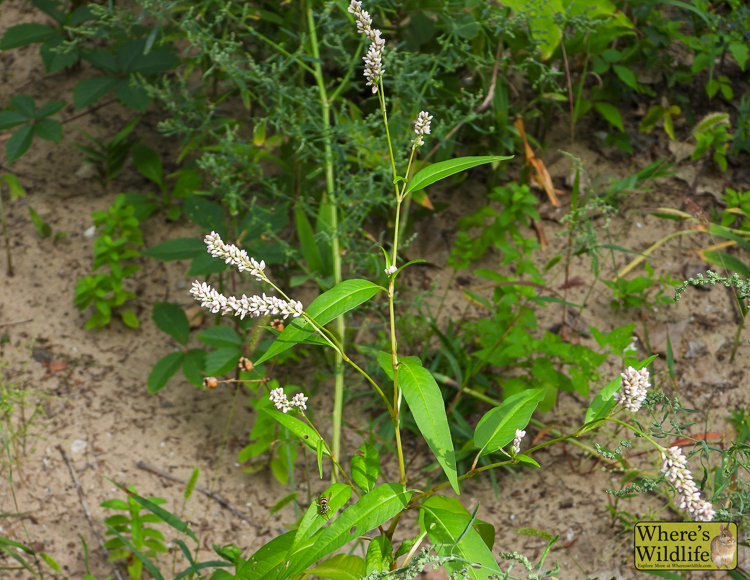
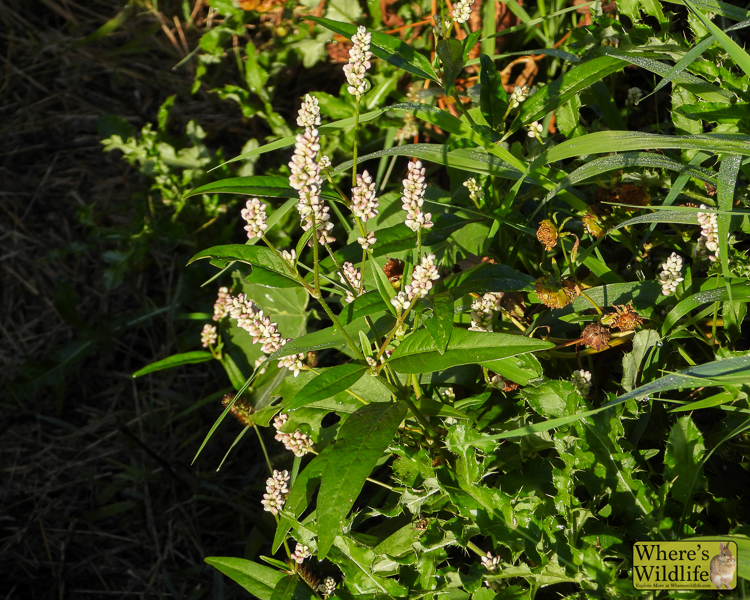
Field photographs

Compare flowers, foliage and the plant in its habitat. Select any photo to enlarge it.

How to recognize it

Key identification clues

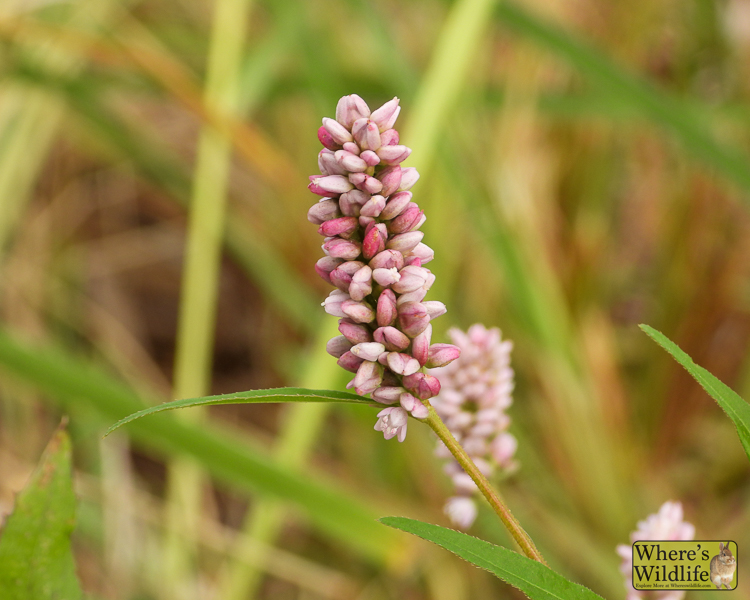
Look for alternate lance-shaped leaves and dense, usually upright flower spikes. At each leaf base, a thin sheath called an ochrea wraps around the stem; its upper rim lacks a fringe of bristles.

Where and when to look

Prairie Wildflower
Blooms: June – September

Habitat: Pennsylvania Smartweed prefers full to partial sun with moist conditions, and rich loamy soil. Look for Pennsylvania Smartweed in wet prairies, prairie swales, swamps, low areas near ponds or rivers, edges of marshes, degraded seasonal wetlands, abandoned fields, low areas along railroads, roadside ditches, and waste areas.

Range & sightings

Native to parts of North America, including the United States.

Reported U.S. distribution
AK, AL, AR, AZ, CA, CO, CT, DC, DE, FL, GA, IA, IL, IN, KS, KY, LA, MA, MD, ME, MI, MN, MO, MS, MT, NC, ND, NE, NH, NJ, NM, NV, NY, OH, OK, OR, PA, RI, SC, SD, TN, TX, VA, VT, WI, WV, WY

State records describe documented distribution, not presence in every county. A state record alone does not establish that every population there is native. The observation map shows reported sightings and may include cultivated plants.

Distribution source: USDA PLANTS. USDA lists this plant as Polygonum pensylvanicum L..
Observations show reported sightings; they do not define the plant’s complete native range.

A closer look

An annual of open wet ground

This annual thrives where disturbance reduces competition, including moist fields and wetland edges. It tolerates temporary standing water. Record soil moisture and surrounding vegetation when photographing a patch.

Small flowers, many visitors

Bees, wasps, flies and butterflies visit the crowded flowers. A close-up can reveal separate flowers that look like one solid pink spike from a distance.

Fruits that feed birds

Each flower produces one small, flattened dark fruit. Smartweed seeds are food for waterfowl and other seed-eating birds. Revisit a patch after flowering and compare its seed-bearing spikes with your earlier photographs.

Check the sheath at each joint

Smartweeds can be difficult to separate. Combine sheath details with the usually glandular flower stalks and upright spikes. Leaf markings and flower color vary, so neither should decide the identification alone.

Keep learning

Study the photographs and field notes for Pennsylvania Smartweed, then practice identifying this and other wildflowers in the quiz.

Share this:

Like this:

Like Loading…