WHERE’S WILDLIFE • WILDFLOWER FIELD GUIDE

Nodding Smartweed

Persicaria lapathifolia
NATIVE • WILDFLOWER

At a glance

Family   Polygonaceae · buckwheat family
Life cycle   Annual
Blooms   July–September (Upper Midwest)
Height   2–6 feet
Light & habitat   Part shade, sun; moist; ditches, floodplains, waste areas, fields, shorelines

Common names
Nodding Smartweed · Pale Smartweed · Curlytop Knotweed

Bloom timing and mature height vary with location and growing conditions. Sources: Minnesota Wildflowers.

Range Map

Explore photographed sightings and their locations.

View photos & full species guideHide photos & full species guide

Field photographs

Compare flowers, foliage and the plant in its habitat. Select any photo to enlarge it.

How to recognize it

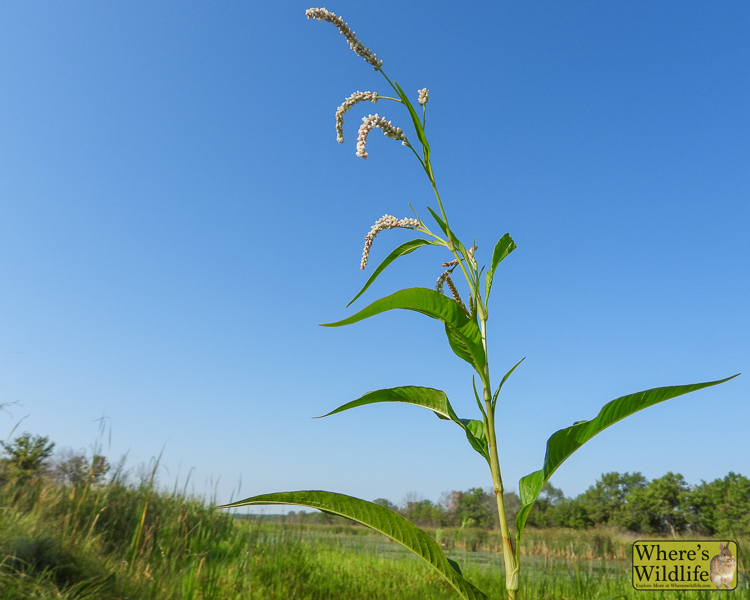
Follow a drooping flower cluster

The slender clusters commonly reach two to four inches long and may be longer. Photograph their full curve and the point where each stalk joins the leafy stem.

Where and when to look

Wetland Wildflower
Blooms: July – September

Habitat: Nodding Smartweed prefers full to partial sun with wet to moist conditions, and fertile soil abundant with organic matter. Look for Nodding Smartweed in edges of lakes and ponds, marshes, mudflats and gravel bars of rivers, prairie swales, ditches along railroads and roadsides, and moist waste areas.

Range & sightings

Native to parts of North America, including the United States.

Reported U.S. distribution
AK, AL, AR, AZ, CA, CO, CT, DC, DE, FL, GA, IA, ID, IL, IN, KS, KY, LA, MA, MD, ME, MI, MN, MO, MS, MT, NC, ND, NE, NH, NJ, NM, NV, NY, OH, OK, OR, PA, RI, SC, SD, TN, TX, UT, VA, VT, WA, WI, WV, WY

State records describe documented distribution, not presence in every county. A state record alone does not establish that every population there is native. The observation map shows reported sightings and may include cultivated plants.

Distribution source: USDA PLANTS. USDA lists this plant as Polygonum lapathifolium L..
Observations show reported sightings; they do not define the plant’s complete native range.

A closer look

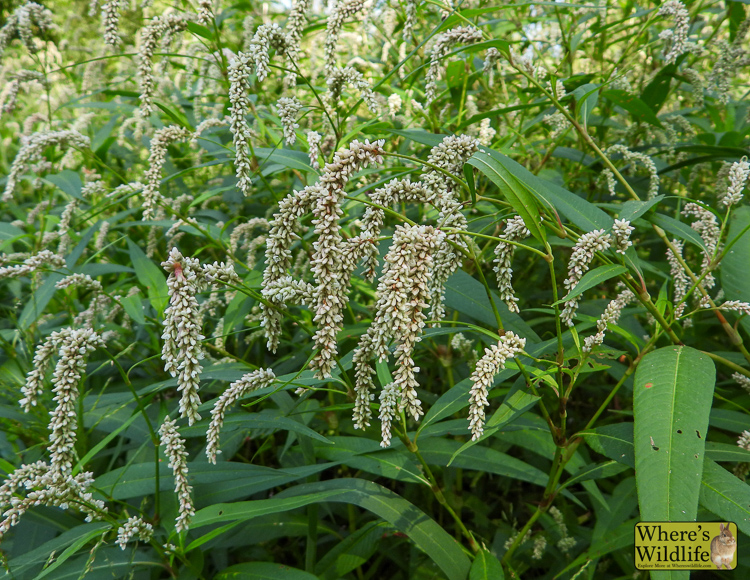
Tiny flowers barely open

Greenish-white to pink flowers crowd the cluster. Each has four or five petal-like tepals that open only slightly. A close view helps separate individual flowers from the overall spike-like outline.

Find the papery sheath at each node

A ribbed membrane surrounds the stem above each leaf attachment. Its upper edge lacks a fringe of bristles, though older sheaths may tear and turn brown. Include a young, intact node.

A branching plant of wet, disturbed ground

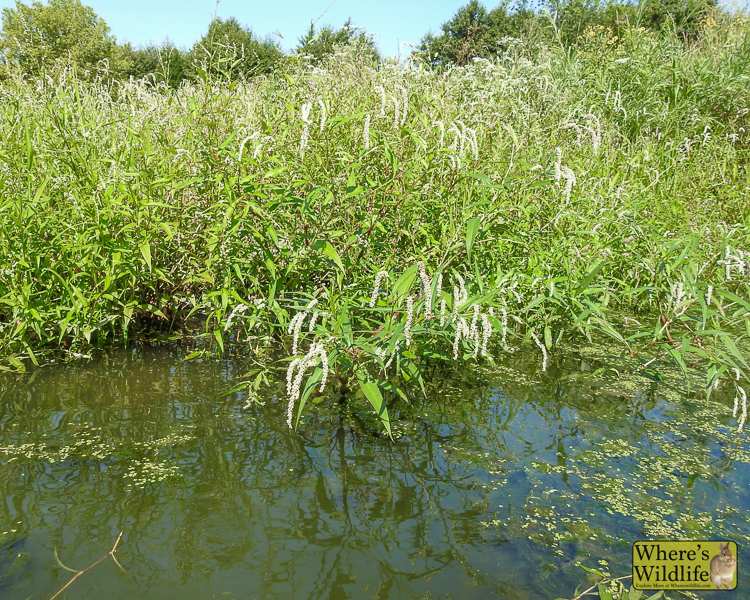
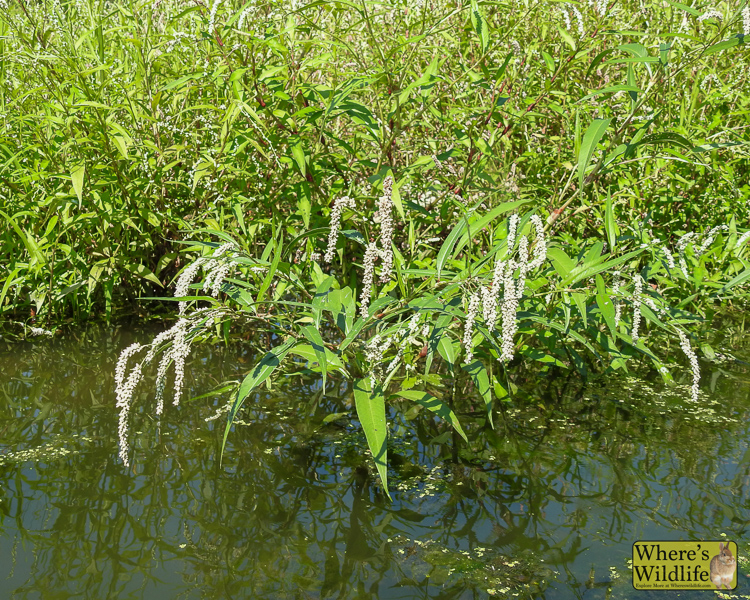
Smooth stems often redden and branch widely, with swollen nodes. Step back to show the plant at a receding shoreline or other moist opening, then compare upper and lower leaves.

Do not depend on a leaf blotch

A dark mark can occur on the leaf, but many plants lack it. Record the drooping clusters and the sheath at a leaf base as well as any markings you see.

Keep learning

Study the photographs and field notes for Nodding Smartweed, then practice identifying this and other wildflowers in the quiz.

Share this:

Like this:

Like Loading…