Explore photographed sightings and their locations.
View photos & full species guideHide photos & full species guide
Field photographs
Compare flowers, foliage and the plant in its habitat. Select any photo to enlarge it.
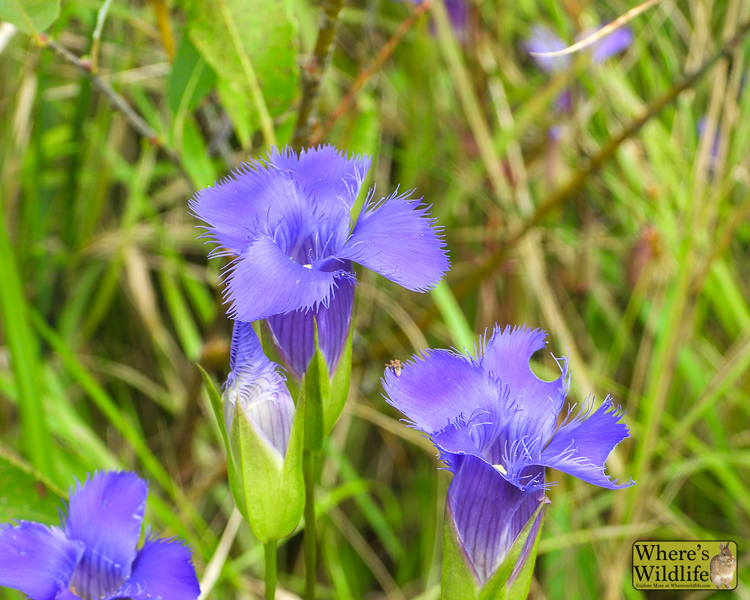
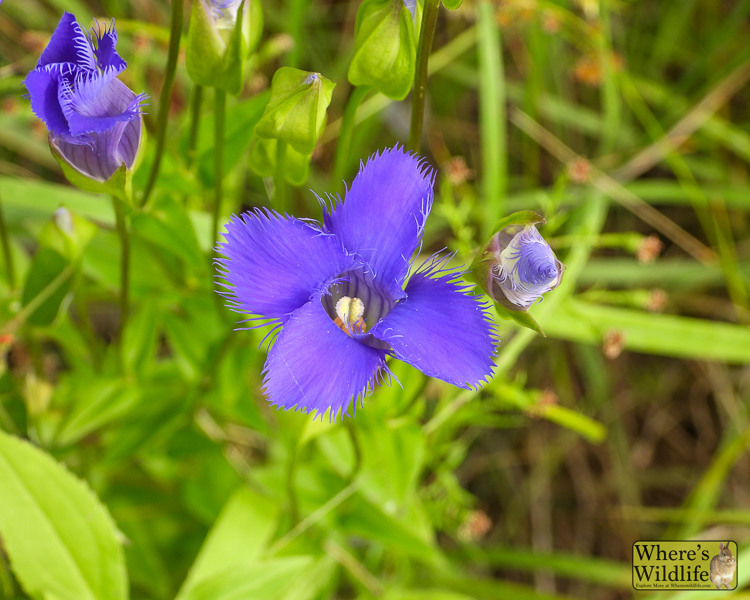
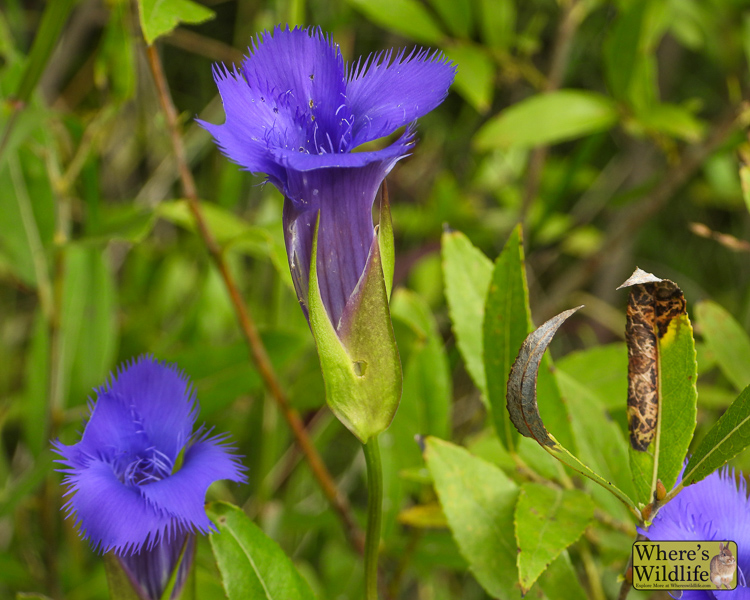
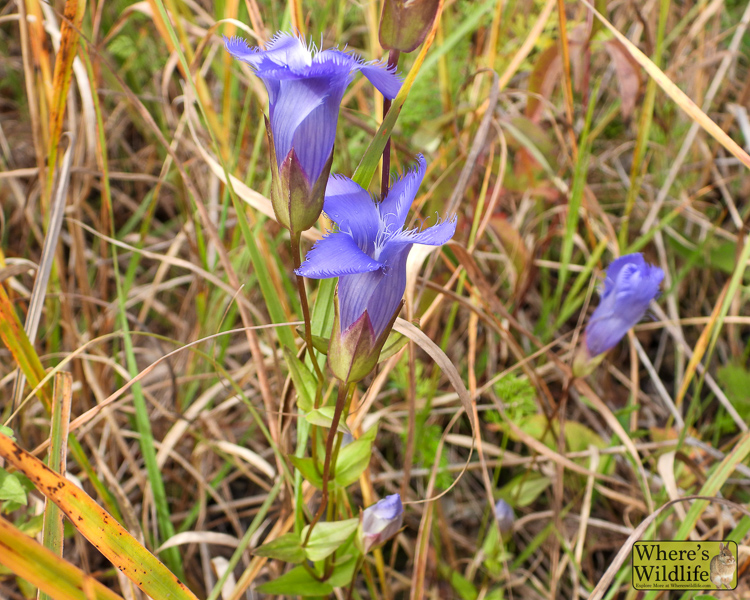
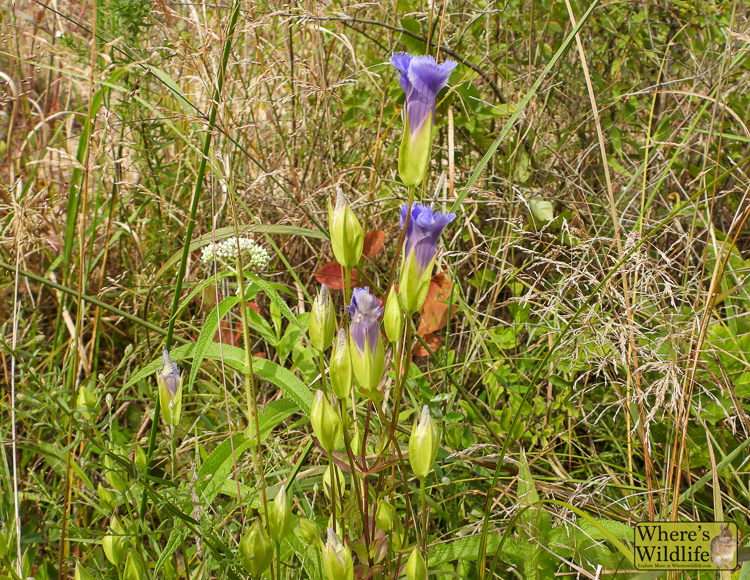
Greater Fringed Gentian flowers above long green calyx tubes.
Greater Fringed Gentian’s fringed blue petals seen from above.
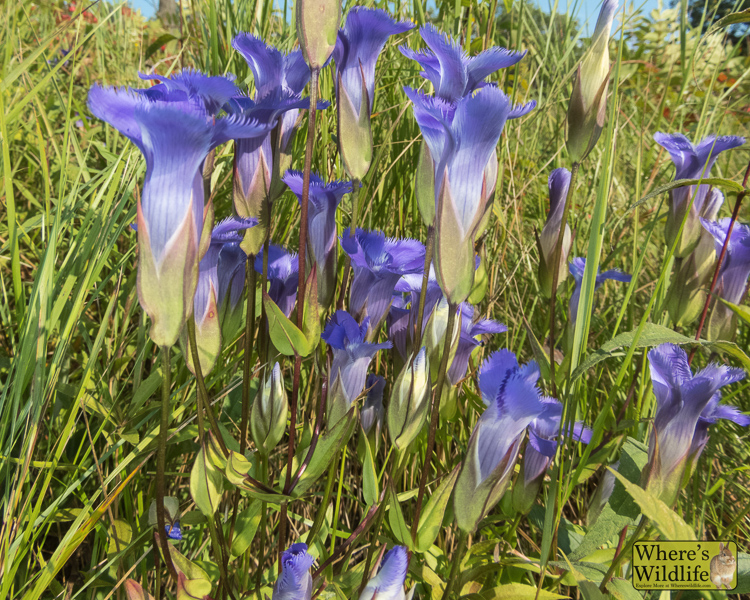
Greater Fringed Gentian’s deep blue blossoms in sunlight.
Greater Fringed Gentian blooming on slender upright stems.
Greater Fringed Gentian’s blue flowers and buds among dry grasses.
A cluster of Greater Fringed Gentian’s blue flowers.
Greater Fringed Gentian flowers and closed buds among grasses.
How to recognize it
Four fringed lobes open outward
Each flower forms a tube ending in four broad lobes with long, fine fringes. A front view records the fringe, while a side view shows the tube and surrounding pointed sepals.
Where and when to look
Wetland Wildflower Blooms: August – September
Habitat: Greater Fringed Gentian prefers full or partial sun with somewhat wet to moist conditions, and calcareous sandy soil with a neutral pH. Look for Greater Fringed Gentian in wet to moist sand prairies, edges of sandy sloughs and sandy swales, fens, open wooded swamps, wooded ravines, roadside ditches, and open damp areas along sandy trails.
Range & sightings
Native to parts of North America, including the United States.
Reported U.S. distribution CT, DE, GA, IA, IL, IN, MA, MD, ME, MI, MN, NC, ND, NH, NJ, NY, OH, PA, RI, TN, VA, VT, WI, WV
State records describe documented distribution, not presence in every county. A state record alone does not establish that every population there is native. The observation map shows reported sightings and may include cultivated plants.
Observations show reported sightings; they do not define the plant’s complete native range.
A closer look
Sunlight changes the flower’s appearance
Flowers open on sunny days. A closed flower can hide much of the fringe, so note the weather and time when photographing plants and revisit if conditions allow.
Opposite leaves clasp the stem
Smooth, toothless leaves occur in opposite pairs and lack stalks. Lower leaves are broader than those higher on the stem. Include several leaf pairs to show this gradual change.
Small populations depend on seeds
This short-lived gentian relies on successful seed production to persist. Observe flowers in place and follow marked viewpoints over time, leaving stems intact so flowering plants can complete their life cycle.
Lesser Fringed Gentian generally has narrower leaves and shorter fringes. Greater Fringed Gentian is often more robust, but size alone can mislead. Photograph leaves and petal edges together for comparison.
Study the photographs and field notes for Greater Fringed Gentian, then practice identifying this and other wildflowers in the quiz.
Greater Fringed Gentian clipart
Transparent PNG clipart. Select a design for file specifications, licensing and download details. Purchased files do not include the preview watermark.
Clipart savings: 1–5 files $1.99 each · 6–10 files $1.66 each · 11+ files $1.25 each. Discounts are applied automatically to eligible clipart in the cart.