WHERE’S WILDLIFE • WILDFLOWER FIELD GUIDE

Common Milkweed

Asclepias syriaca

as-KLEE-pee-as seer-ee-AY-kah · pronunciation guide [2]

NATIVE • PRAIRIES, MEADOWS & OPEN EDGES

At a glance

Family   Apocynaceae · dogbane family
Life cycle   Herbaceous perennial
Height   Usually 2–5 feet
Blooms   June–August
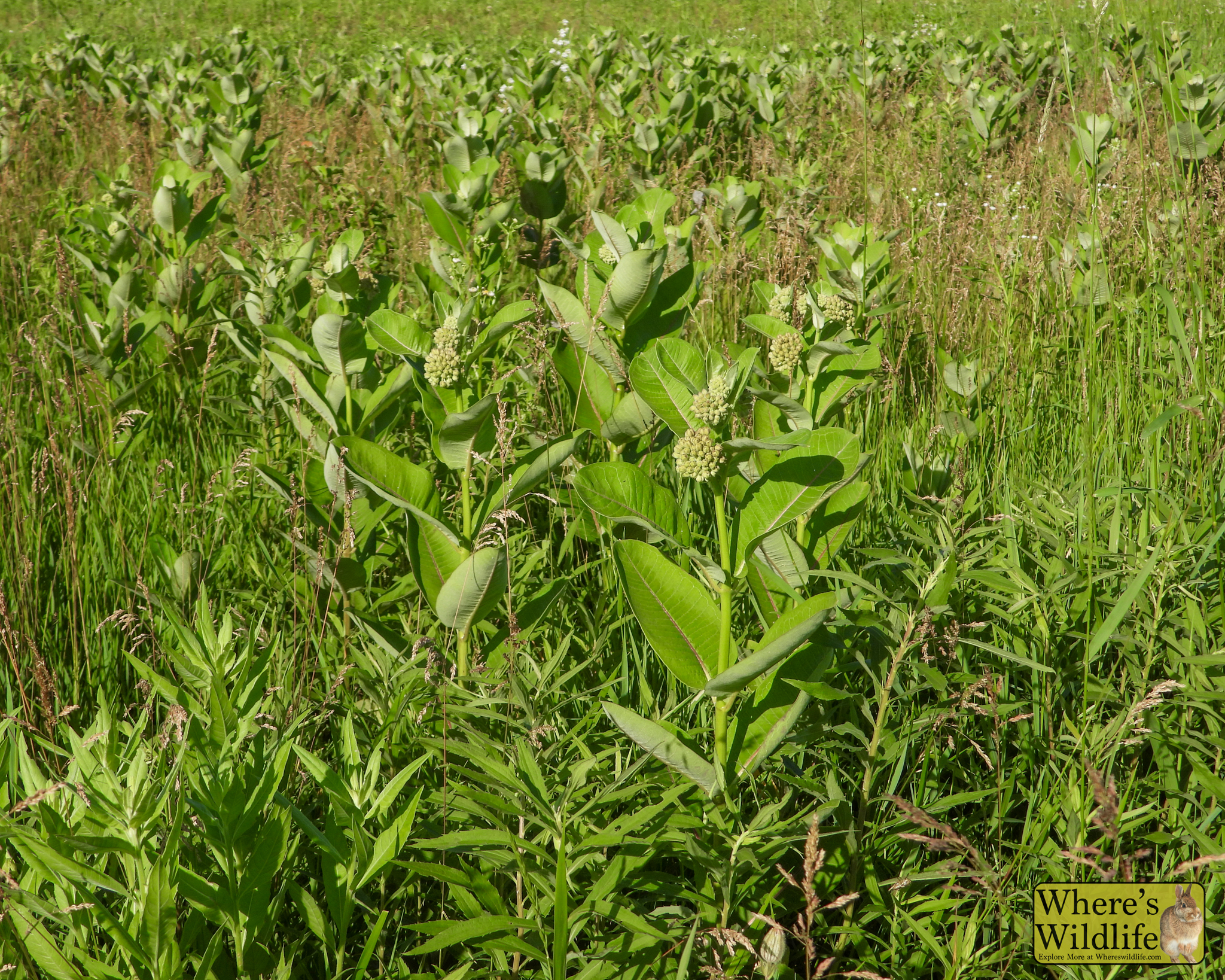
Light & habitat   Sunny meadows, fields, prairies, roadsides, and open woodland edges. Plants spread into patches.

Bloom timing and height vary with location and growing conditions. [1, 2]

Other common names
Silkweed · Milkplant [1]

Milkweed & Monarchs
A host plant for Monarch caterpillars and a nectar source for many flower-visiting insects. [2] [3]

Range Map

Explore photographed sightings on the observation map.

View photos & full species guideHide photos & full species guide

Field photographs

Explore all 25 field photographs by Brian Woolman. Eight are shown first; use “Load more photos” for additional views, or select a photograph to enlarge it. Compare flowers, whole plants, leaves, pods, sap, and insects.

How to recognize it

Follow three field clues

01 · Rounded flower clusters
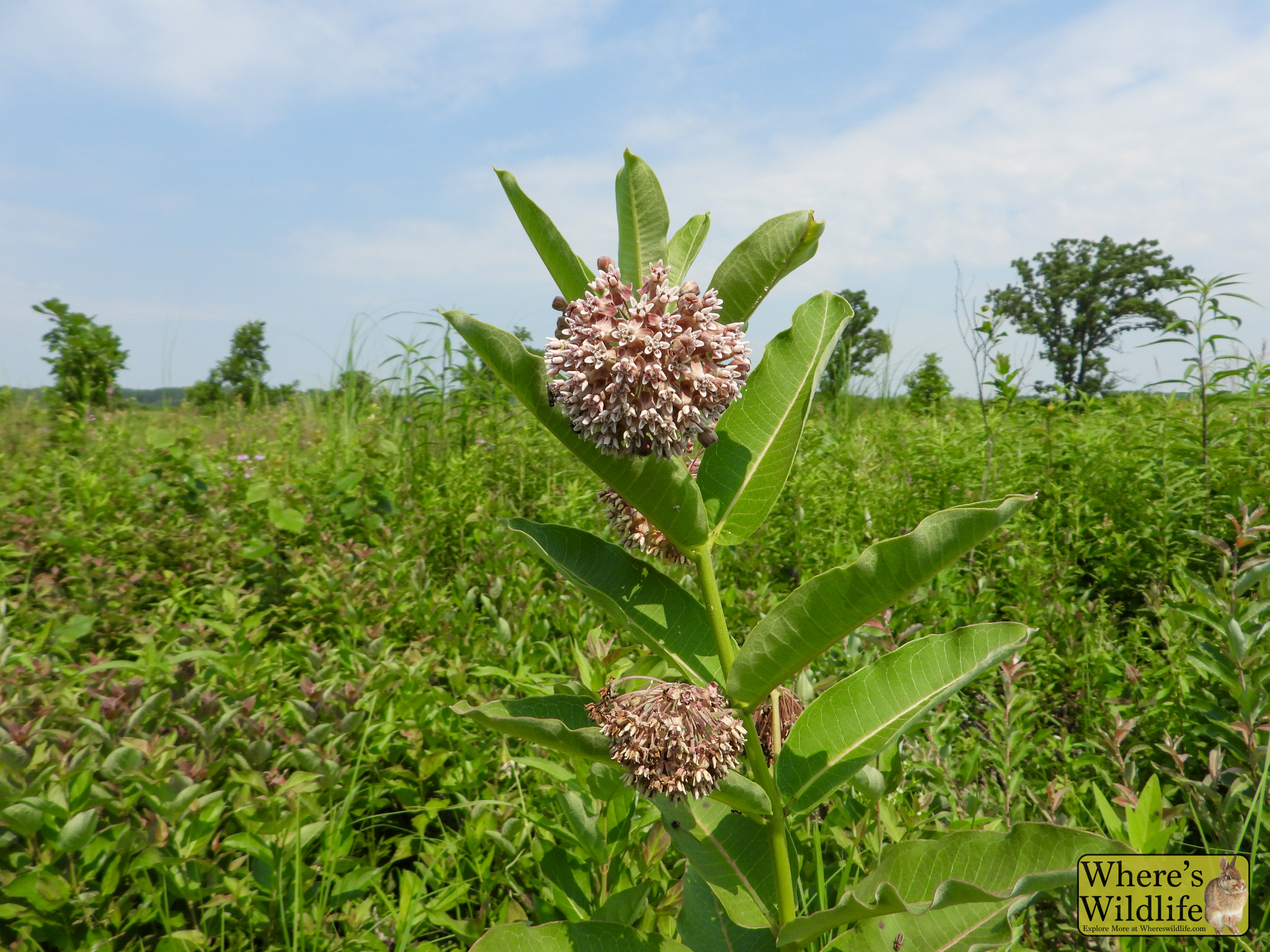
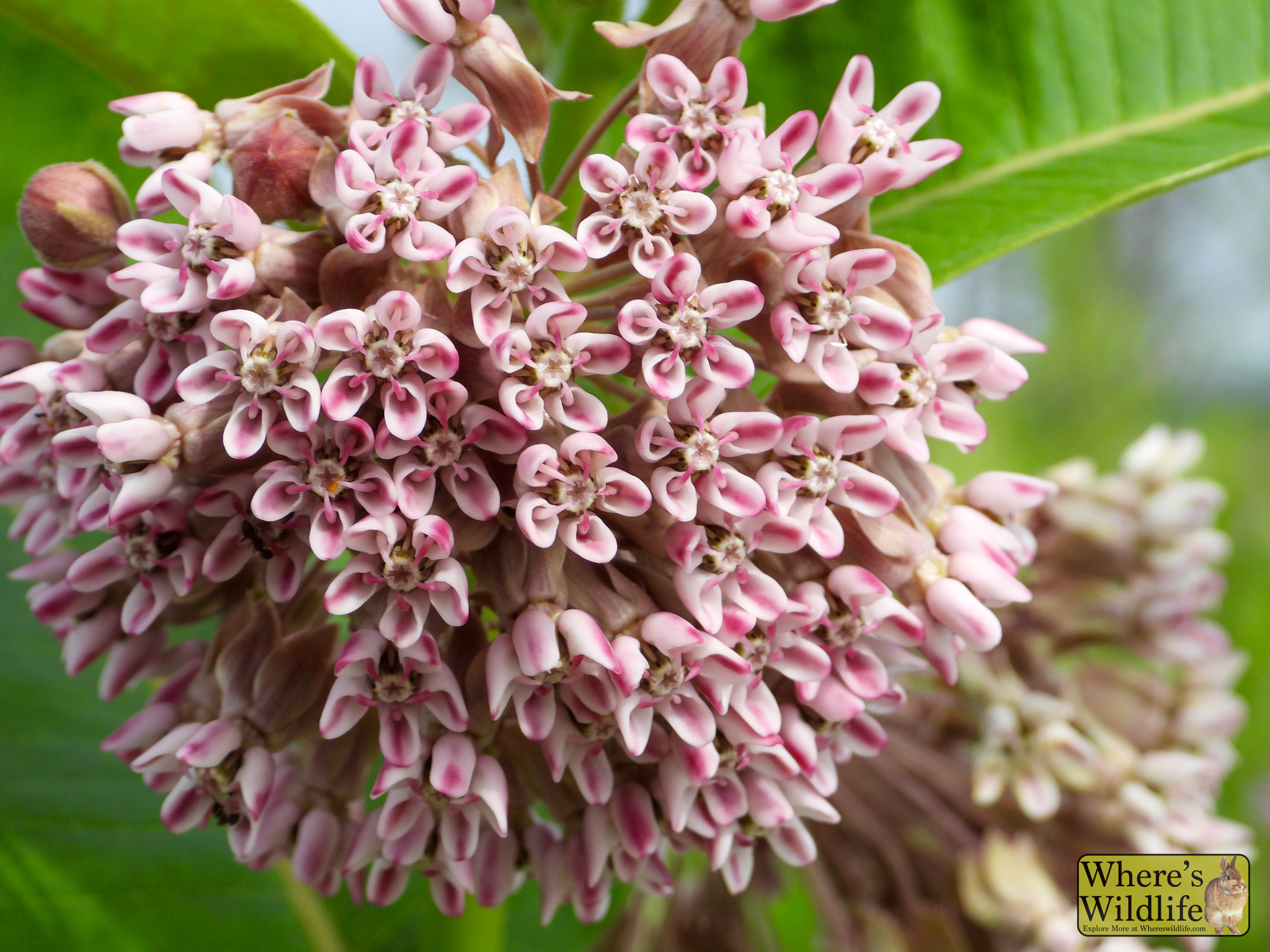
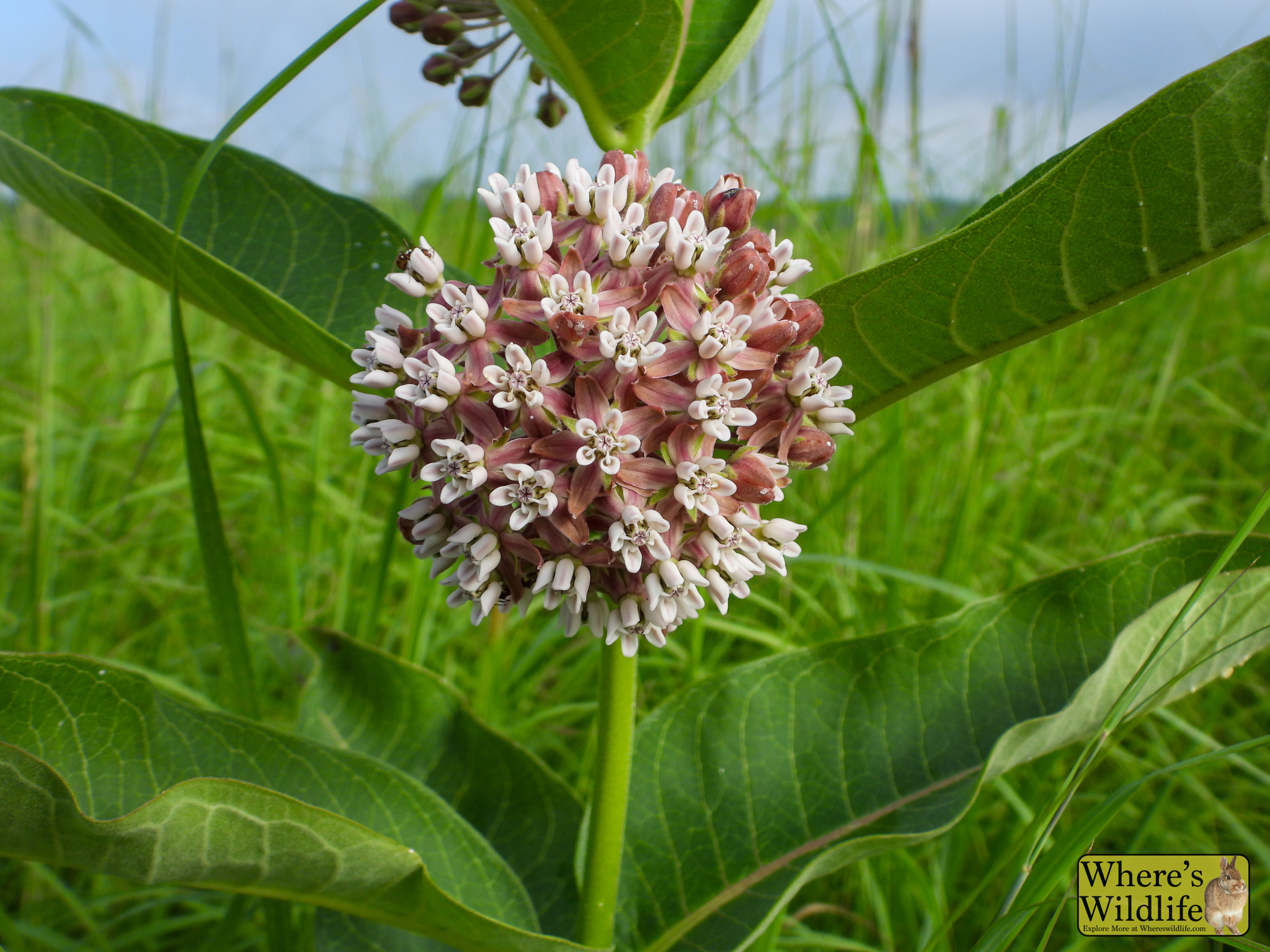
Pink to mauve flowers with five pale hoods above downward-curving petals.

02 · Broad opposite leaves
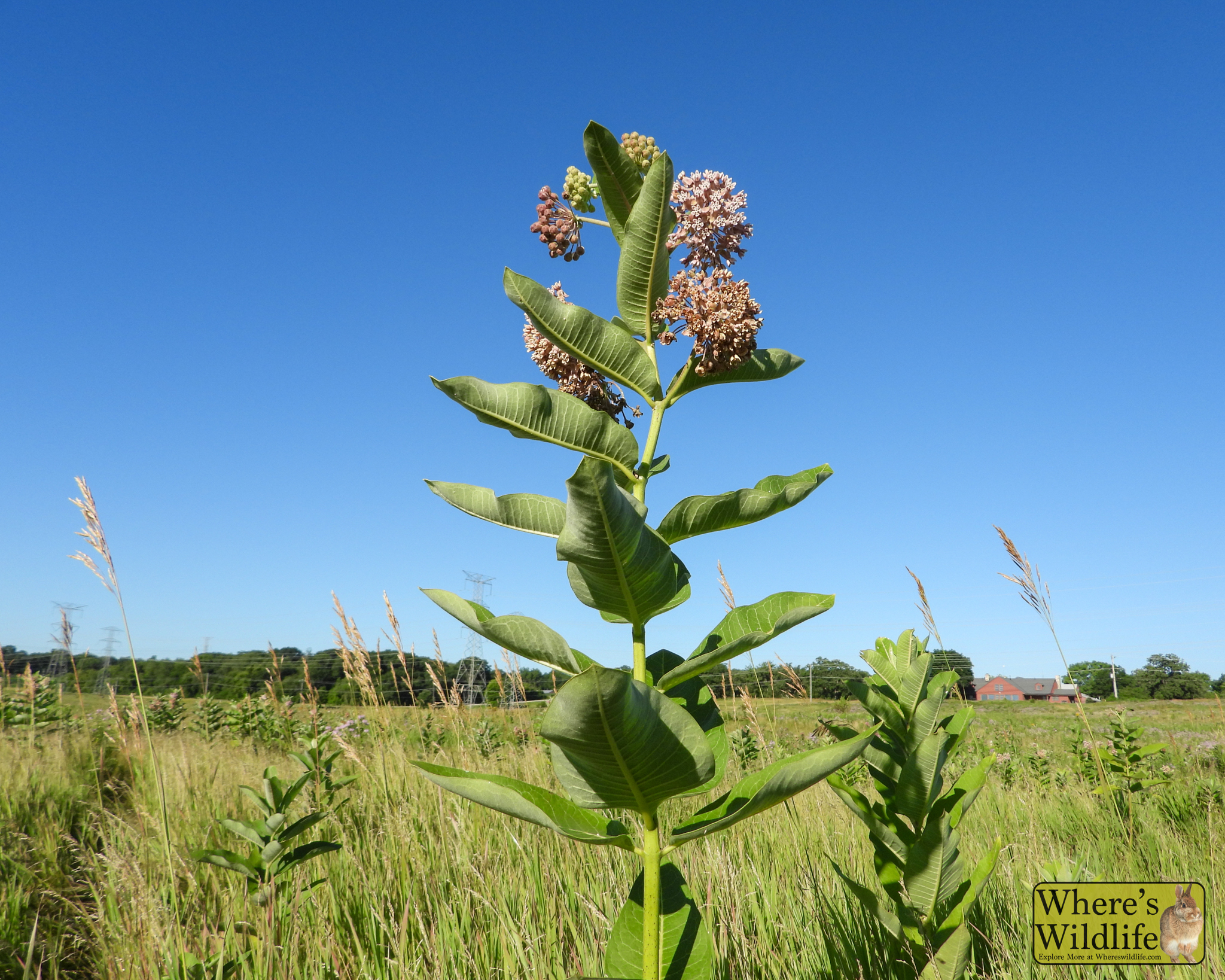
Oval or oblong, toothless leaves with short stalks and softly hairy undersides.

03 · Bumpy green pods
Later in the season, look for thick pods with a rough surface. [1]

Where and when to look

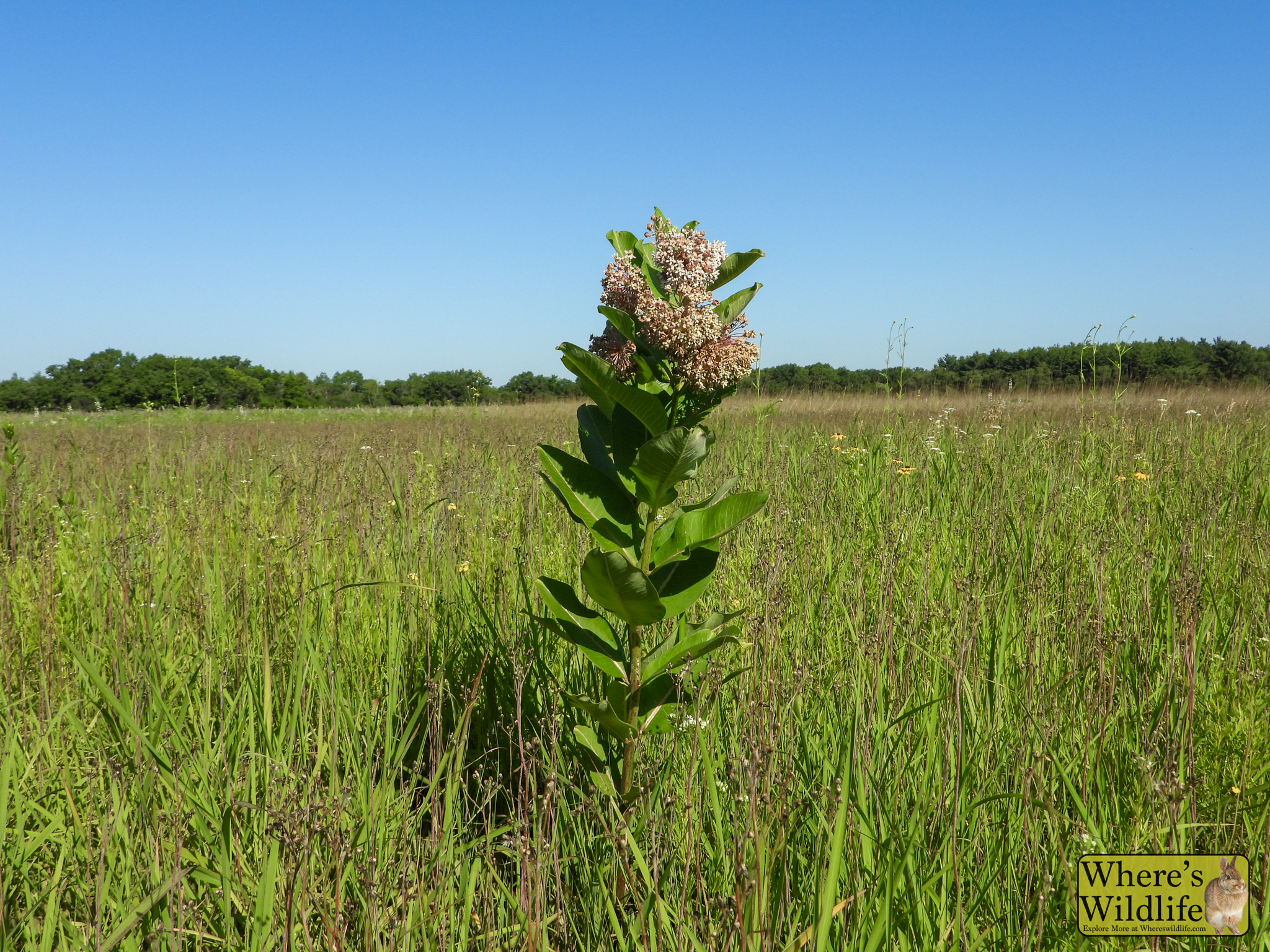
Look in sunny meadows, fields, prairies, and open edges. The summer flowering season is generally June–August; weather and location affect timing. Plants can form spreading patches. [1] [2]

Opposite leaves and a hairy stem

Include several leaf pairs when photographing the plant. Common Milkweed has short leaf stalks, softly hairy undersides, and a usually unbranched stem with variable hairiness. Turn a leaf gently to examine its underside. [1]

The plant and meadow overview images are AI-generated artwork. The identification close-ups and gallery are field photographs by Brian Woolman.

A closer look

Five-part flowers

Look closely at the five-part crown above the reflexed petals. These small flowers form rounded clusters, usually in the upper leaf axils. [1]

Monarchs and other visitors

Red milkweed beetles on a Common Milkweed flower cluster. Photograph by Brian Woolman.

Monarch caterpillars eat milkweed foliage, while adult butterflies visit flowers for nectar. Milkweed tussock moth caterpillars, milkweed bugs, and red milkweed beetles also use the plant. [2] [3]

Pods, seeds & milky sap

Thick green pods carry conspicuous soft, warty projections. Mature pods split to release brown seeds with silky hairs. Damaged tissues release milky sap, but there is no need to break a plant to identify it. [1, 5]

Compare similar milkweeds

Common Milkweed or Sullivant’s Milkweed?

Sullivant’s Milkweed (Asclepias sullivantii) has hairless stems and leaves, often with thick leaves that sweep upward on very short stalks. Its pods are generally smoother, although some may have small warty bumps. [4, 6]

Common Milkweed has softly hairy leaf undersides, short but distinct leaf stalks, and usually rough pods with pronounced projections. Pink midveins and flower color can occur in both species, so compare several features together. [1, 5]

Range & sightings

Native to central and eastern Canada and the central and eastern United States. [2]

Reported U.S. distribution
AL, AR, CT, DC, DE, GA, IA, IL, IN, KS, KY, LA, MA, MD, ME, MI, MN, MO, MS, MT, NC, ND, NE, NH, NJ, NY, OH, OK, OR, PA, RI, SC, SD, TN, TX, VA, VT, WI, WV

State records describe documented distribution, not presence in every county. A state record alone does not establish that every population there is native. The observation map shows reported sightings and may include cultivated plants.

Distribution source: USDA PLANTS.

Observations show reported sightings; they do not define the plant’s complete native range.
Keep learning

Practice recognizing the rounded flower clusters, opposite leaves, and bumpy pods, then test your identification skills in the quiz.

Common Milkweed posters

Explore Common Milkweed, its plant parts, and the insects that use it with these educational posters.

Common Milkweed · White

Educational plant & insect poster.

Common Milkweed · Green

Educational plant & insect poster.

Common Milkweed clipart

Transparent PNG clipart. Select a design for file specifications, licensing and download details. Purchased files do not include the preview watermark.

Common Milkweed

Asclepias syriaca
IMG0002

$1.99 · transparent PNG

Common Milkweed

Asclepias syriaca
IMG0005

$1.99 · transparent PNG

Common Milkweed

Asclepias syriaca
IMG0006

$1.99 · transparent PNG

Common Milkweed with Red Milkweed Beetles

Asclepias syriaca
IMG0007

$1.99 · transparent PNG

Common Milkweed

Asclepias syriaca
IMG0097

$1.99 · transparent PNG

Common Milkweed with Monarch Butterfly

Asclepias syriaca
IMG0096

$1.99 · transparent PNG

Clipart savings: 1–5 files $1.99 each · 6–10 files $1.66 each · 11+ files $1.25 each. Discounts are applied automatically to eligible clipart in the cart.

Share this:

Like this:

Like Loading…