How to recognize it
Key identification clues
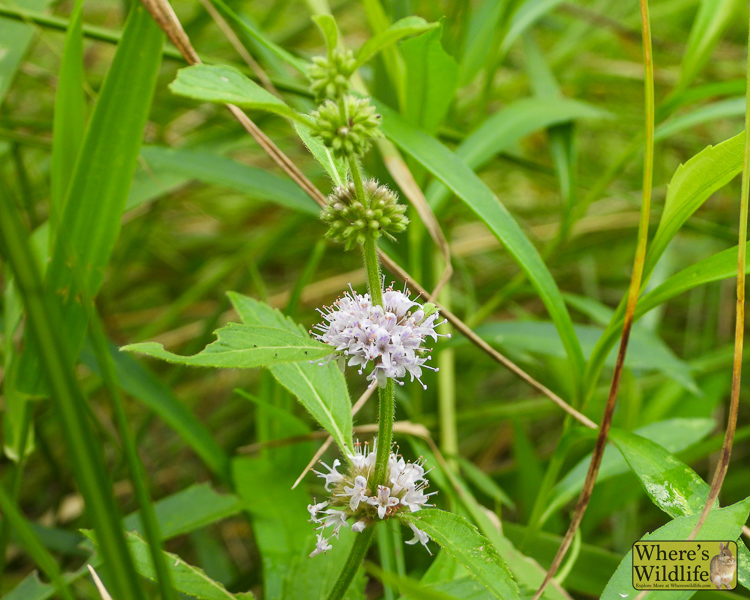
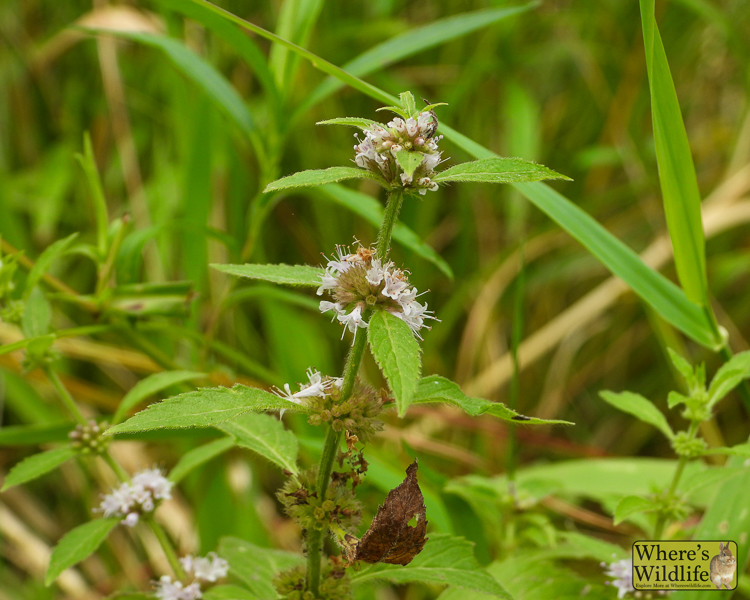
Opposite, toothed leaves grow on four-angled stems. Small white, pink or lavender flowers form separate whorls in upper leaf axils rather than one terminal flower spike.
Family Lamiaceae · mint family
Life cycle Perennial
Blooms July–September (Upper Midwest)
Height 6–24 inches
Light & habitat Part shade, sun; moist soil; thickets, along shores, wet meadows
Common names
Wild Mint · Field Mint
Bloom timing and mature height vary with location and growing conditions. Sources: Minnesota Wildflowers.
Explore photographed sightings and their locations.
Compare flowers, foliage and the plant in its habitat. Select any photo to enlarge it.
Opposite, toothed leaves grow on four-angled stems. Small white, pink or lavender flowers form separate whorls in upper leaf axils rather than one terminal flower spike.
Look in moist meadows, shore margins, marsh edges and damp disturbed ground, in sun or light shade. Flowering dates vary across the region.
Native to parts of North America, including the United States.
Reported U.S. distribution
AK, AR, AZ, CA, CO, CT, DC, DE, GA, IA, ID, IL, IN, KS, KY, MA, MD, ME, MI, MN, MO, MT, NC, ND, NE, NH, NJ, NM, NV, NY, OH, OR, PA, RI, SD, TN, TX, UT, VA, VT, WA, WI, WV, WY
State records describe documented distribution, not presence in every county. A state record alone does not establish that every population there is native. The observation map shows reported sightings and may include cultivated plants.
Distribution source: USDA PLANTS.
Observations show reported sightings; they do not define the plant’s complete native range.
Underground rhizomes allow stems to spread into colonies. A patch of shoots may therefore include connected growth rather than only separate seedlings.
Flies and wasps visit the flowers, along with some small bees, butterflies and skippers. Observe a cluster for several minutes and record visitor types without assuming every visitor pollinates it.
Regional references differ in how they treat native and introduced forms within this mint group. The linked Illinois account distinguishes native and Eurasian varieties under Mentha arvensis. Compare the name used by your local flora before drawing conclusions about a particular population’s origin.
Flower placement helps separate this mint from cultivated mints with terminal spikes. Hybrids can complicate identification; scent alone cannot establish the species.
Study the photographs and field notes for Wild Mint, then practice identifying this and other wildflowers in the quiz.
Explore wildlife guides, educational posters, and PNG clipart. Use the filters to narrow your results.