WHERE’S WILDLIFE • WILDFLOWER FIELD GUIDE

Wild Four-O'Clock

Mirabilis nyctaginea
NATIVE • WILDFLOWER

At a glance

Family   Nyctaginaceae · four o'clock family
Life cycle   Perennial
Blooms   May–September (Upper Midwest)
Height   2–4 feet
Light & habitat   Sun; dry sandy or gravelly soil; fields, prairies, roadsides, rock outcrops, waste areas

Common names
Wild Four-O'Clock · Heart-leaved Four O'Clock

Bloom timing and mature height vary with location and growing conditions. Sources: Minnesota Wildflowers.

Range Map

Explore photographed sightings and their locations.

View photos & full species guideHide photos & full species guide

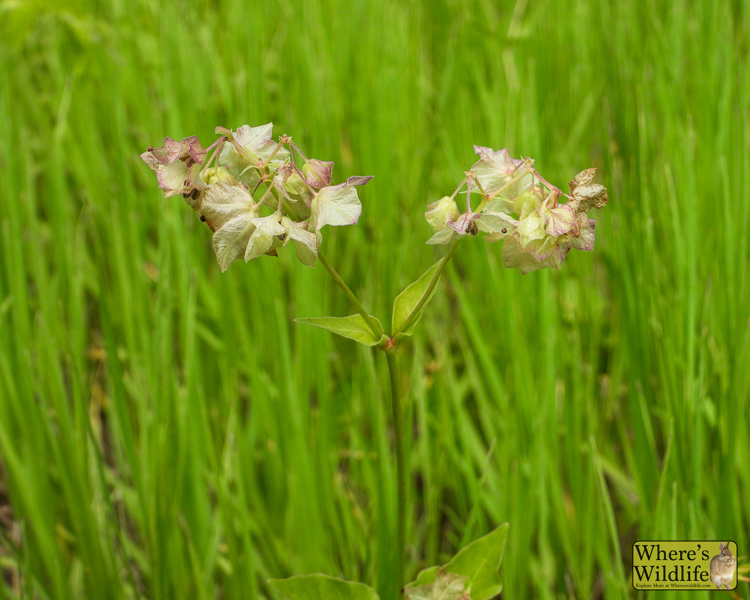
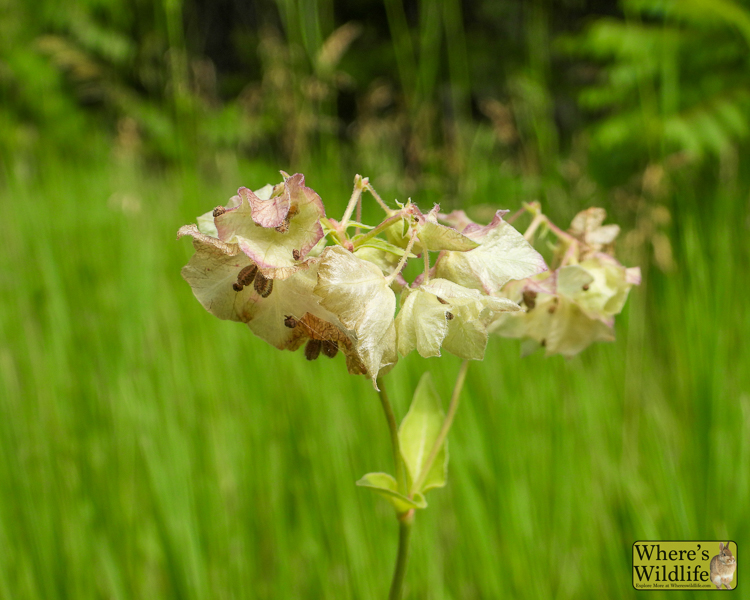
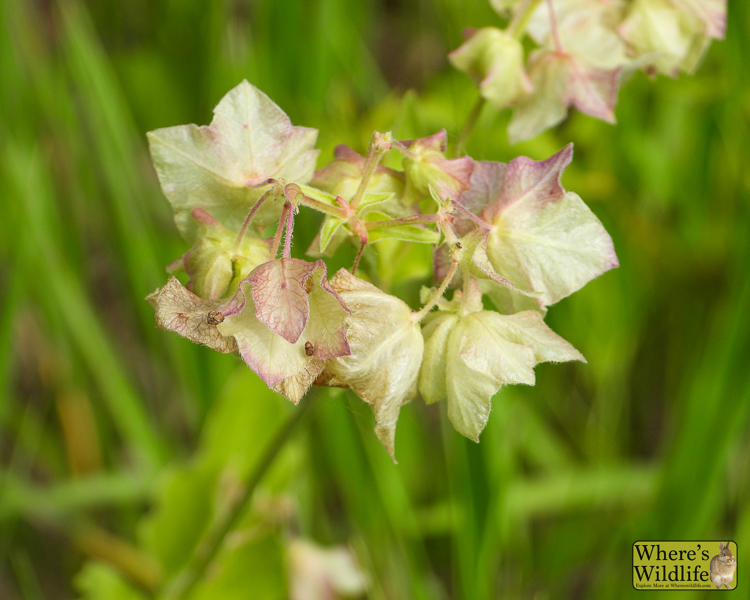
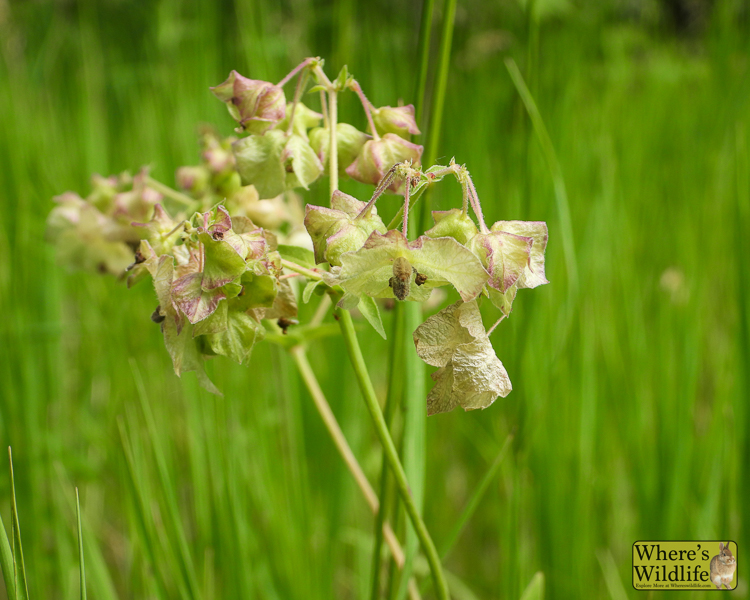
Field photographs

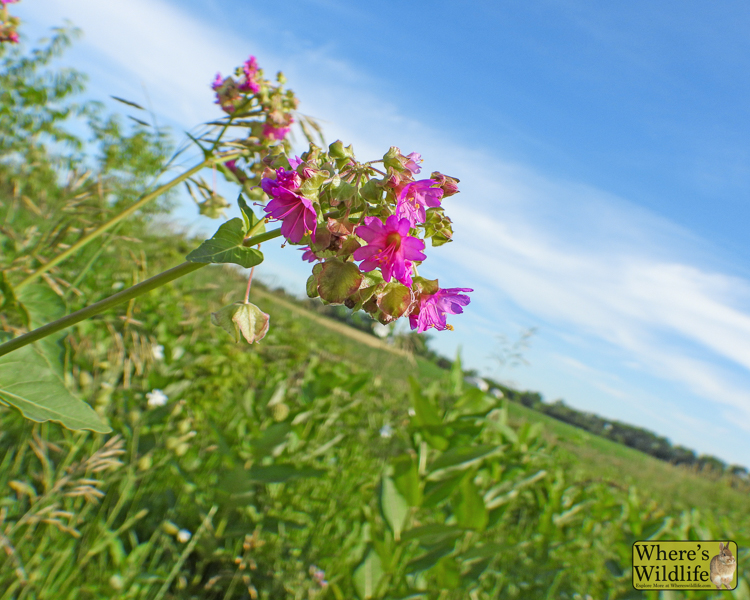
Compare flowers, foliage and the plant in its habitat. Select any photo to enlarge it.

How to recognize it

Key identification clues

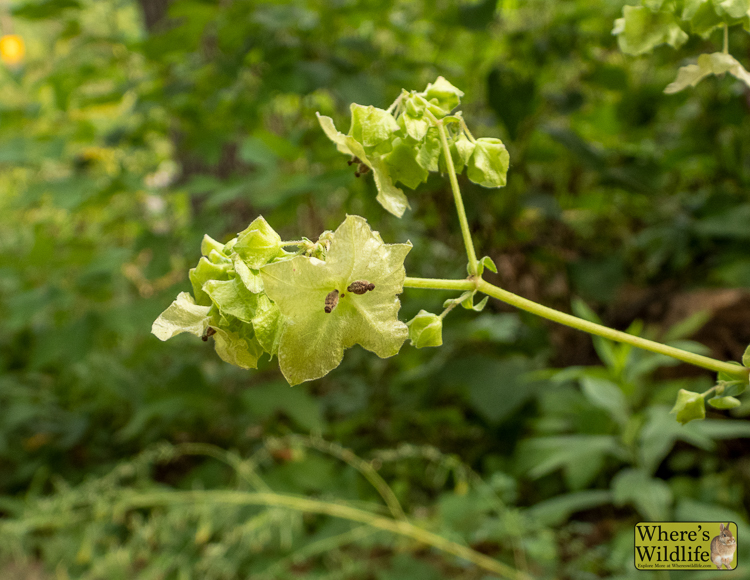
Look for opposite, broadly heart-shaped leaves with smooth margins. Several small trumpet-shaped flowers share a green, five-lobed enclosing cup.

Where and when to look

Search sunny, dry to moderately moist disturbed places, including field edges and roadsides. Flowering season varies locally; open blooms are most likely from late afternoon into the night.

Range & sightings

Native to parts of North America, including the United States.

Reported U.S. distribution
AL, AR, CA, CO, CT, DC, IA, ID, IL, IN, KS, KY, LA, MA, MD, ME, MI, MN, MO, MS, MT, NC, ND, NE, NH, NJ, NM, NV, NY, OH, OK, PA, RI, SD, TN, TX, UT, VA, VT, WA, WI, WV, WY

State records describe documented distribution, not presence in every county. A state record alone does not establish that every population there is native. The observation map shows reported sightings and may include cultivated plants.

Distribution source: USDA PLANTS.
Observations show reported sightings; they do not define the plant’s complete native range.

A closer look

Petal-like, but not petals

The colorful trumpet is formed by the calyx rather than true petals. Outside it, green bracts surround a small group of flowers. A close-up can show these two distinct layers.

A different daily schedule

Flowers typically close during the morning. Photograph a marked location in daylight and again late in the day; closed flowers do not necessarily mean that flowering has finished.

Flowers and their visitors

Bees and moths visit the flowers. Record the time when observing visitors. This North American species has expanded beyond parts of its original range, so a regional flora is useful for interpreting local native status.

Look beyond the common name

Garden four-o’clocks and other wild Mirabilis species share the name. Compare leaf width, stem hairiness and flower size instead of identifying from the name or flower color alone.

Keep learning

Study the photographs and field notes for Wild Four-O’Clock, then practice identifying this and other wildflowers in the quiz.

Share this:

Like this:

Like Loading…