WHERE’S WILDLIFE • WILDFLOWER FIELD GUIDE

White Campion

Silene latifolia
NON-NATIVE • WILDFLOWER

At a glance

Family   Caryophyllaceae · pink family
Life cycle   Annual, short-lived perennial
Blooms   May–September (Upper Midwest)
Height   18–48 inches
Light & habitat   Shade, sun; disturbed soil, waste places, fields, edges of woods

Common names
White Campion · Bladder Campion · White Cockle

Bloom timing and mature height vary with location and growing conditions. Sources: Minnesota Wildflowers.

Range Map

Explore photographed sightings and their locations.

View photos & full species guideHide photos & full species guide

Field photographs

Compare flowers, foliage and the plant in its habitat. Select any photo to enlarge it.

How to recognize it

Photograph the front and the side

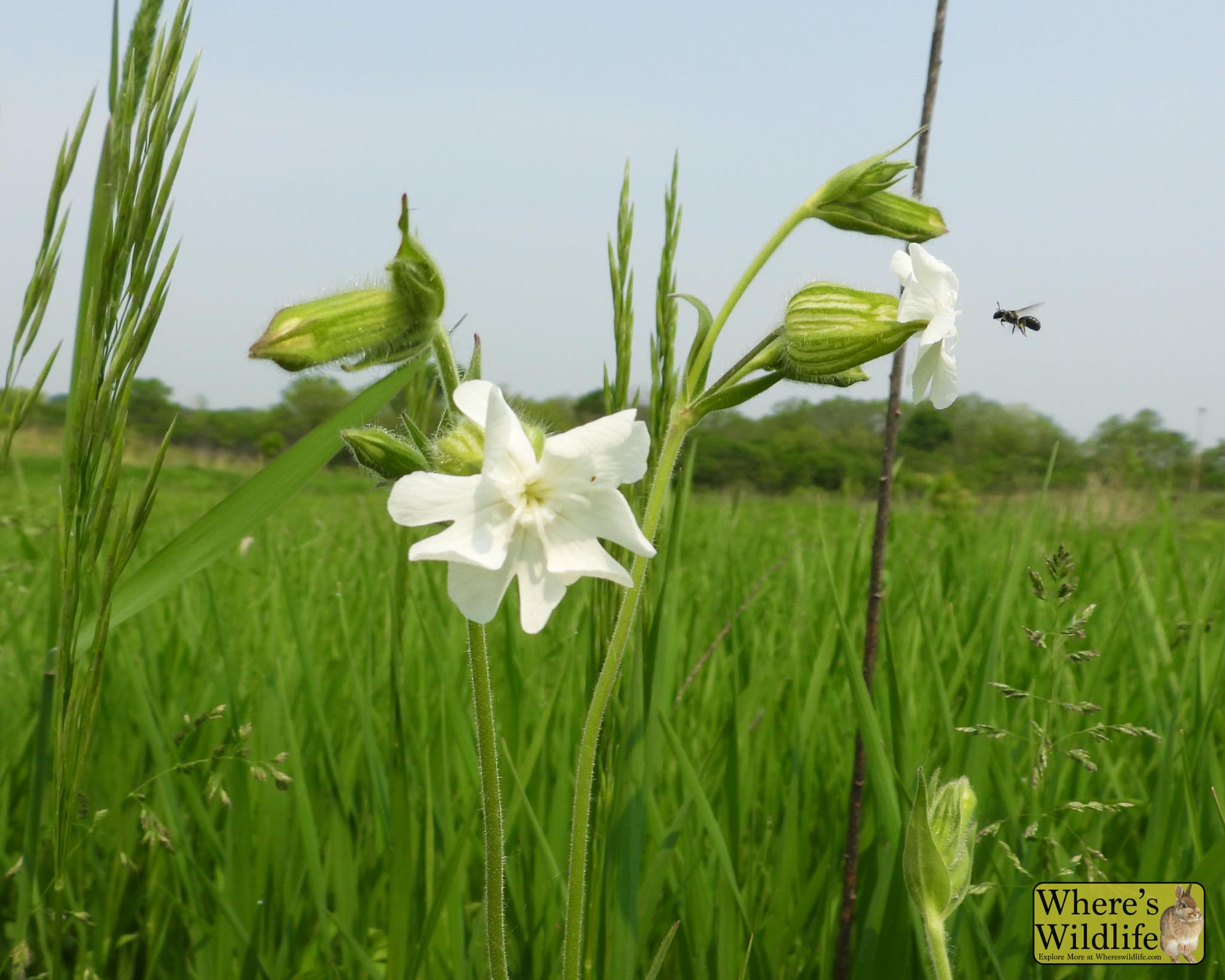
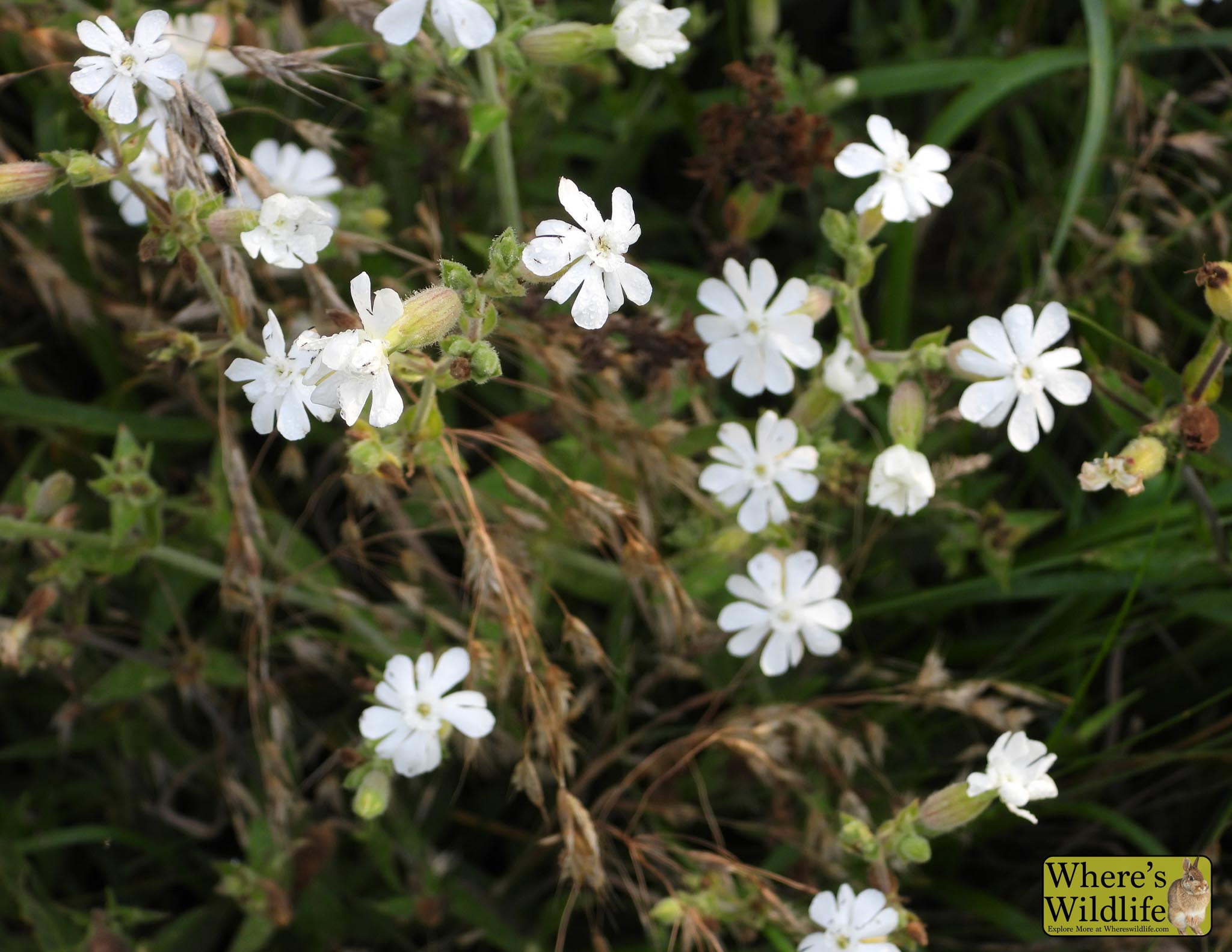
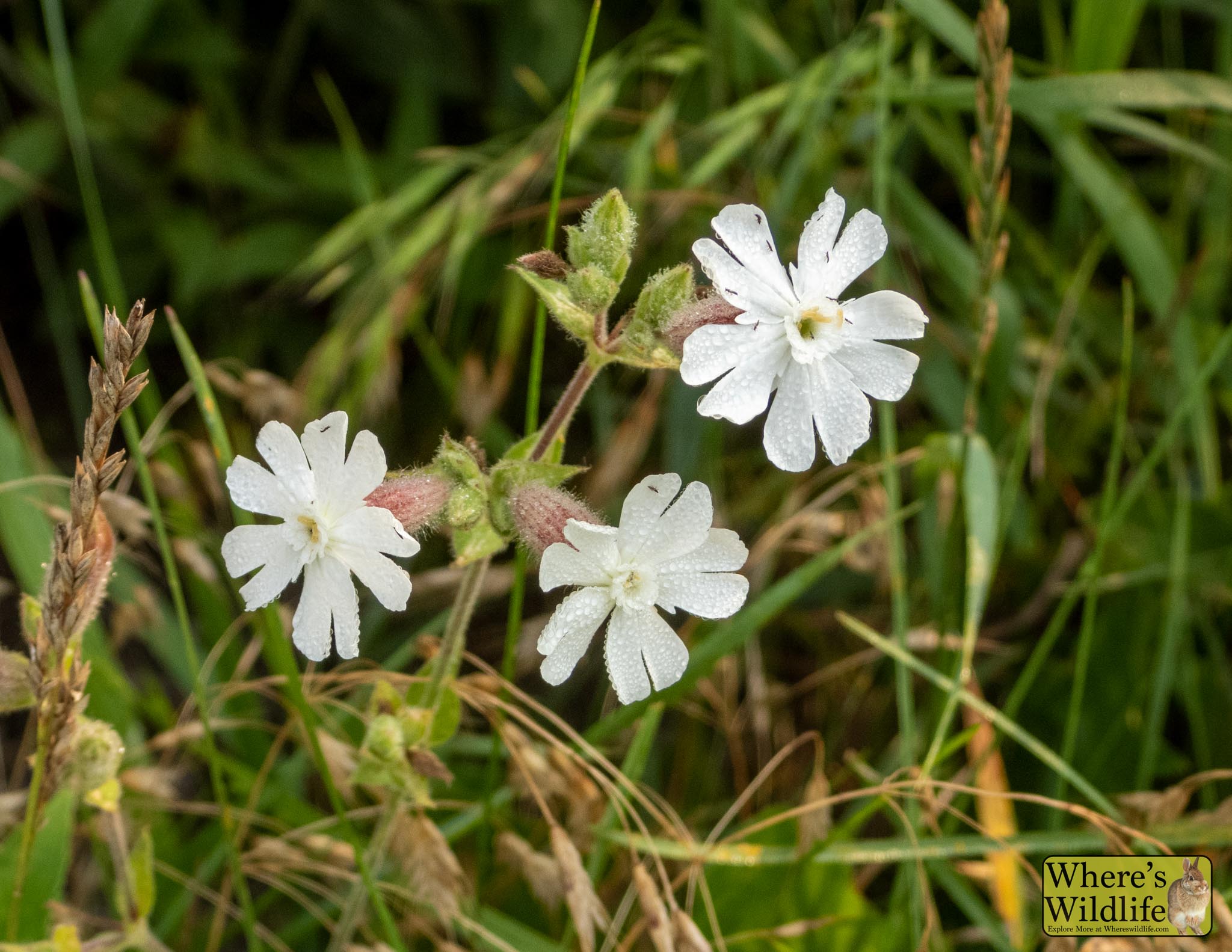
A front view shows the divided petals and small collar at the throat. A side view reveals the inflated calyx and its raised veins, which are hidden in a face-on flower portrait.

Where and when to look

Blooms: May – September

Habitat: White Campion prefers full or partial sun, mesic conditions, and fertile loamy soil. Look for White Campion in disturbed soil, waste places, fields, and along the edges of woods.

Range & sightings

Non-native in the United States; introduced populations are documented here.

Reported U.S. distribution
AK, AL, AR, CA, CO, CT, DC, DE, GA, IA, ID, IL, IN, KS, KY, MA, MD, ME, MI, MN, MO, MT, NC, ND, NE, NH, NJ, NM, NV, NY, OH, OR, PA, RI, SC, SD, TN, UT, VA, VT, WA, WI, WV, WY

State records describe documented distribution, not presence in every county. A state record alone does not establish that every population there is native. The observation map shows reported sightings and may include cultivated plants.

Distribution source: USDA PLANTS.
Observations show reported sightings; they do not define the plant’s complete native range.

A closer look

Male and female flowers differ

Male flowers carry ten stamens; female flowers have five styles and a larger, more swollen calyx. Compare several plants rather than expecting both forms on one stem.

Opposite leaves become smaller upward

The hairy leaves occur in pairs and have un-toothed margins. Lower leaves have short stalks, while upper leaves are smaller and stalkless. Show several successive pairs on the stem.

Capsules open with ten teeth

Mature upright capsules have ten teeth around the opening. This is useful beside flower and calyx photographs when comparing similar campions; leave the seeds undisturbed.

Note the time of observation

Flowers open in the evening and may close by midday, remaining open longer in cloudy weather. Include the time with the photograph when comparing open and closed blooms.

Keep learning

Study the photographs and field notes for White Campion, then practice identifying this and other wildflowers in the quiz.

Share this:

Like this:

Like Loading…