How to recognize it
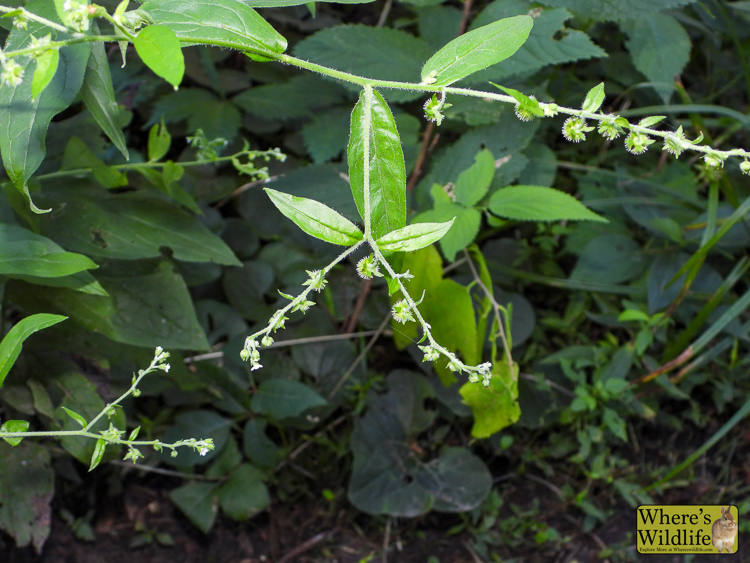
Follow the slender flowering branches
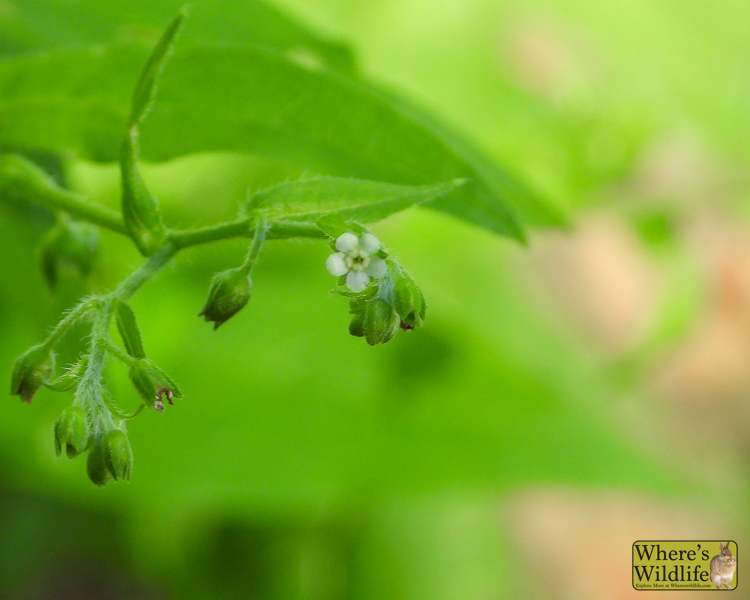
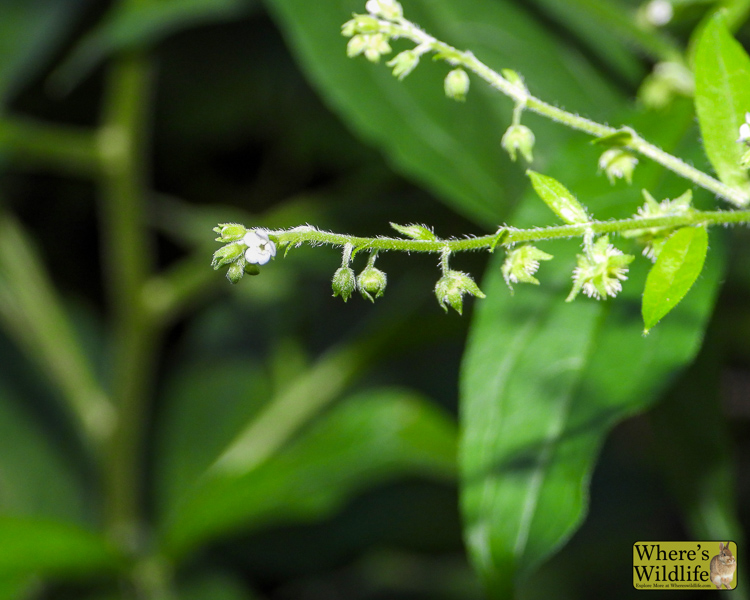
Small blossoms open successively along narrow racemes that lengthen as the plant develops. Photograph an entire branch with flowers and younger fruits to show their arrangement.
Family Boraginaceae · borage family
Life cycle Annual, biennial
Blooms June–August (Upper Midwest)
Height 2–3 feet
Light & habitat Part shade, shade; upland woods, thickets
Common names
Stickseed · Beggar's-lice · Sticktight
Bloom timing and mature height vary with location and growing conditions. Sources: Minnesota Wildflowers.
Explore photographed sightings and their locations.
6 field photographs. Select a photograph to enlarge it.
Small blossoms open successively along narrow racemes that lengthen as the plant develops. Photograph an entire branch with flowers and younger fruits to show their arrangement.
Woodland Wildflower
Blooms: June – August
Habitat: Stickseed prefers partial sun to medium shade with mesic conditions and a fertile loamy soil. Look for Stickseed in moist to slightly dry deciduous woodlands, woodland borders, powerline clearances in wooded areas, thickets, and shady fence rows.
Native to parts of North America, including the United States.
Reported U.S. distribution
AL, AR, CT, DC, DE, GA, IA, IL, IN, KS, KY, LA, MA, MD, ME, MI, MN, MO, MS, NC, ND, NE, NH, NJ, NY, OH, OK, PA, RI, SC, SD, TN, TX, VA, VT, WI, WV
State records describe documented distribution, not presence in every county. A state record alone does not establish that every population there is native. The observation map shows reported sightings and may include cultivated plants.
Distribution source: USDA PLANTS.
Observations show reported sightings; they do not define the plant’s complete native range.
The white to pale blue flowers have a small ring of raised appendages at the opening. Use a close view with a scale reference to convey how small they are.
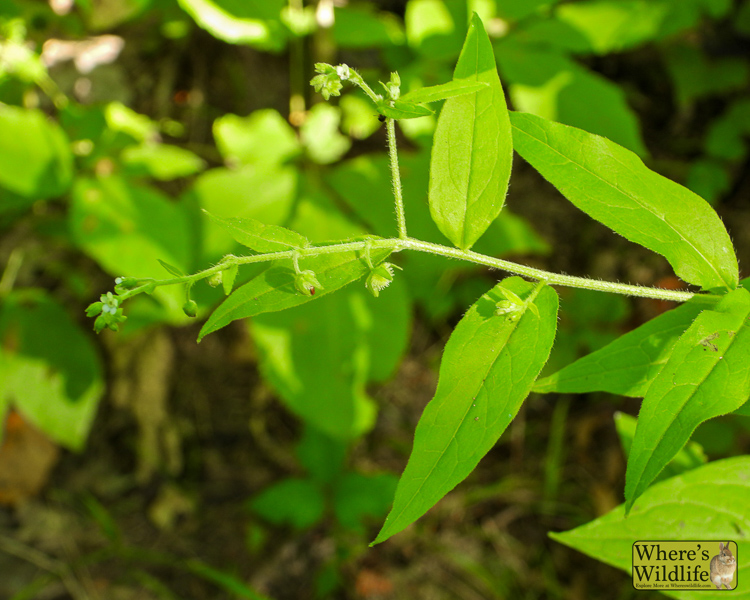
Leaves have smooth edges and taper at both ends. Lower leaves have short stalks, while upper ones become smaller and stalkless. Include several levels of the plant in the photo series.
The fruit divides into four parts with clinging prickles. Photograph an attached cluster from more than one angle to show the surface details and its position along the branch.
Virginia Stickseed has prickles across the outer nutlet surfaces. In Nodding Stickseed, they are concentrated along the nutlet edges. A sharp fruit close-up is more useful than flower color alone.
Study the photographs and field notes for Stickseed, then practice identifying this and other wildflowers in the quiz.
Explore wildlife guides, educational posters, and PNG clipart. Use the filters to narrow your results.