Explore photographed sightings and their locations.
View photos & full species guideHide photos & full species guide
Field photographs
Compare flowers, foliage and the plant in its habitat. Select any photo to enlarge it.
Southern Blueflag’s violet flower against a smooth water background.
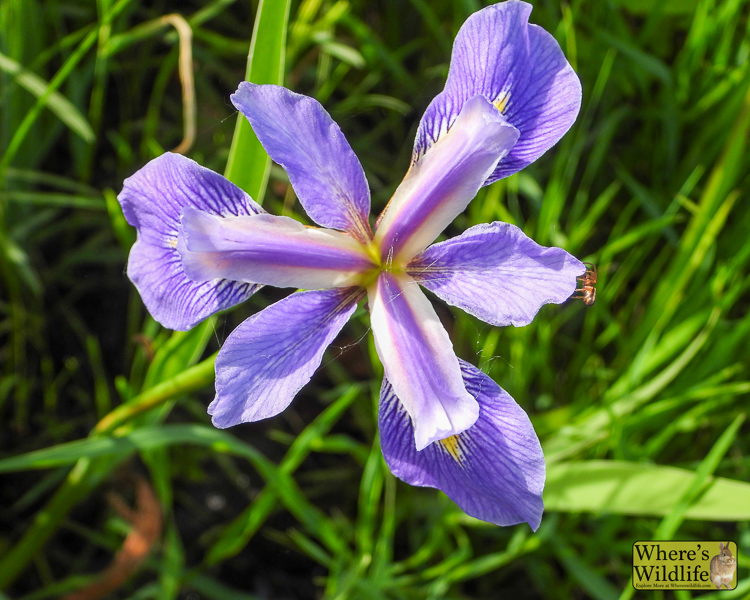
Southern Blueflag’s violet flower viewed from above.
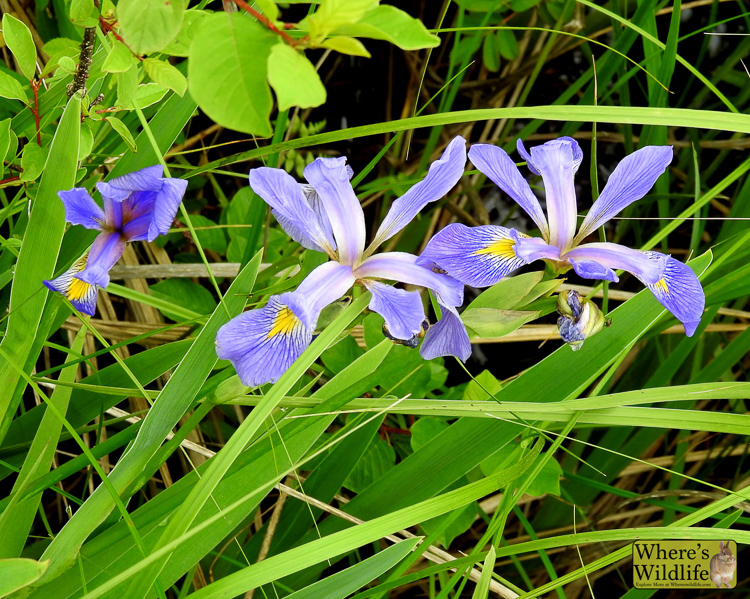
Southern Blueflag’s pale violet flowers above long green leaves.
Southern Blueflag blooming among grasses and leafy stems.
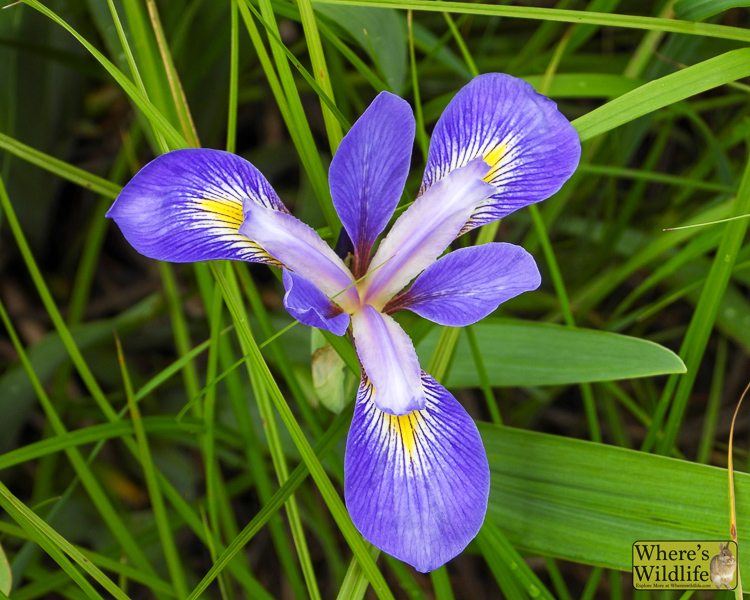
Southern Blueflag’s veined petals with yellow markings.
Southern Blueflag’s deep violet flower among narrow leaves.
How to recognize it
Include the fan of sword-shaped leaves
Long, smooth-edged leaves rise from the base, with parallel veins and gradually pointed tips. Step back enough to show how the flowering stalk sits among the foliage.
Where and when to look
Wetland Wildflower Blooms: June – July
Habitat: Southern Blueflag prefers wet to moist conditions with partial to full sun and a rich organic soil. Look for Southern Blueflag wet to moist black soil prairies, prairie swales, soggy meadows along rivers, open bottomland woodlands, swamps, fens, seeps, edges of ponds and streams, ditches, and low-lying ground along railroads and roadsides.
Range & sightings
Native to parts of North America, including the United States.
Reported U.S. distribution AL, AR, DC, FL, GA, IA, IL, IN, KS, KY, LA, MD, MI, MN, MO, MS, NC, NE, NY, OH, OK, PA, SC, TN, TX, VA, WI, WV
State records describe documented distribution, not presence in every county. A state record alone does not establish that every population there is native. The observation map shows reported sightings and may include cultivated plants.
Observations show reported sightings; they do not define the plant’s complete native range.
A closer look
The broad outer parts are sepals
Three spreading sepals carry yellow-and-white markings and purple veins. They lack the tufted beard found on many garden irises. Photograph the marked area clearly.
Style branches arch above the sepals
A petal-like style branch lies over each broad sepal, forming a passage beneath it. A side view reveals this layered structure and distinguishes it from the more upright petals.
Three-angled capsules follow the flowers
Elongated capsules replace the blooms and eventually split to release seeds. Pair a fruit close-up with a wider view of the leafy clump to document the plant after flowering.
Use more than blue-violet color for identification
Northern Blueflag can look very similar. Record location, leaves, flower structure and mature capsules together; a single flower portrait may not settle the distinction.
Study the photographs and field notes for Southern Blueflag, then practice identifying this and other wildflowers in the quiz.
Southern Blueflag clipart
Transparent PNG clipart. Select a design for file specifications, licensing and download details. Purchased files do not include the preview watermark.
Clipart savings: 1–5 files $1.99 each · 6–10 files $1.66 each · 11+ files $1.25 each. Discounts are applied automatically to eligible clipart in the cart.