WHERE’S WILDLIFE • WILDFLOWER FIELD GUIDE

Snowdrop

Galanthus nivalis
NON-NATIVE • WILDFLOWER

At a glance

Family   Amaryllidaceae
Life cycle   Bulb · Perennial
Blooms   Winter · Spring
Height   4 in – 10 in
Light & soil   Full sun; Partial Shade · Good Drainage; Occasionally Wet

Common names
Snowdrop · Common Snowdrop · Snowdrops

Bloom season is a general guide; timing and mature height vary by region and conditions. Sources: NC State Extension.

Range Map

Explore photographed sightings and their locations.

View photos & full species guideHide photos & full species guide

Field photographs

Compare flowers, foliage and the plant in its habitat. Select any photo to enlarge it.

How to recognize it

Follow the field marks

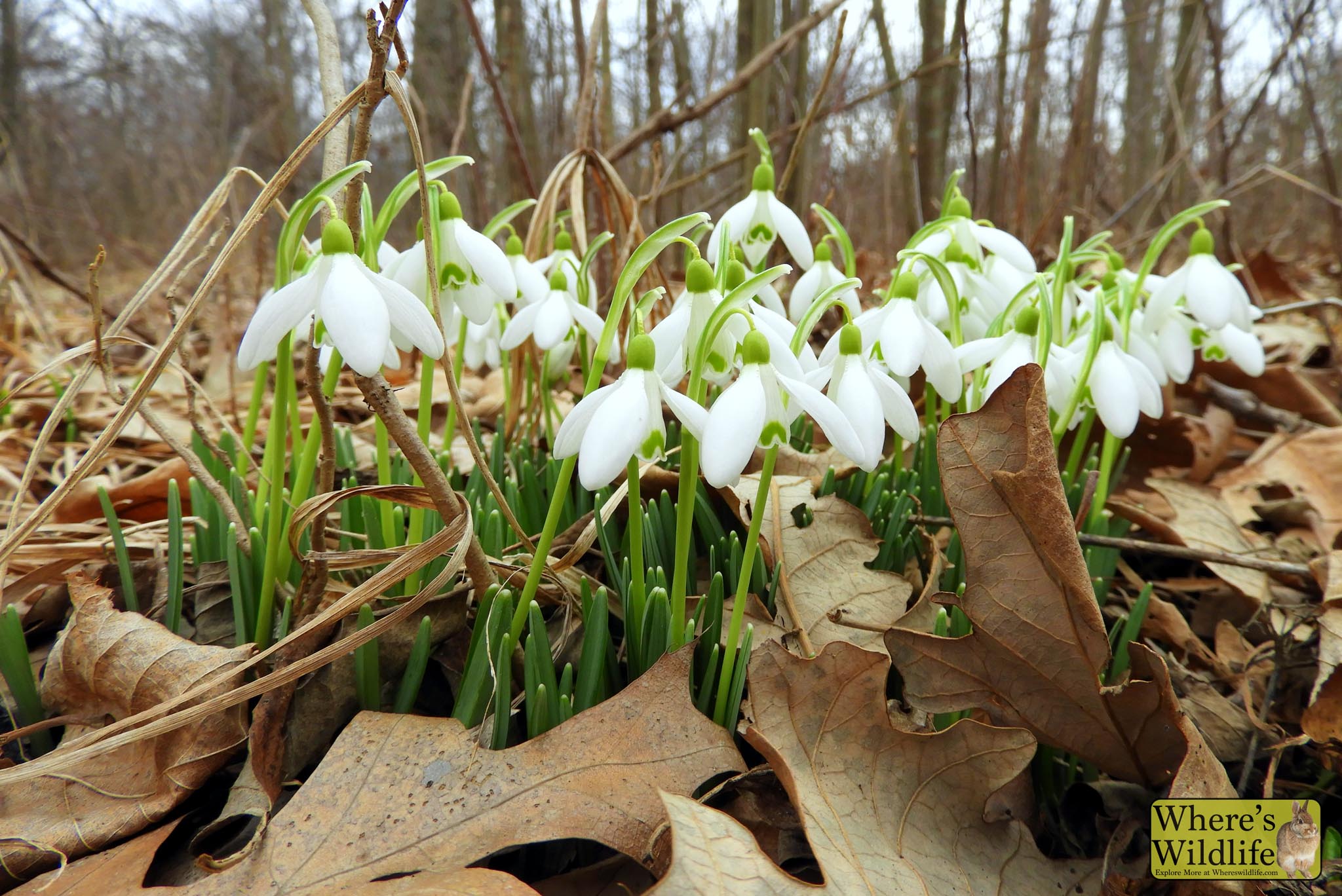
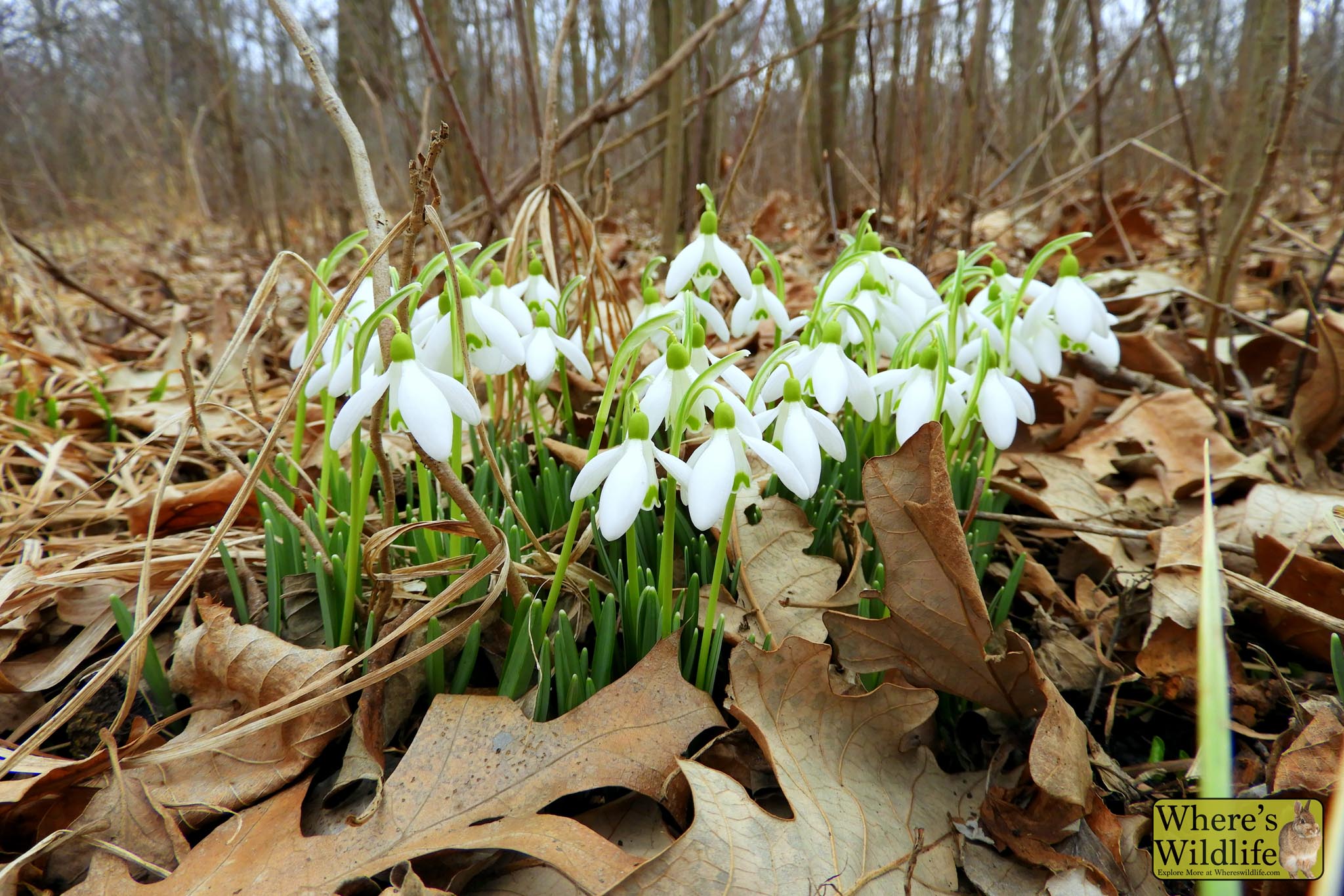
Flowers: Three long outer tepals surround three shorter inner ones with green markings near their notched tips.

Growth: Strap-like leaves emerge at ground level beside a leafless flower stalk. Typical plants are only a few inches tall. [1, 2]

Where and when to look

Look around gardens, old home sites and naturalized woodland plantings. Well-drained, organic soils in sun or partial shade suit it. In the Midwest, flowering occurs very early in spring; dates shift with weather and location. [1, 2]

Range & sightings

Non-native in the United States; introduced populations are documented here.

Reported U.S. distribution
DC, DE, MA, MD, NC, NJ, NY, OH, PA, RI, UT, VA, WA

State records describe documented distribution, not presence in every county. A state record alone does not establish that every population there is native. The observation map shows reported sightings and may include cultivated plants.

Distribution source: USDA PLANTS.

Observations show reported sightings; they do not define the plant’s complete native range.

A closer look

Six tepals in two unequal sets

Tepals are the flower’s petal-like segments. In a typical Common Snowdrop, the three outer segments form the bell’s outline while the shorter inner segments carry the familiar green marks. [2]

A low side view is useful for seeing both sets. Compare several flowers; cultivated double forms can have extra segments. [1]

A short season above ground

The foliage remains after bloom and then dies back naturally. Snowdrops can grow beneath deciduous trees, where spring light reaches them before the canopy fills out. [1]

Record the same patch during flowering and again as the leaves fade. Its disappearance above ground does not mean the perennial bulbs have vanished.

How a clump grows

Bulb offsets and seeds can produce new plants, gradually creating clumps. Bees pollinate the flowers. [2]

Look at the spacing between flowering stems and compare the patch in successive years. Note whether nearby plants flower at the same time or whether sunnier spots start earlier; these observations help separate seasonal timing from plant identity.

Snowdrop or snowflake?

Snowflakes (Leucojum) also have dangling white flowers with green marks, but their six tepals are similar in length. A snowdrop has a conspicuous long outer set and short inner set. Giant Snowdrop generally has broader leaves than Common Snowdrop. [1]

Keep learning

Study the photographs and field notes for Snowdrop, then practice identifying this and other wildflowers in the quiz.

Share this:

Like this:

Like Loading…