How to recognize it
Key identification clues
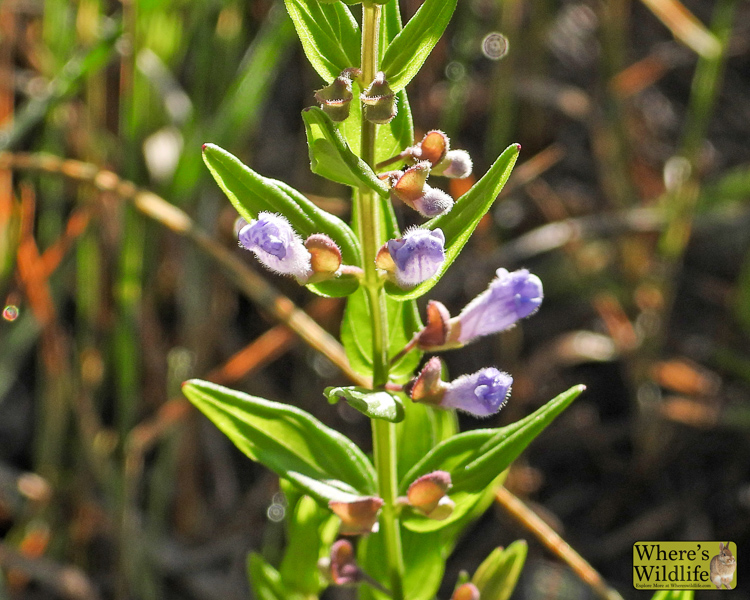
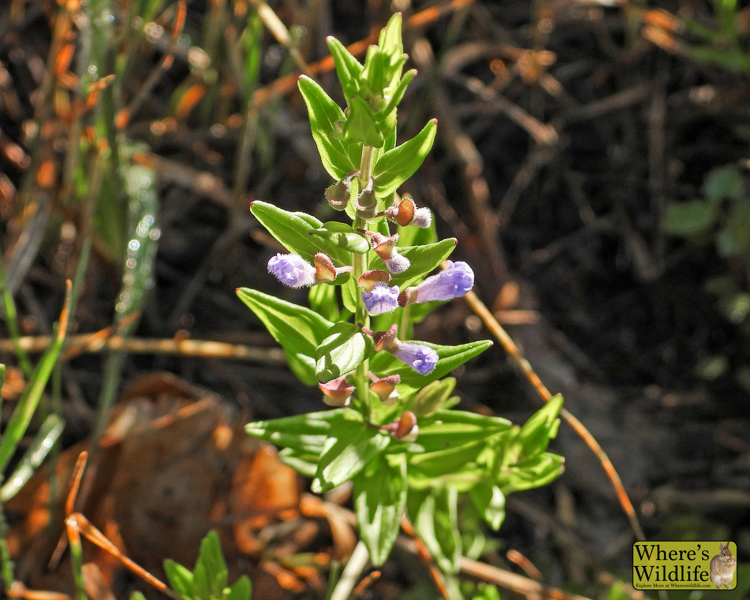
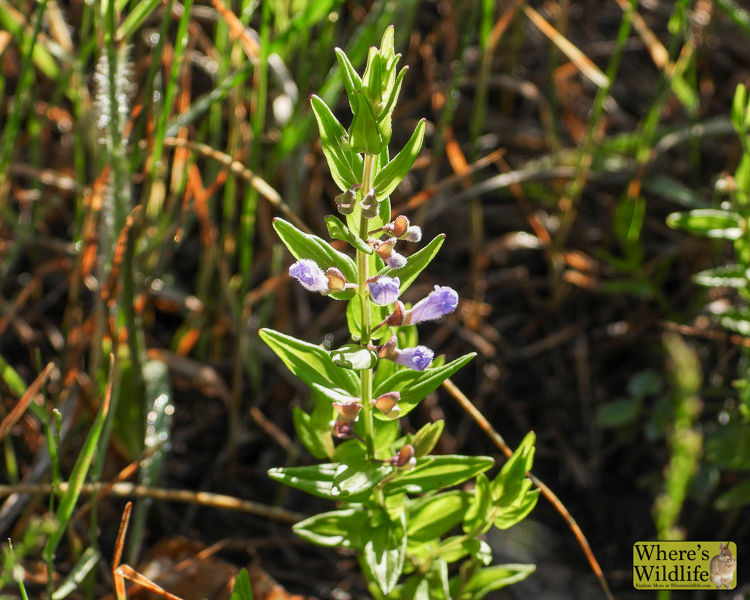
Look for opposite, small, mostly toothless leaves with edges rolled under, and blue-violet flowers in upper leaf axils. Fine non-glandular hairs cover the calyx; the upper flower lip forms a small hood.


Family Lamiaceae · mint family
Life cycle Perennial
Blooms May–July (Upper Midwest)
Height 4–8 inches
Light & habitat Part shade, sun; average to dry sandy soil; prairies, savannas, open woods, bluffs, rock outcrops
Common names
Small Skullcap
Bloom timing and mature height vary with location and growing conditions. Sources: Minnesota Wildflowers.
Explore photographed sightings and their locations.
Compare flowers, foliage and the plant in its habitat. Select any photo to enlarge it.


Look for opposite, small, mostly toothless leaves with edges rolled under, and blue-violet flowers in upper leaf axils. Fine non-glandular hairs cover the calyx; the upper flower lip forms a small hood.
Prairie Wildflower
Blooms: May – July
Habitat: Small Skullcap prefers full to partial sun with dry conditions and shallow soil containing some sandy or rocky material. Look for Small Skullcap in hill prairies, upland prairies, gravel and sand prairies, barren savannas, thinly wooded bluffs and slopes, rock ledges, limestone glades, and abandoned fields.
Native to parts of North America, including the United States.
Reported U.S. distribution
AL, AR, CT, DC, DE, GA, IA, IL, IN, KS, KY, LA, MA, MD, ME, MI, MN, MO, MS, NC, ND, NE, NJ, NY, OH, OK, PA, SD, TN, TX, VA, WI, WV
State records describe documented distribution, not presence in every county. A state record alone does not establish that every population there is native. The observation map shows reported sightings and may include cultivated plants.
Distribution source: USDA PLANTS. USDA lists this plant as Scutellaria parvula Michx. var. missouriensis (Torr.) Goodman & C.A. Lawson.
Observations show reported sightings; they do not define the plant’s complete native range.
Look at the small raised projection on the upper side of the calyx, beneath the flower. A side photograph can show this skullcap feature more clearly than a straight-on view of the petals.
Plants may produce inconspicuous self-pollinating flowers instead of showy blue ones. These are called cleistogamous flowers. The absence of open blue petals does not necessarily mean flowering has finished.
The calyx enlarges around four nutlets. Compare flowering and fruiting stems without removing them; the changing calyx offers a way to follow reproduction on a plant only a few inches tall.
Scutellaria parvula in the narrower sense has glandular hairs and more oval leaves with more side veins. This plant is also treated as S. parvula var. missouriensis in some references. A hand lens and regional key help resolve the distinction.
Study the photographs and field notes for Small Skullcap, then practice identifying this and other wildflowers in the quiz.
Explore wildlife guides, educational posters, and PNG clipart. Use the filters to narrow your results.