How to recognize it
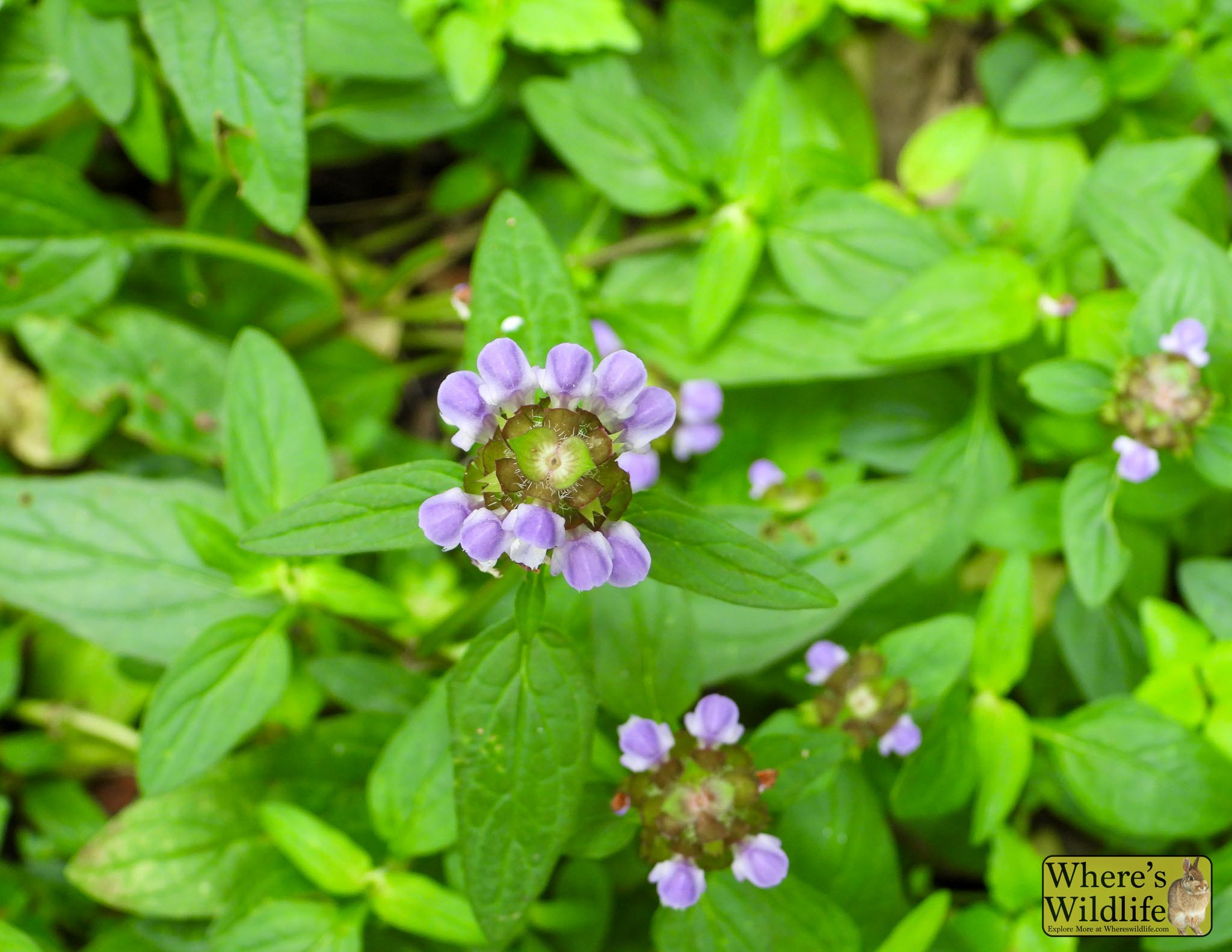
Look at the compact flower spike
The thick, short spike contains both open flowers and persistent green-to-purple cups. Photograph the full cluster along with the upper leaves to show its compact form.
Family Lamiaceae · mint family
Life cycle Perennial
Blooms June–October (Upper Midwest)
Height 6–20 inches
Light & habitat Part shade, sun; roadsides, open woods, fields
Common names
Self Heal · Heal-all
Bloom timing and mature height vary with location and growing conditions. Sources: Minnesota Wildflowers.
Explore photographed sightings and their locations.
Compare flowers, foliage and the plant in its habitat. Select any photo to enlarge it.
The thick, short spike contains both open flowers and persistent green-to-purple cups. Photograph the full cluster along with the upper leaves to show its compact form.
Blooms: June – October
Habitat: Self Heal prefers full to partial sun and moist to mesic conditions. Look for Self Heal in moist black soil prairies, meadows near rivers and streams, thickets, woodland openings, woodland borders, pastures, and abandoned fields.
Native to parts of North America, including the United States.
Reported U.S. distribution
AK, AL, AR, AZ, CA, CO, CT, DC, DE, FL, GA, HI, IA, ID, IL, IN, KS, KY, LA, MA, MD, ME, MI, MN, MO, MS, MT, NC, ND, NE, NH, NJ, NM, NV, NY, OH, OK, OR, PA, RI, SC, SD, TN, TX, UT, VA, VT, WA, WI, WV, WY
State records describe documented distribution, not presence in every county. A state record alone does not establish that every population there is native. The observation map shows reported sightings and may include cultivated plants.
Distribution source: USDA PLANTS.
Observations show reported sightings; they do not define the plant’s complete native range.
The darker upper lip curves over the stamens and style. The lower lip has three lobes, with a fringed middle lobe. A low frontal view reveals these details.
Lower leaves have longer stalks, while the upper leaves may be nearly stalkless. Include successive pairs and the angled stem to show this change along the plant.
After the colorful corolla falls, the persistent calyx can hold four one-seeded nutlets. Compare a fresh spike with an older one to follow the transition from flower to fruit.
Self Heal includes forms with narrower and broader leaves, and hairiness varies. Photograph mature leaves and stems clearly; the common name or a single purple flower does not establish the variety.
Study the photographs and field notes for Self Heal, then practice identifying this and other wildflowers in the quiz.
Explore wildlife guides, educational posters, and PNG clipart. Use the filters to narrow your results.