Family Sapindaceae · soapberry family GenusAesculus Life cycle Deciduous tree Blooms Spring, often May Height Usually 20–40 feet Habitat Rich woods and stream valleys
Explore reported observations. Sightings are not a complete range map.
View photos & full species guideHide photos & full species guide
Field photographs
12 field photographs. Select a photograph to enlarge it.
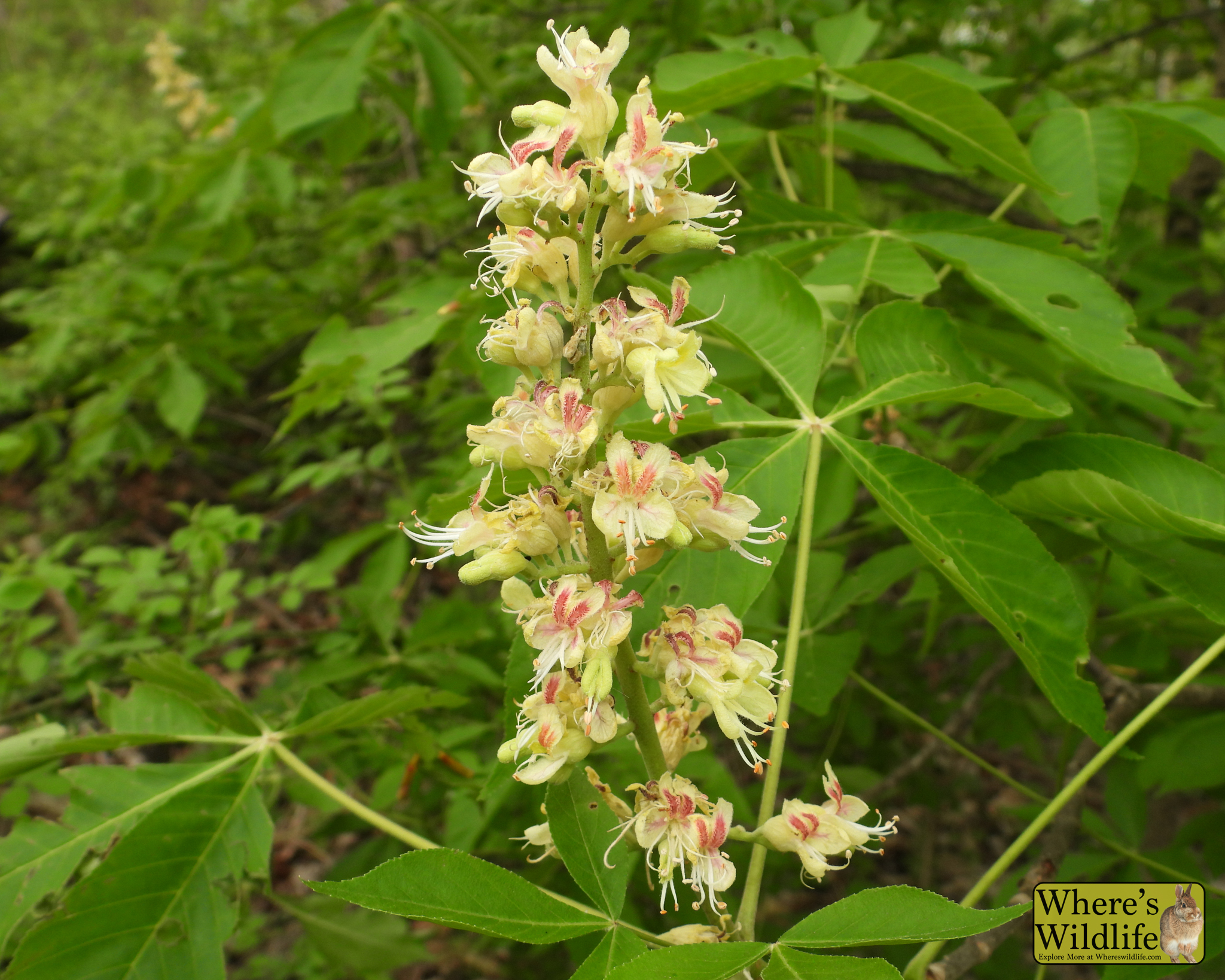
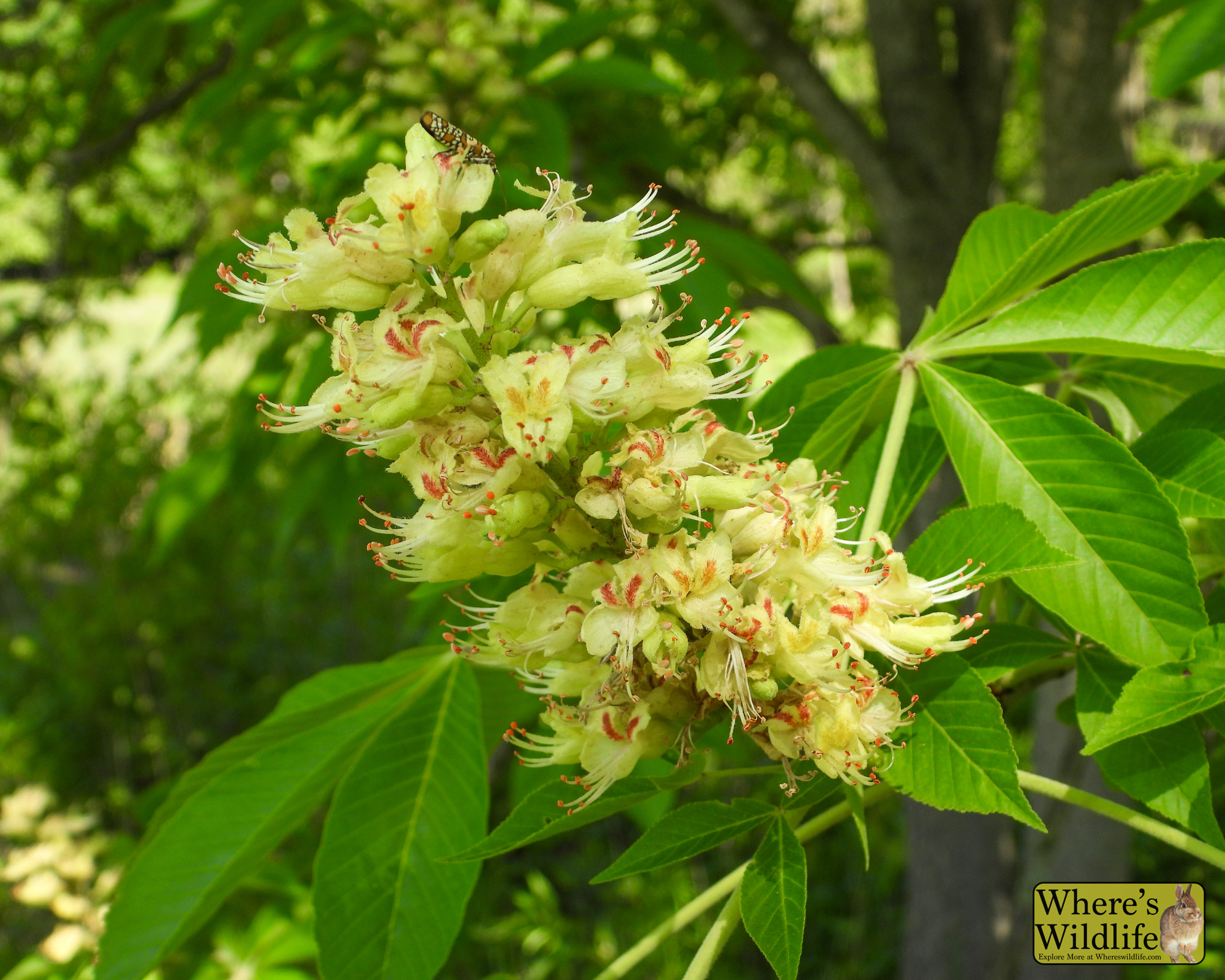
Ohio Buckeye: flowers and foliage.
Ohio Buckeye: palmately compound leaves.
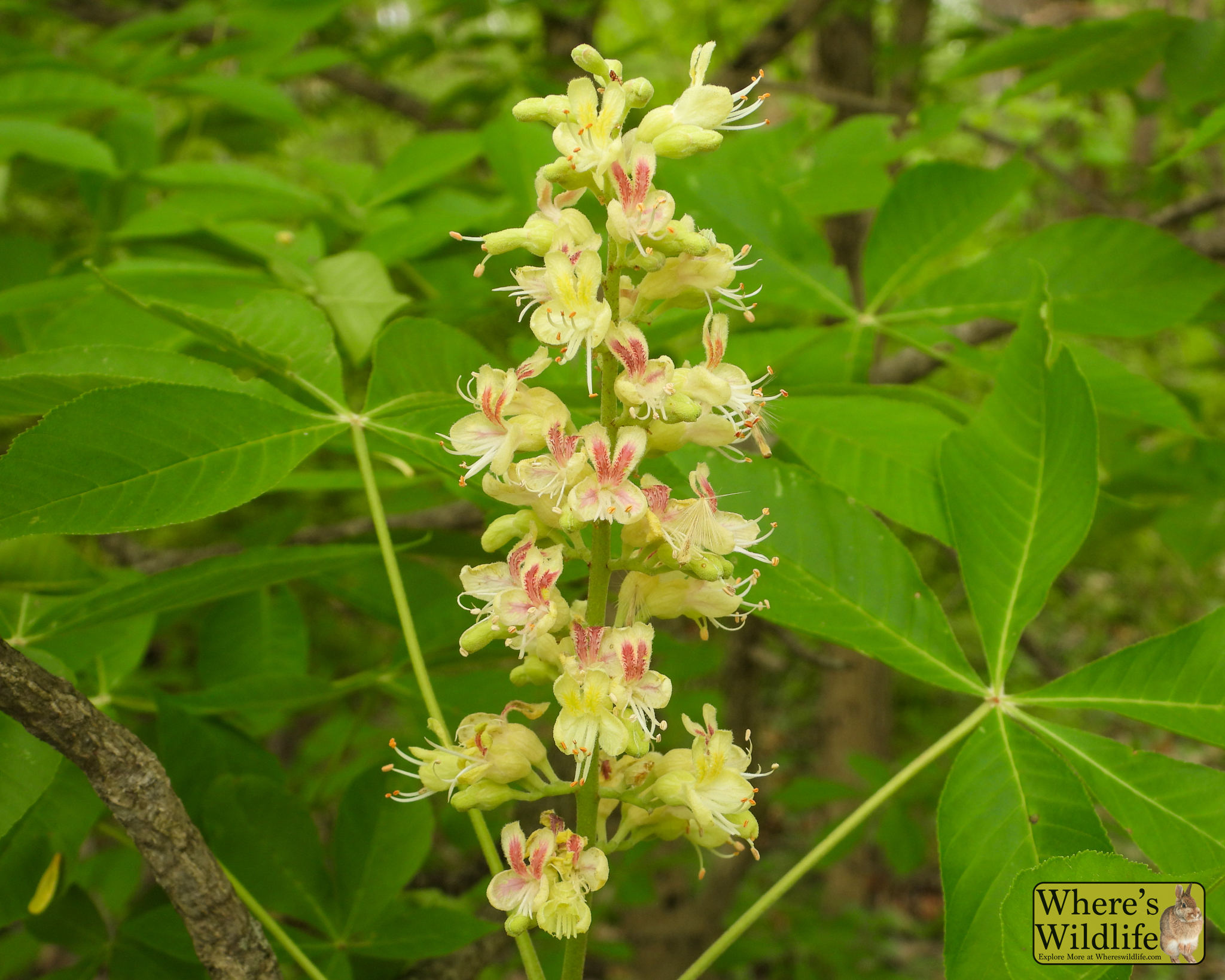
Ohio Buckeye: spring flower cluster.
Ohio Buckeye: upright flower cluster.
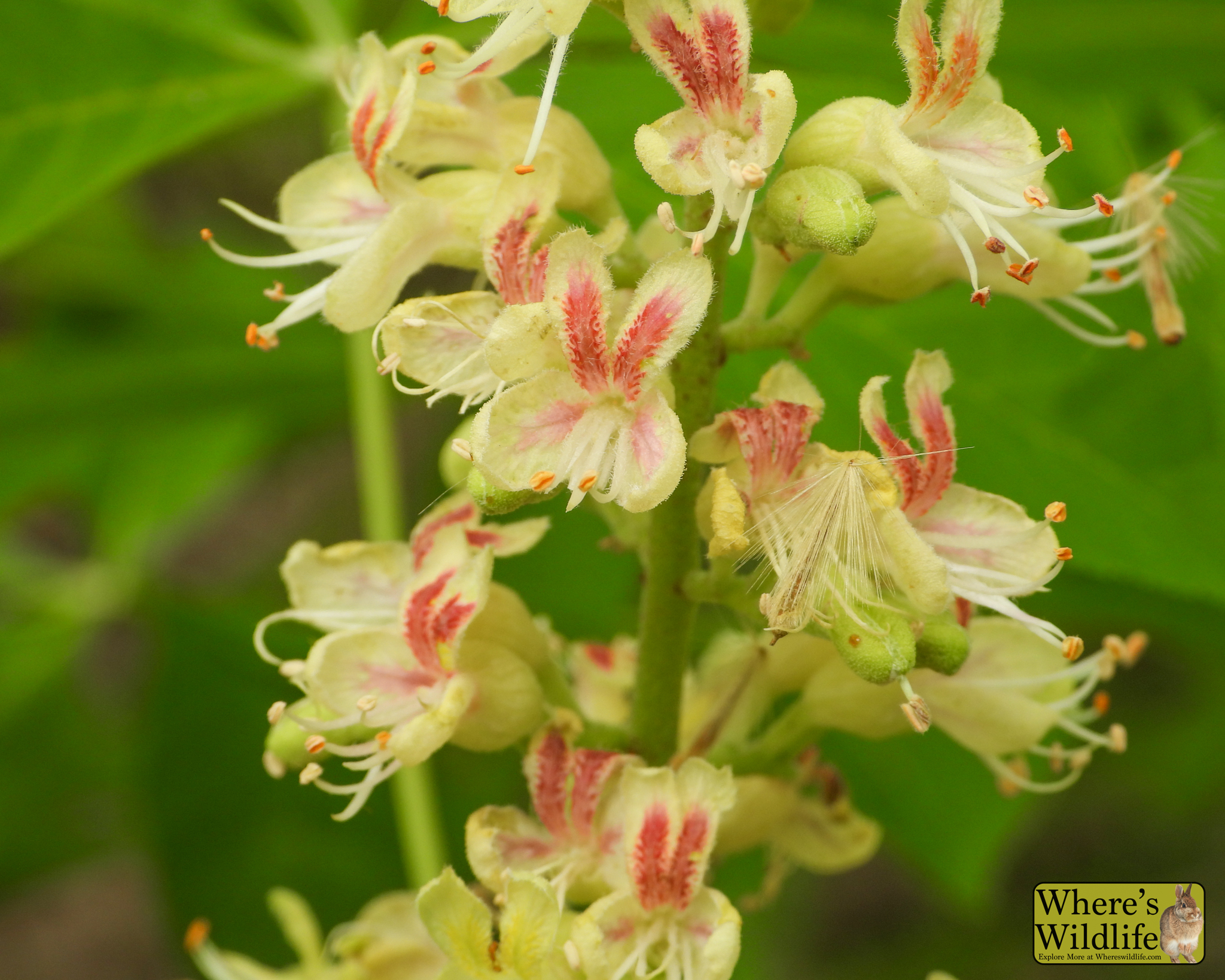
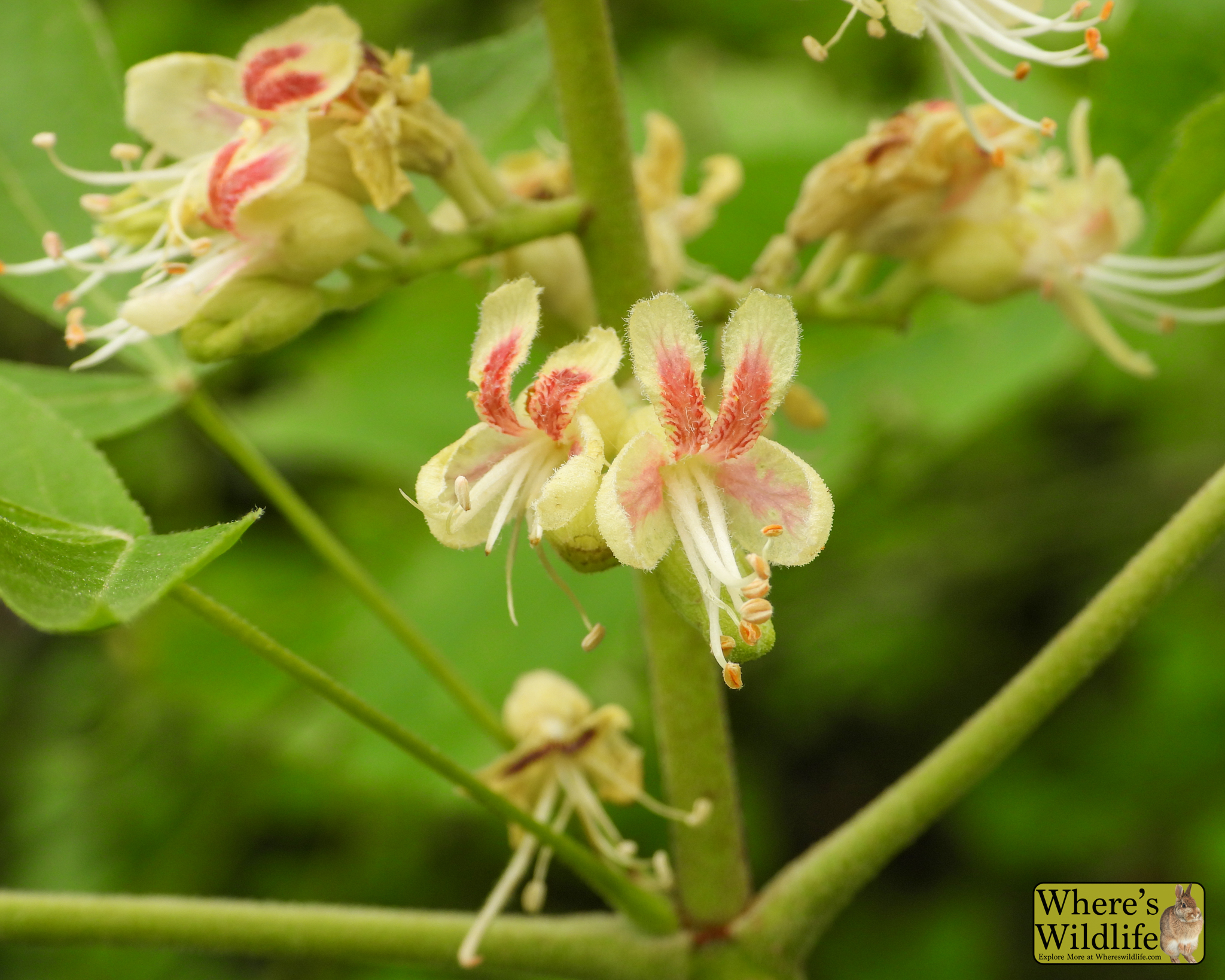
Ohio Buckeye: close view of flowers.
Ohio Buckeye: flower detail.
Ohio Buckeye: flower cluster above leaves.
Ohio Buckeye: compound leaf.
Ohio Buckeye: leaves on a branch.
Ohio Buckeye: glossy brown seeds.
Ohio Buckeye: developing capsules and foliage.
Ohio Buckeye: open capsules and seeds.
How to recognize it
Toothed leaflets spread from one point.
Leaves & stems
Each leaf has five to seven toothed leaflets spreading from a central point, like fingers on a hand. The leaves grow in opposite pairs along the twig.
Upright clusters at the ends of branches.
Flowers
Upright, branching clusters of pale yellow-green flowers grow at the twig tips. Each flower has four petals, with slender stamens extending beyond them.
Brown seeds with pale attachment scars.
Fruits & seeds
Warty or prickly capsules enclose glossy brown seeds. Each seed has a pale attachment scar, giving it the familiar “buckeye” appearance.
Compare the two buckeyes
Ohio Buckeye is a tree with pale yellow-green spring flowers. Bottlebrush Buckeye forms a spreading shrub with long, white bottlebrush-like clusters in early to midsummer. Both have opposite, palmately compound leaves; flower structure and growth form are more useful than leaflet count alone.
Ohio Buckeye
Cream to yellow-green flowers in upright spring clusters.
Bottlebrush Buckeye
Long white stamens give the clusters a bottlebrush appearance.
Range & sightings
Look for spring flowers on low branches in rich woodland and along stream valleys. Trees are also planted in parks. Bloom dates vary with weather and location.
Southeastern Canada and the central and eastern United States; also planted outside its natural range.
Reported U.S. distribution AL, AR, GA, IL, IN, IA, KS, KY, ME, MD, MI, MN, MS, MO, NE, NH, NJ, NY, OH, OK, PA, TN, TX, WV
State records describe documented distribution, not presence in every county. The observation map shows reported sightings and may include cultivated plants.