WHERE’S WILDLIFE • WILDFLOWER FIELD GUIDE

Nodding Bur-Marigold

Bidens cernua
NATIVE • WILDFLOWER

At a glance

Family   Asteraceae · aster family
Life cycle   Annual
Blooms   August–October in the Upper Midwest
Height   Commonly 6–36 inches
Habitat   Muddy shores, shallow marshes, wet meadows and ditches in sun or partial shade

Common names
Nodding Bur-Marigold · Nodding Beggarticks

Sightings map

Explore photographed observations and their locations.

View photos & full species guideHide photos & full species guide

Field photographs

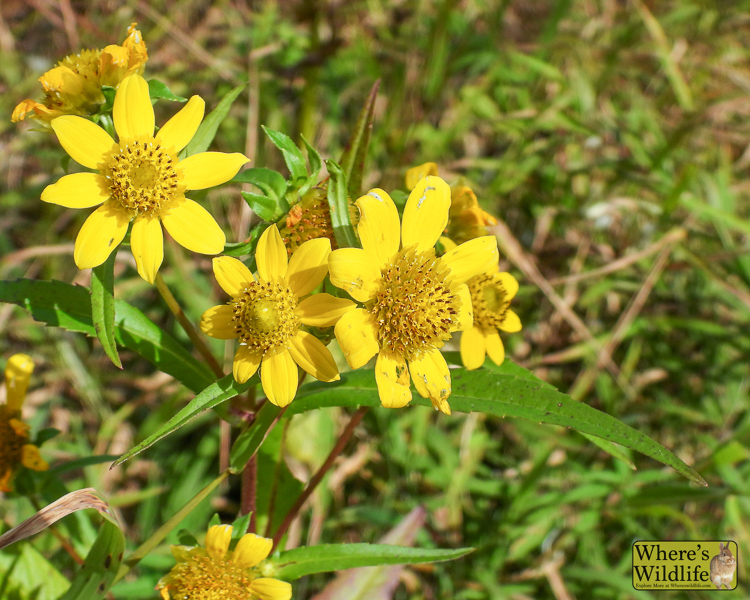
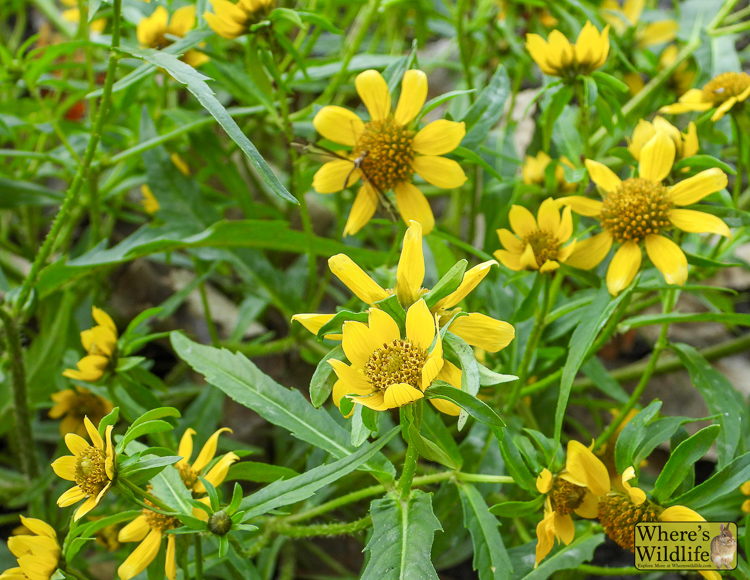
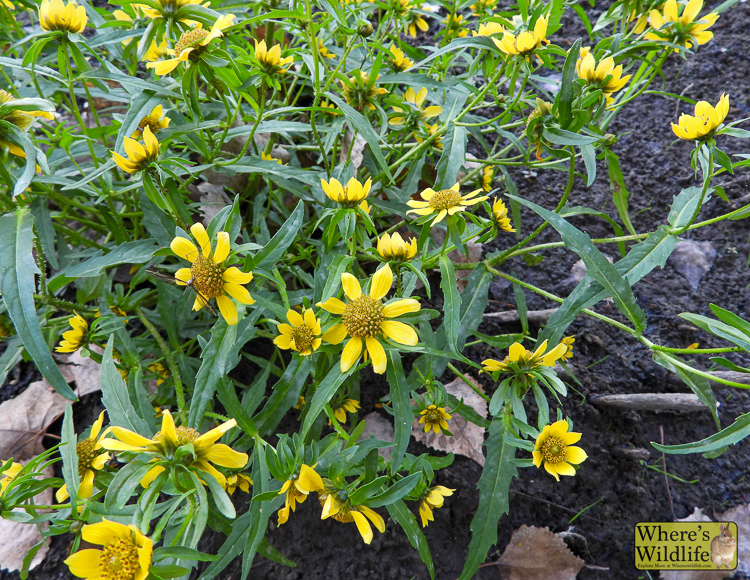
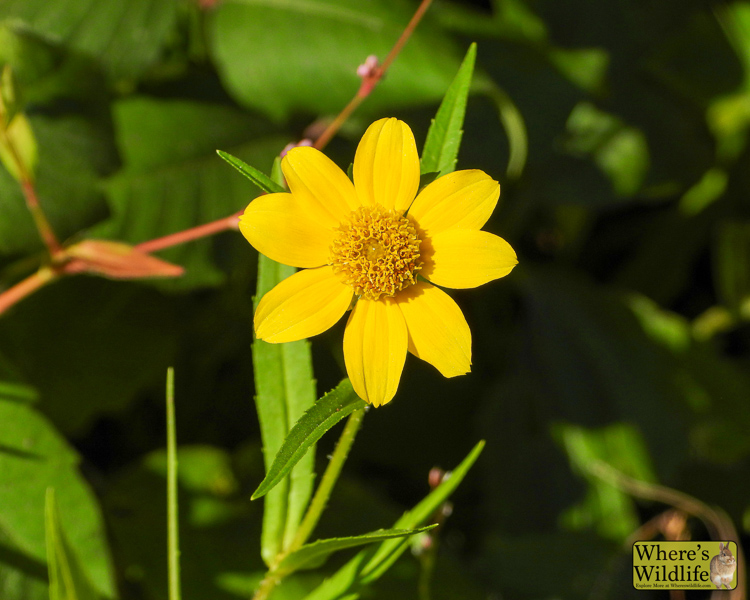
Seven field photographs by Brian Woolman. Select an image to enlarge it and move between views of the heads, leaves and wetland habitat.

How to recognize Nodding Bur-Marigold

Start at a leaf pair on the main stem, then look at flower heads of different ages. A fresh head may still be upright while a nearby older head already points toward the ground.

When the head begins to nod

The flower stalk often bends just below the head as the fruits mature. On a younger plant, the narrow leaves give a better clue. Each leaf has a single, pointed blade with small teeth along its edges.

At the water’s edge

Look along the shallow edge of a pond, a muddy streambank or an opening in a marsh. This wetland annual can bloom with its lower stems standing in water. On an exposed shore, the same plant may grow directly out of wet mud.

Two leaves meet the stem

In this photograph the open water makes the leaf pairs easy to see. Follow the two blades to the same point on the reddish stem. Their stalkless bases can almost meet around it.

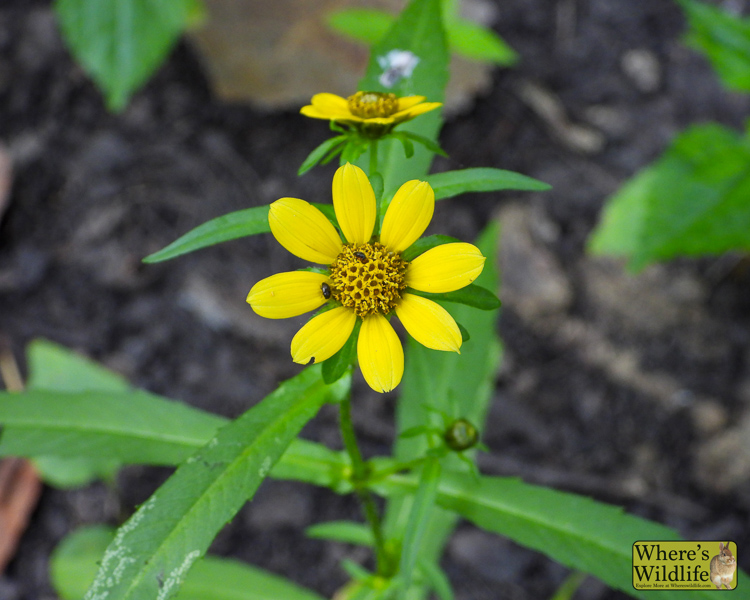
A head in fresh bloom

Broad yellow rays surround a slightly domed center made of many tiny disk flowers. Some plants produce very short rays or lack them altogether. The leaf pairs are still visible on those plants.

Green bracts below the rays

Look at the heads turned sideways. The narrow green structures immediately below each head are bracts. They vary in length and spread or curl away from the base of the head.

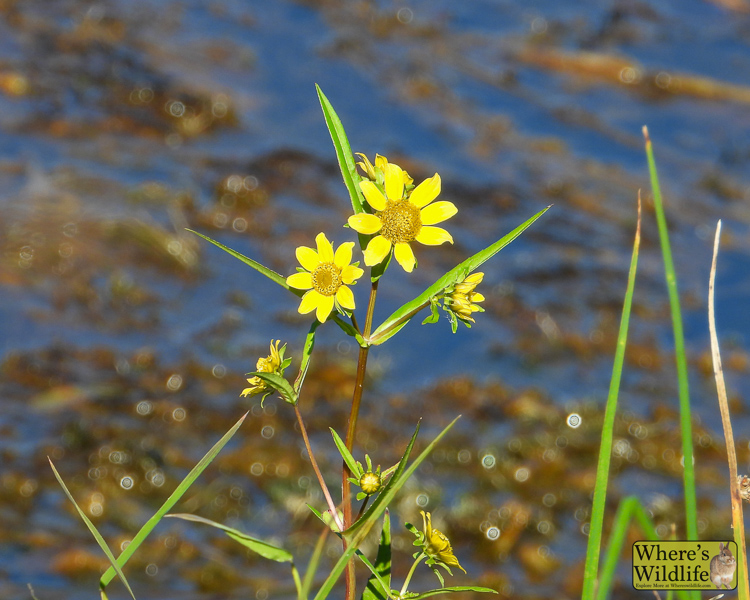
Flowering in shallow water

Here the plants rise through a mat of floating vegetation. Trace a stem from the waterline up to its flowers to separate the bur-marigold’s paired leaves from the blades of surrounding grasses or sedges.

The first two cards use AI-generated watercolors based on Brian Woolman’s photographs. The detail cards, gallery and leaf comparison use his original field photographs.

Leaf comparison with Bearded Beggarticks

Both species can carry showy yellow heads in late summer. Pick one leaf and trace it from the stem to the tip.

Nodding Bur-Marigold

In Bidens cernua, each toothed leaf is one continuous blade attached directly to the stem.

Bearded Beggarticks

In Bidens aristosa, each leaf has a stalk and divides into several narrow, toothed segments.

Through the season

As the rays fade, check whether the older heads tilt down. Their dark, four-angled fruits often bear four slender points called awns. Tiny backward-facing barbs on the awns help a fruit catch on fur or clothing. A side view records the nod, while a close-up of a ripe fruit shows the awns.

Range & sightings

Nodding Bur-Marigold is native across much of North America, including Wisconsin and Illinois. Its native range also extends through parts of Europe and Asia.

Reported U.S. distribution
AK, AL, AR, AZ, CA, CO, CT, DC, DE, GA, IA, ID, IL, IN, KS, KY, LA, MA, MD, ME, MI, MN, MO, MT, NC, ND, NE, NH, NJ, NM, NV, NY, OH, OK, OR, PA, RI, SD, TN, TX, UT, VA, VT, WA, WI, WV, WY

State records describe documented distribution, not presence in every county. A state record alone does not establish that every population there is native. The observation map shows reported sightings and may include cultivated plants.

Distribution source: USDA PLANTS.

Observation coverage varies by location and season.

Keep learning

Practice recognizing Nodding Bur-Marigold in the wildflower quiz, or explore other wetland plants in the guide.

Share this:

Like this:

Like Loading…