WHERE’S WILDLIFE • WILDFLOWER FIELD GUIDE

Large-leaved Aster

Eurybia macrophylla

Pronunciation (approximate): yoo-RIB-ee-uh mak-roh-FIL-uh

NATIVE • WILDFLOWER

At a glance

Family: Asteraceae
Genus: Eurybia
Life cycle: Perennial
Bloom time: Late summer into fall
Height: 1–4 feet
Habitat: Woodland understory and clearings

Common names: Large-leaved Aster · Bigleaf Aster

Sightings map

Explore places where people have reported this species.

View photos & full species guideHide photos & full species guide

Field photographs

Compare flowers, foliage and the plant in its habitat. Select any photo to enlarge it.

How to recognize it

Start with the lowest leaves

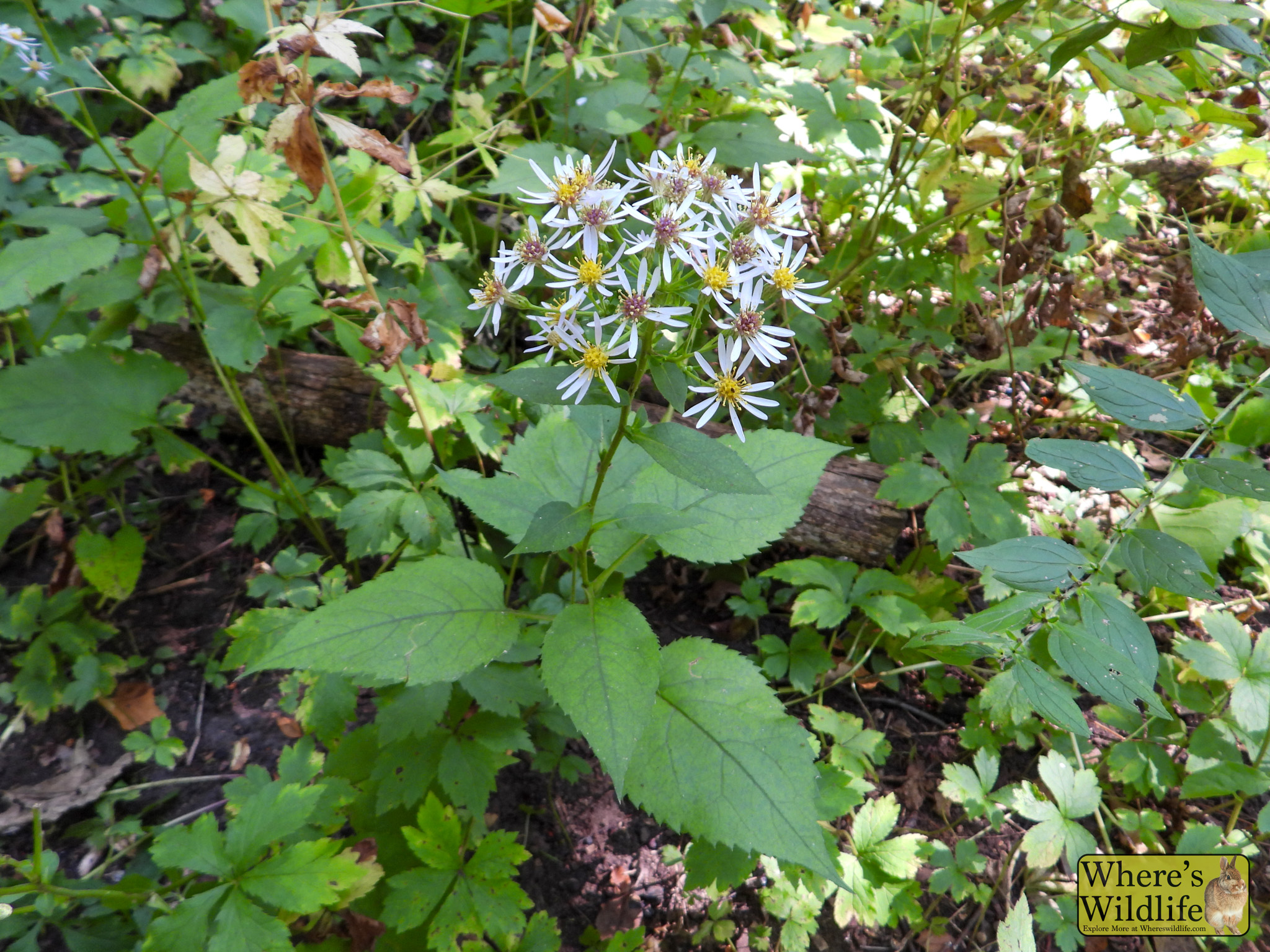
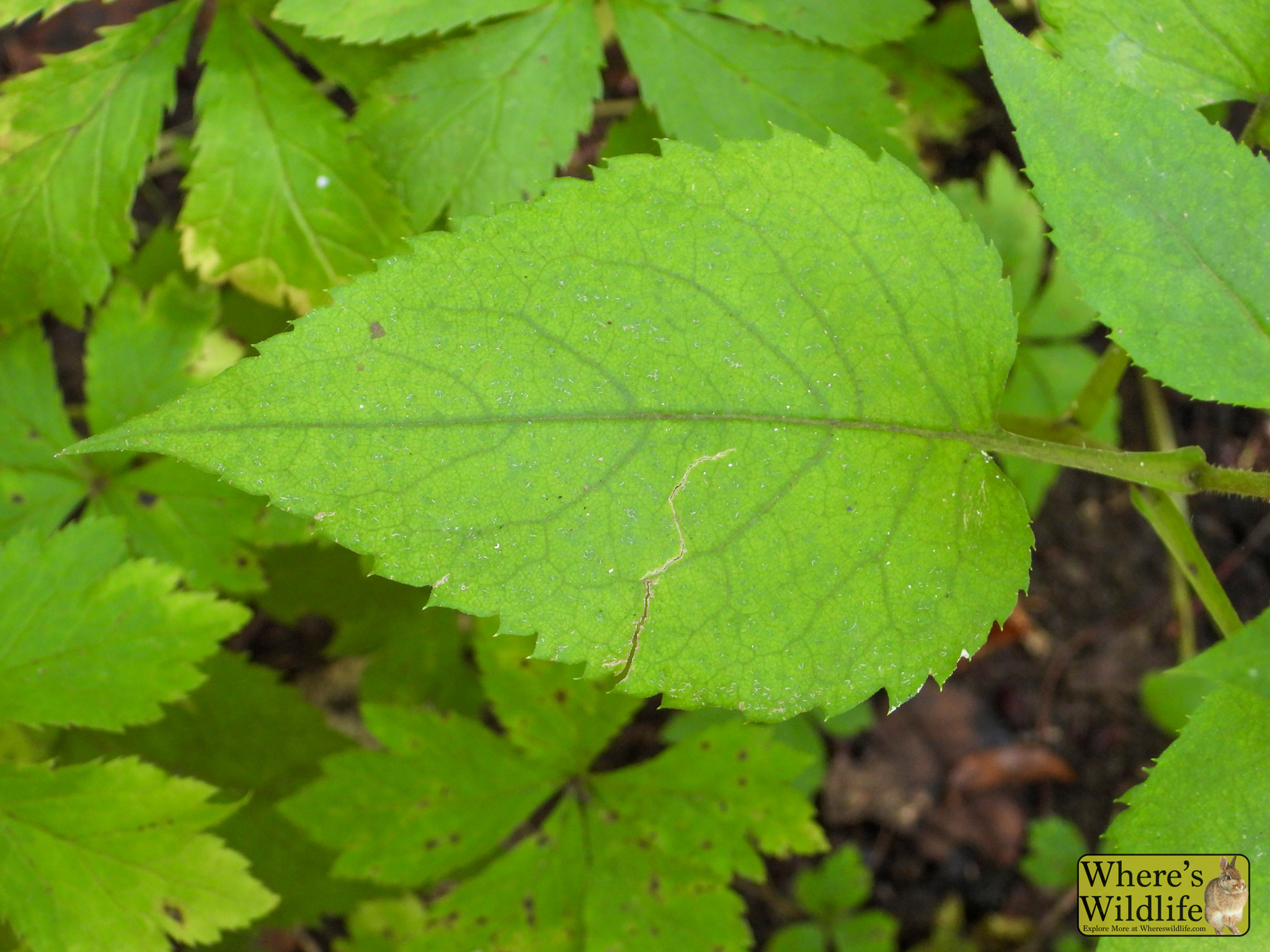
Look near the ground for large, long-stalked leaves with a heart-shaped base and toothed edges. The leaves become smaller higher on a flowering stem. Many shoots in a patch may carry only leaves.

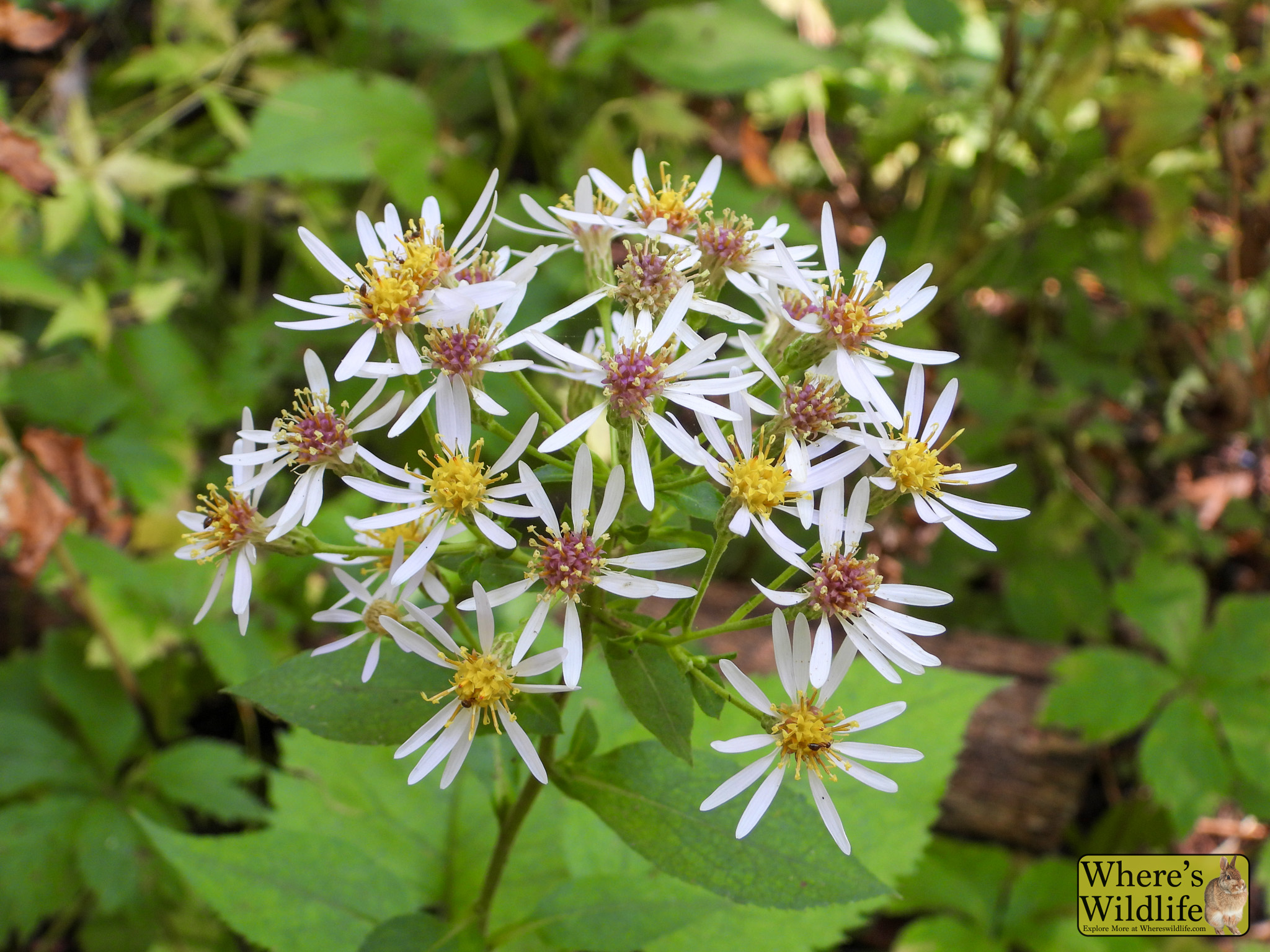
The loose clusters of pale violet to white flower heads rise above the foliage. With a hand lens, look for tiny gland-tipped hairs on the stalk immediately beneath each head.

Identification source: University of Waterloo Astereae Lab.

Where and when to look

Look along woodland paths and in openings among hardwoods or mixed conifers. Patches of broad leaves can be conspicuous well before the flowering stems appear in late summer.

A closer look

Flower heads

Slender rays surround disks that turn from yellow to reddish purple as the heads age.

Leaf margin

Sharp teeth line the margin of this leaf. For identification, also check the base of a leaf growing near the ground.

Woodland habit

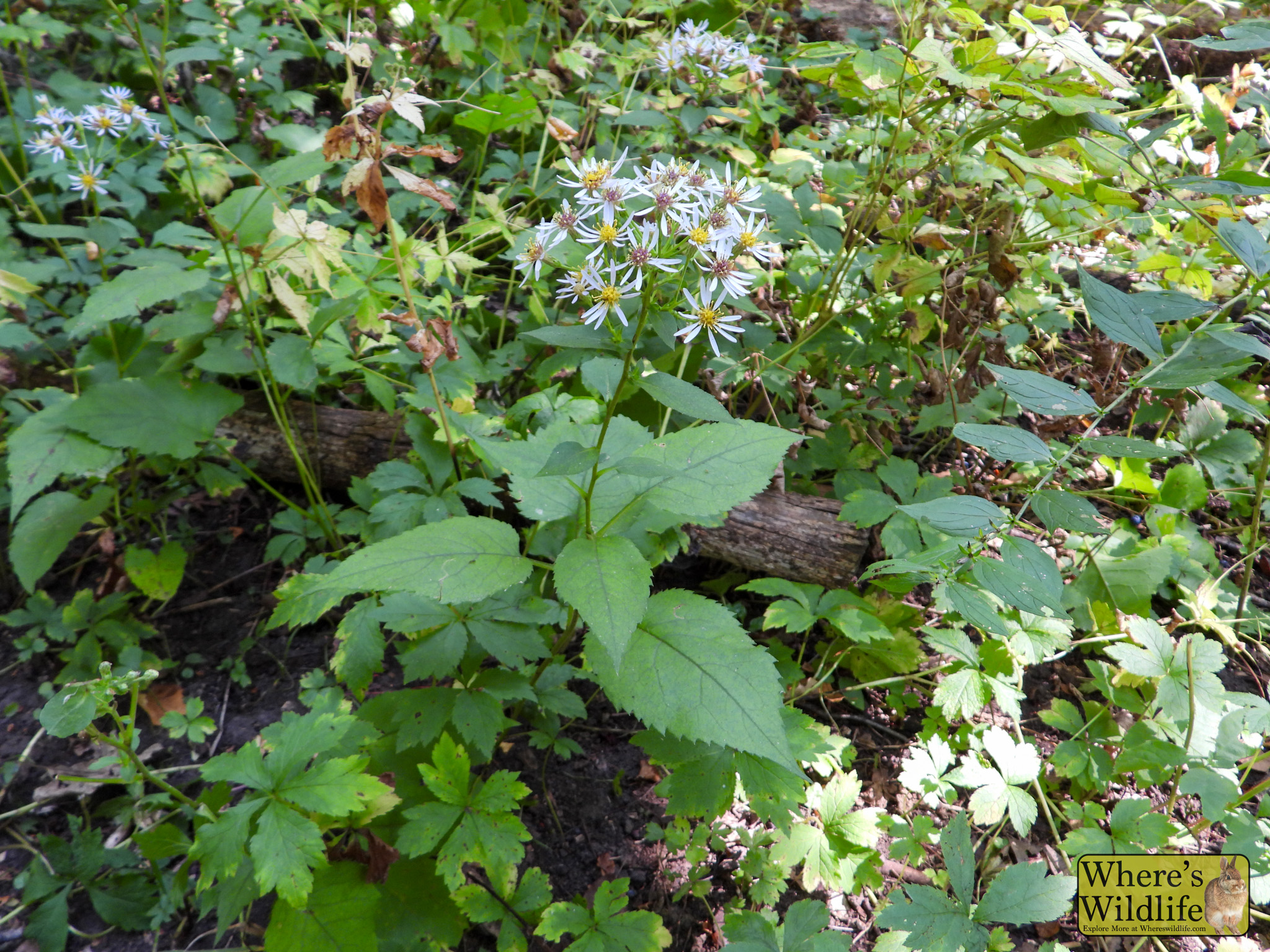
The flowering stem rises above a layer of broad leaves in the woodland understory.

Range & sightings

Native to central and eastern North America.

U.S. native range
AL, CT, DE, GA, IA, IL, IN, KY, MA, MD, ME, MI, MN, MO, NC, NH, NJ, NY, OH, PA, RI, TN, VA, VT, WI, WV, and the District of Columbia.

Worldwide sightings on iNaturalist   28,635 at the time of lookup.

Observations show reported sightings; they do not define the plant’s complete native range.

Distribution source: Kew, Plants of the World Online.

Compare with Forked Aster

Forked Aster also has pale rays and toothed leaves. Examine the branches below the heads. Large-leaved Aster bears tiny stalked glands there. Forked Aster lacks those glands.

See Forked Aster field photographs →

Share this:

Like this:

Like Loading…