Pronunciation: ep-ih-LOW-bee-um sil-ee-ATE-um
Family Onagraceae · evening primrose family
Life cycle Perennial
Blooms June–October (Upper Midwest)
Height 12–40 inches
Light & habitat Part shade, sun; average to wet; meadows, shores, river banks, floodplains, marshes, swamps, bogs, forest edges, cliffs, rock outcrops
Common names
Fringed Willowherb · American Willowherb · Northern Willowherb · Common Willowherb
Bloom timing and mature height vary with location and growing conditions. Sources: Minnesota Wildflowers.
Explore photographed sightings and their locations.
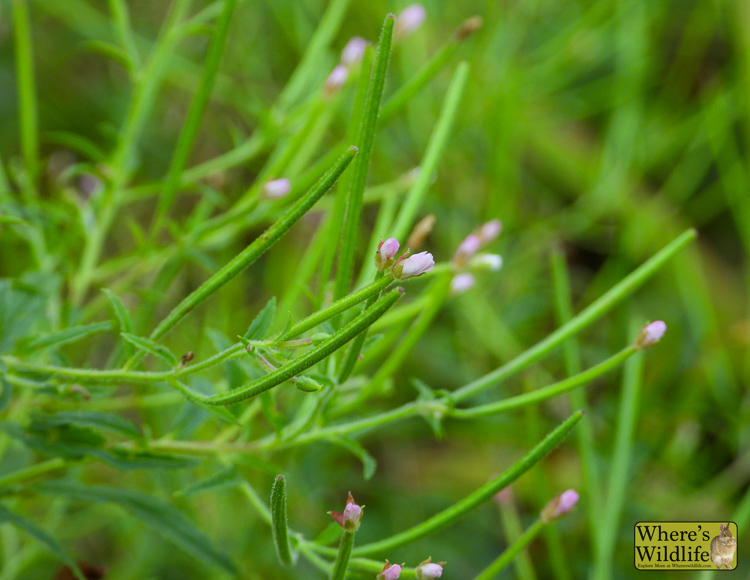
Compare flowers, foliage and the plant in its habitat. Select any photo to enlarge it.
Wetland Wildflower
Blooms: June – October
Habitat: Fringed Willowherb prefers full sun to light shade with moist to wet conditions and soil containing a lot of organic material to retain moisture. Look for Fringed Willowherb in poorly drained areas of black soil prairies, moist woodlands, woodland borders, and various kinds of wetlands, including marshes, bogs, fens, seeps, and edges of ponds, rivers, or drainage ditches.
Native to parts of North America, including the United States.
Reported U.S. distribution
AK, AZ, CA, CO, CT, DC, DE, HI, IA, ID, IL, IN, KS, KY, MA, MD, ME, MI, MN, MT, NC, ND, NE, NH, NJ, NM, NV, NY, OH, OK, OR, PA, RI, SC, SD, TN, TX, UT, VA, VT, WA, WI, WV, WY
State records describe documented distribution, not presence in every county. A state record alone does not establish that every population there is native. The observation map shows reported sightings and may include cultivated plants.
Distribution source: USDA PLANTS.
Observations show reported sightings; they do not define the plant’s complete native range.
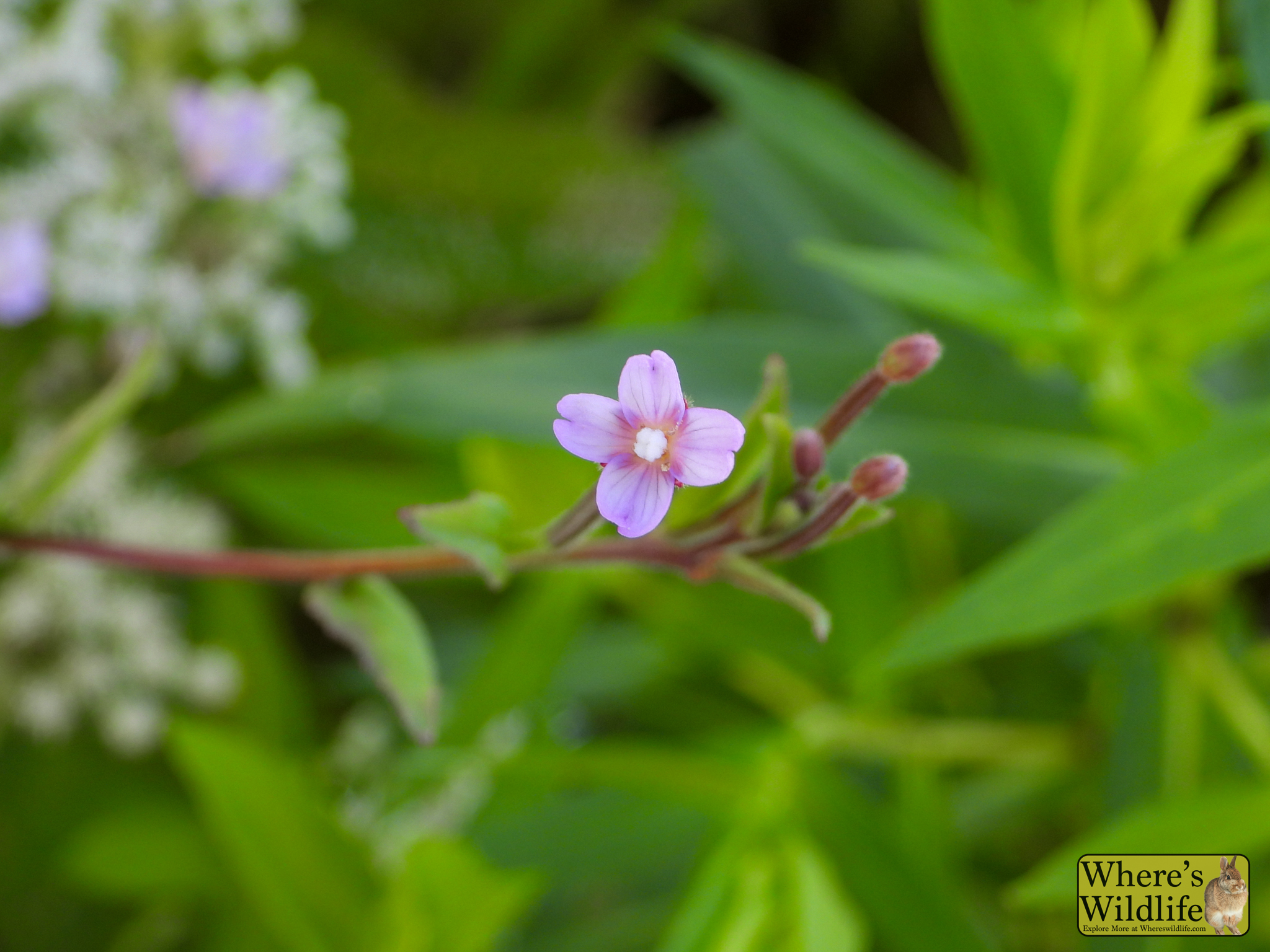
Eight stamens surround a central style tipped by a compact, club-shaped stigma. This differs from the conspicuously four-parted center of Great Hairy Willowherb, whose flowers are also much larger. A sharp macro image helps reveal the distinction.
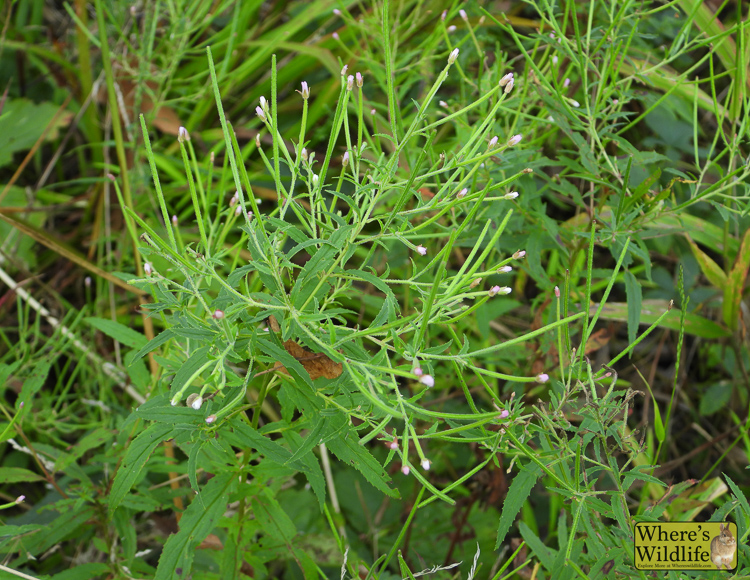
Leaves are mostly opposite below and often alternate near the top. Fine, widely spaced teeth edge the blades. Record both lower and upper leaves, plus hairs around the flower cluster.
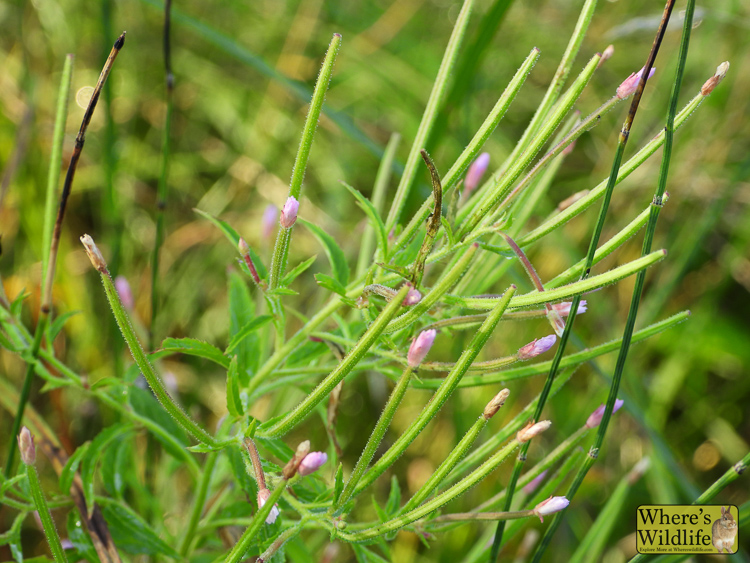
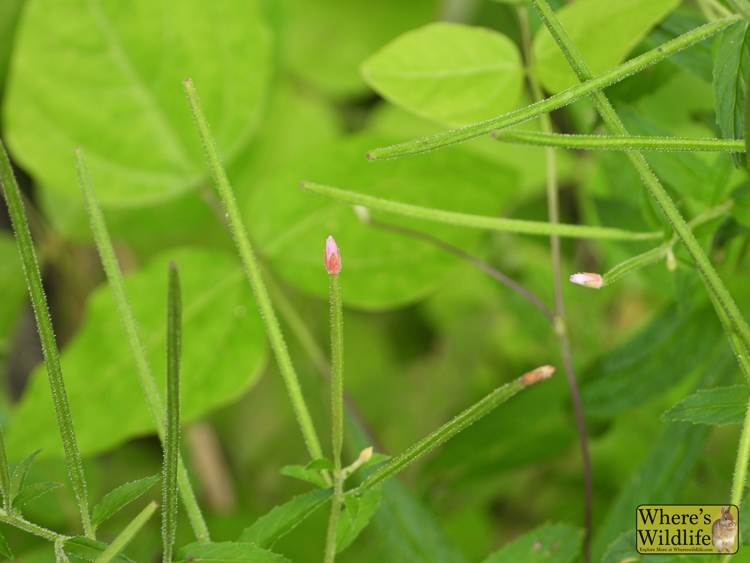
Ripe capsules split lengthwise and curl apart, exposing seeds with silky white tufts. Photograph a naturally opening capsule to document this dispersal stage without removing it.
The hairs attached to mature seeds are white in Fringed Willowherb and cinnamon-colored in Purple-leaf Willowherb. Immature hairs can be pale in both, so use ripe seeds and several additional features.
Study the photographs and field notes for Fringed Willowherb, then practice identifying this and other wildflowers in the quiz.
Explore wildlife guides, educational posters, and PNG clipart. Use the filters to narrow your results.