WHERE’S WILDLIFE • WILDFLOWER FIELD GUIDE

Flower of an Hour

Hibiscus trionum
NON-NATIVE • WILDFLOWER

At a glance

Family   Malvaceae · mallow family
Life cycle   Annual
Blooms   July–September (Upper Midwest)
Height   4–24 inches
Light & habitat   Sun; fields, roadsides, waste areas

Common names
Flower of an Hour

Bloom timing and mature height vary with location and growing conditions. Sources: Minnesota Wildflowers.

Range Map

Explore photographed sightings and their locations.

View photos & full species guideHide photos & full species guide

Field photographs

5 field photographs. Select a photograph to enlarge it.

How to recognize it

Pale petals frame a dark center

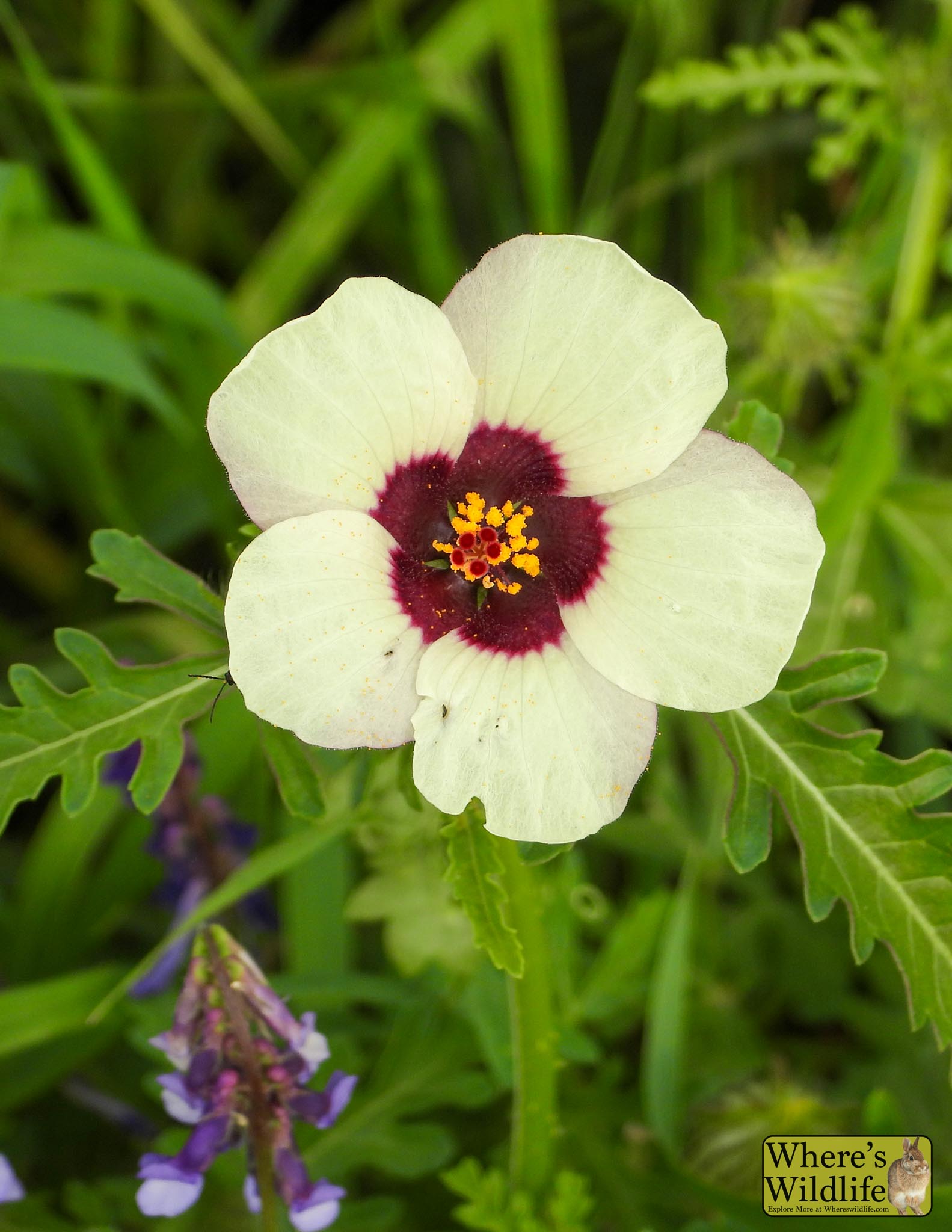
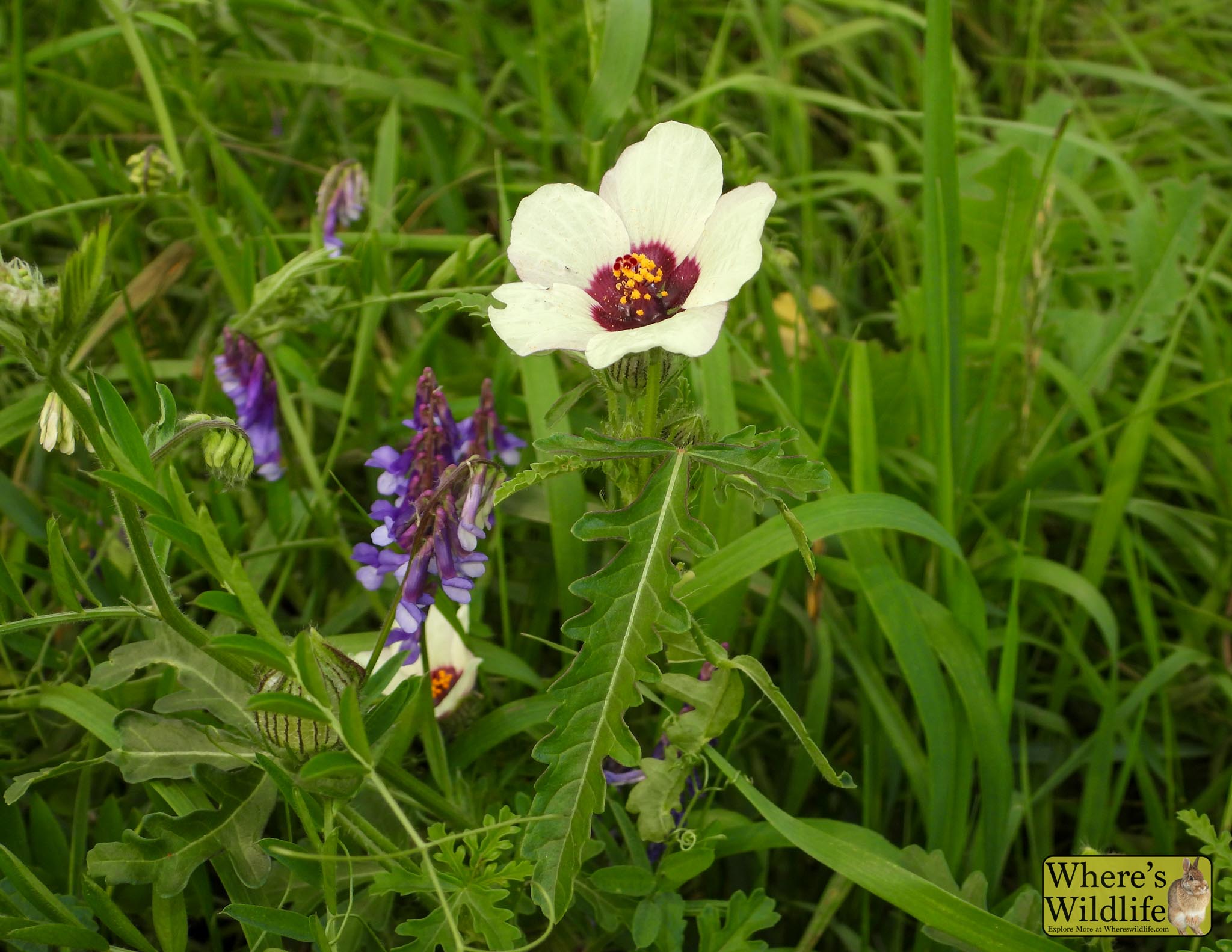
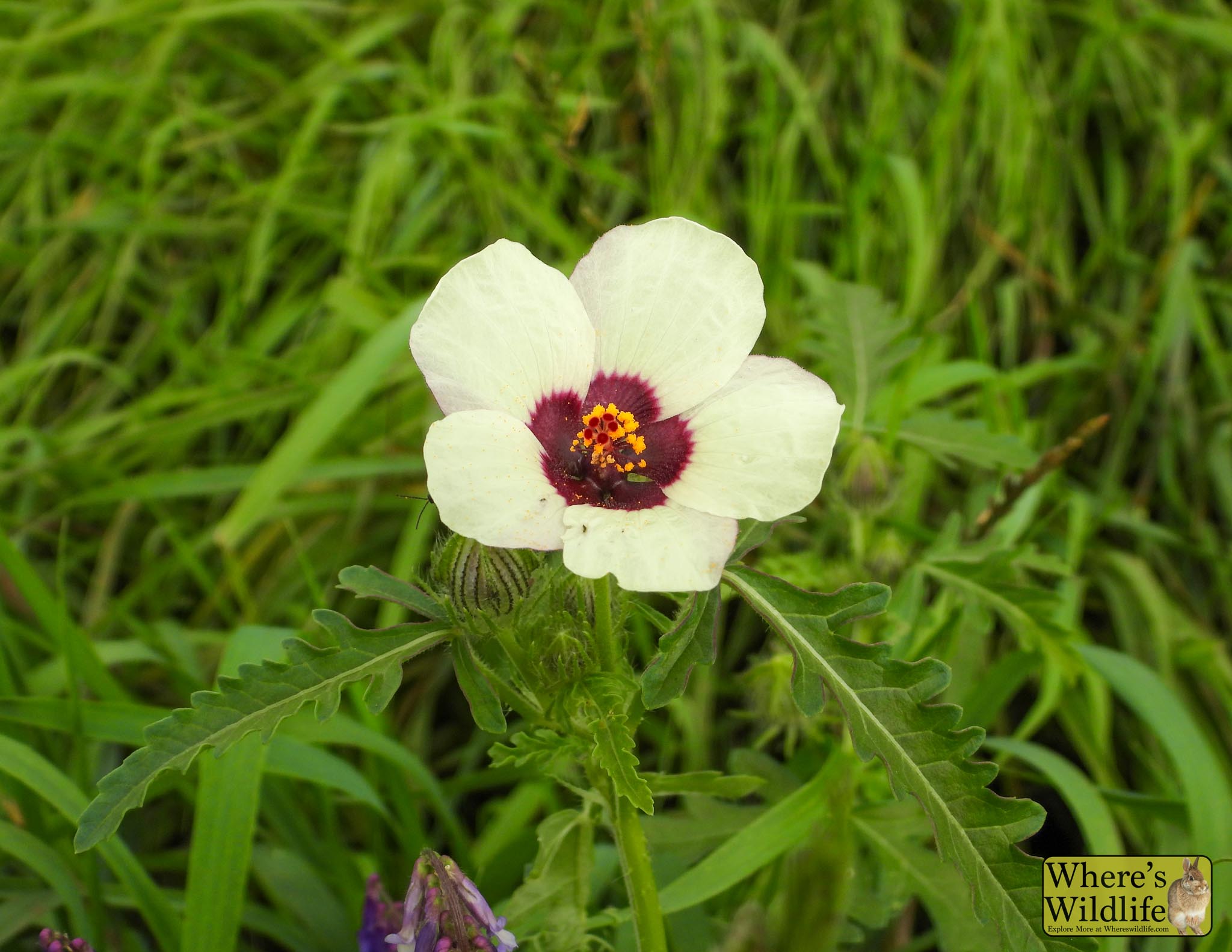
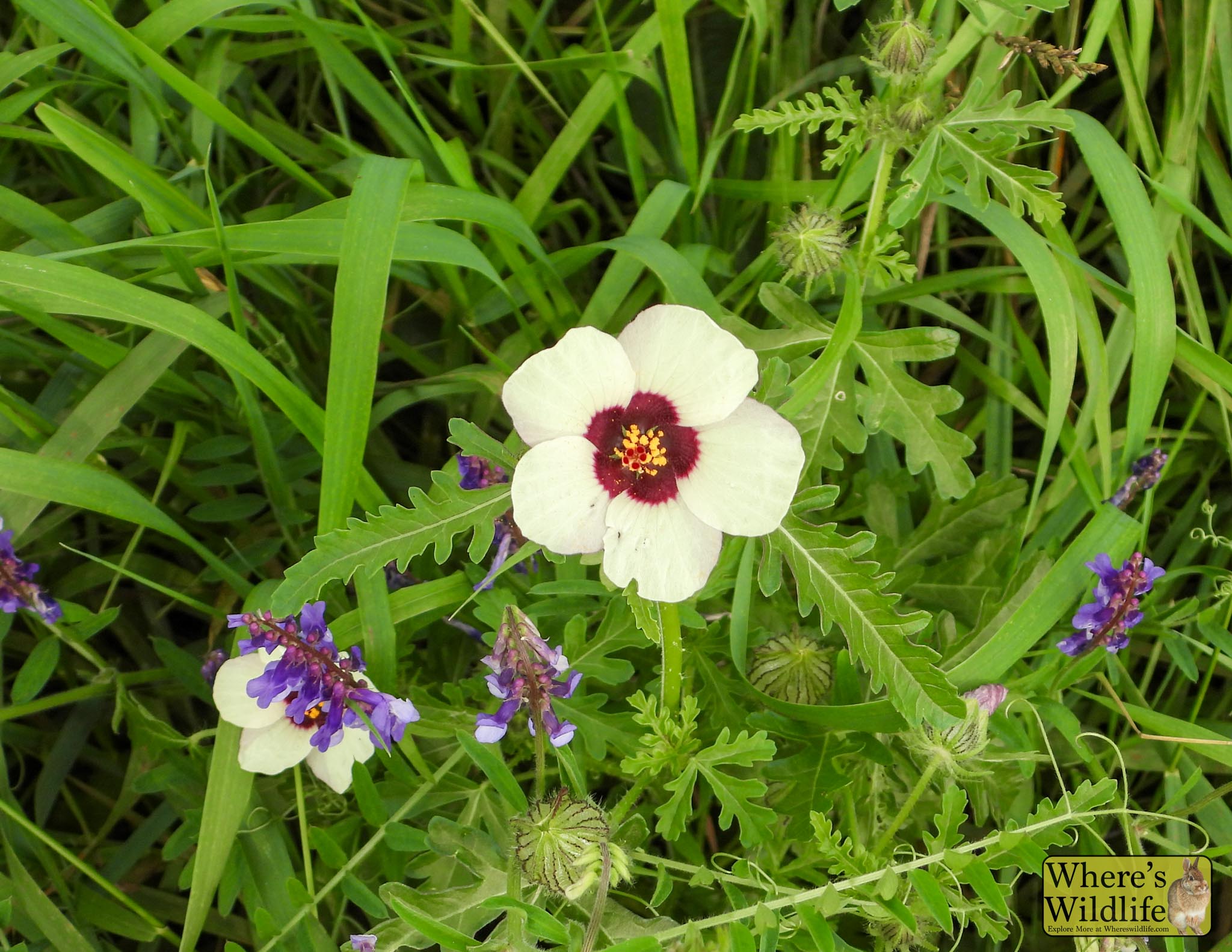
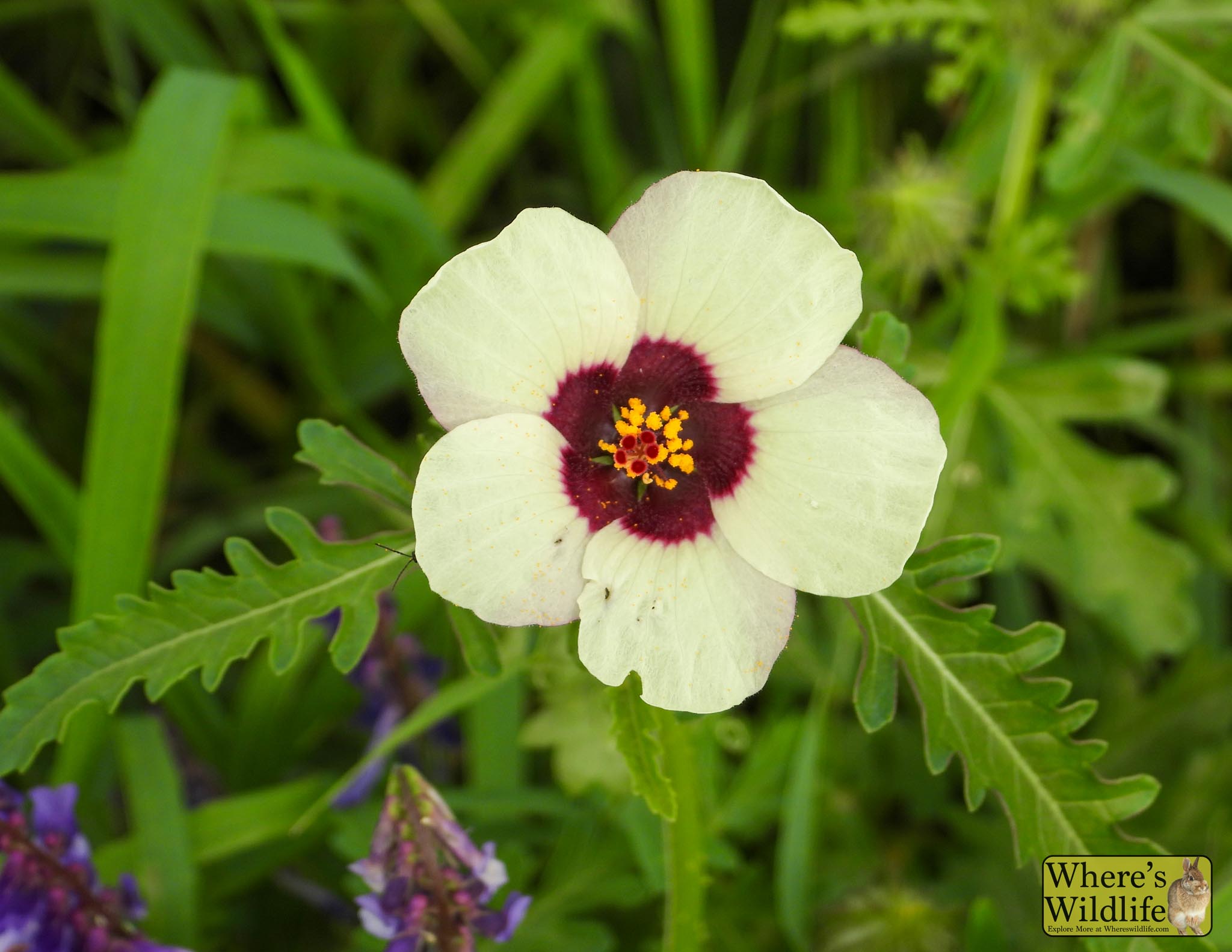
Five overlapping, pale yellow petals have deep purple bases. The flowers arise from upper leaf axils on hairy stalks. Record both the contrasting flower face and the plant’s branching habit.

Where and when to look

Blooms: July – September

Habitat: Flower of an Hour typically grows in full sunlight and mesic conditions. It is found in various types of soil, including sandy soil, compacted clay, and recently cultivated loamy soil. Look for this flower in fields, roadsides, and waste areas

Range & sightings

Non-native in the United States; introduced populations are documented here.

Reported U.S. distribution
AR, AZ, CA, CO, CT, DC, DE, FL, GA, IA, ID, IL, IN, KS, KY, LA, MA, MD, ME, MI, MN, MO, MS, MT, NC, ND, NE, NH, NJ, NM, NY, OH, OK, OR, PA, RI, SC, SD, TN, TX, UT, VA, VT, WA, WI, WV, WY

State records describe documented distribution, not presence in every county. A state record alone does not establish that every population there is native. The observation map shows reported sightings and may include cultivated plants.

Distribution source: USDA PLANTS.
Observations show reported sightings; they do not define the plant’s complete native range.

A closer look

A conspicuous central column

The flower center carries numerous orange-tipped stamens around the style. At its tip, five dark red stigma branches receive pollen. A close photograph shows their arrangement within the dark throat.

Deeply divided leaves change the outline

Leaves are commonly divided into three main lobed sections, with the middle section largest. Photograph a complete leaf and its attachment rather than an isolated lobe that might resemble another plant.

A persistent covering surrounds the fruit

The sepals remain around a five-part seed capsule. Compare a fresh flower with an older enclosed fruit on the same plant to follow its short flowering stage into seed development.

Look behind the flower

A side view reveals strongly veined, translucent sepals and a ring of narrow bracts below them. These structures can remain visible when no flower is open, making them valuable photographic clues.

Keep learning

Study the photographs and field notes for Flower of an Hour, then practice identifying this and other wildflowers in the quiz.

Share this:

Like this:

Like Loading…