How to recognize it
Broad leaves beneath arching sprays
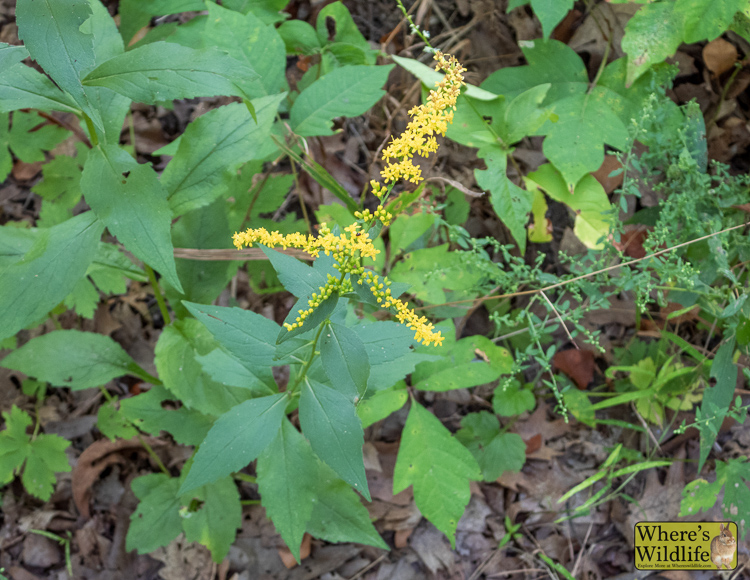
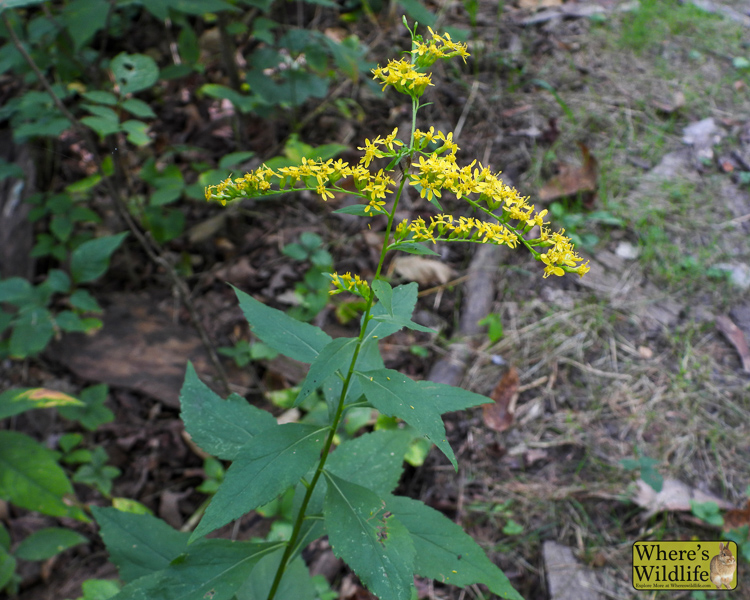
Follow the stem upward from the relatively broad leaves to the spreading flower branches. The overall cluster is often open and arching, though some plants have shorter, more compact clusters.
Family Asteraceae · aster family
Life cycle Perennial
Blooms July–September (Upper Midwest)
Height 2–4 feet
Light & habitat Part shade, shade, sun; dry woods
Common names
Elm-leaved Goldenrod
Bloom timing and mature height vary with location and growing conditions. Sources: Minnesota Wildflowers.
Explore photographed sightings and their locations.
Compare flowers, foliage and the plant in its habitat. Select any photo to enlarge it.
Follow the stem upward from the relatively broad leaves to the spreading flower branches. The overall cluster is often open and arching, though some plants have shorter, more compact clusters.
Woodland Wildflower
Blooms: July – September
Habitat: Elm-leaved Goldenrod prefers light shade to partial sun with moist or slightly dry conditions and soil containing loam or some rocky material. Look for Elm-leaved Goldenrod in mesic to upland woodlands, woodland edges, thinly wooded bluffs, edges of limestone glades, partially shaded banks of rivers, and thickets.
Native to parts of North America, including the United States.
Reported U.S. distribution
AL, AR, CT, DC, DE, FL, GA, IA, IL, IN, KS, KY, LA, MA, MD, ME, MI, MN, MO, MS, NC, NE, NH, NJ, NY, OH, OK, PA, RI, SC, TN, TX, VA, VT, WI, WV
State records describe documented distribution, not presence in every county. A state record alone does not establish that every population there is native. The observation map shows reported sightings and may include cultivated plants.
Distribution source: USDA PLANTS.
Observations show reported sightings; they do not define the plant’s complete native range.
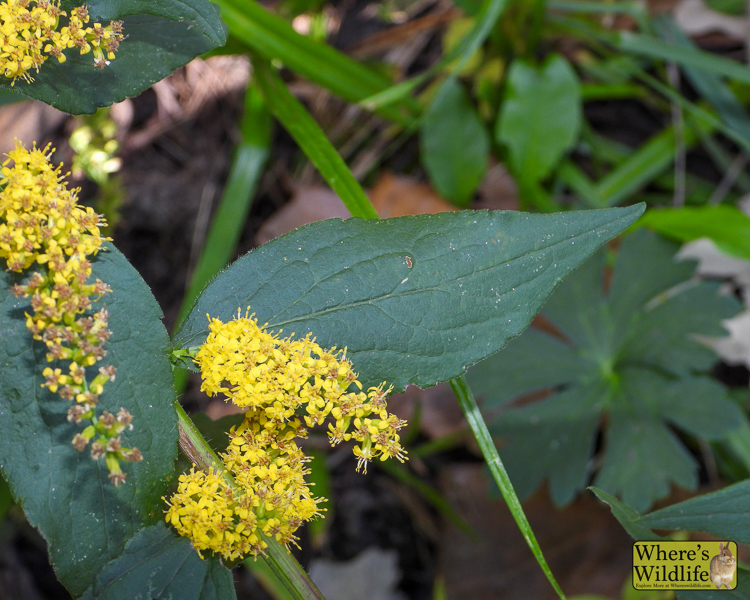
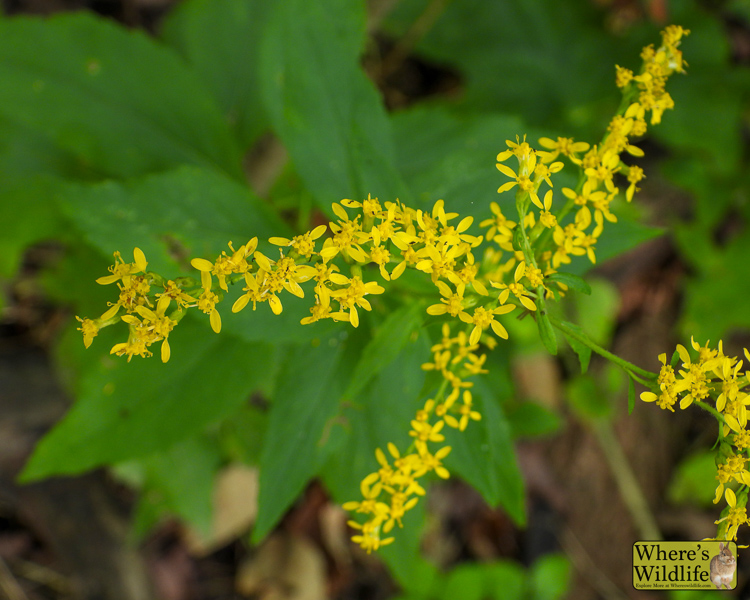
Small heads line one side of the flowering branches. Each head contains a few yellow rays around central florets; a close view helps separate an individual head from the entire spray.
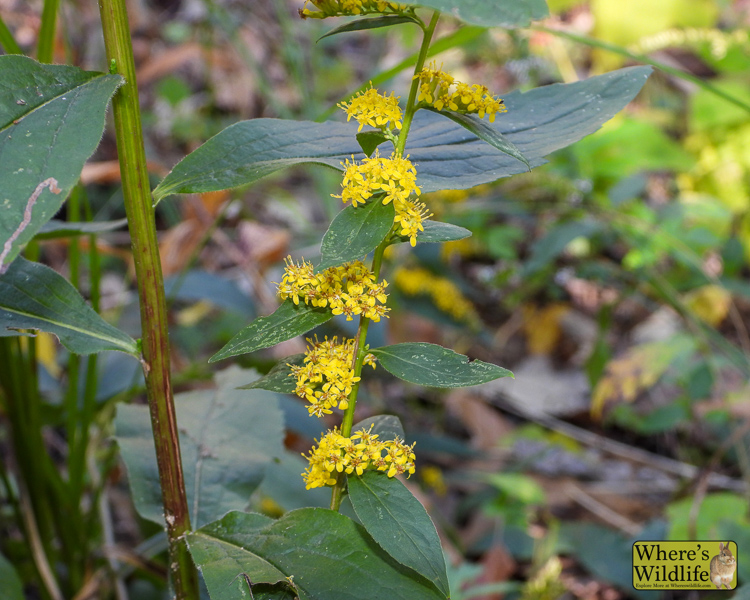
Lower leaves taper into short, winged stalks, while upper leaves are stalkless. Lower leaves may already have withered by flowering time, so their absence should be recorded rather than overlooked.
Look in woods and openings with light shade. Plants may lean under their flowers. Photograph that posture and the surrounding canopy to add context to close-up identification features.
Yellow flower color alone identifies few goldenrods. Include the sharply toothed upper leaves and the arrangement of flower heads in the same photograph, plus a wider view showing the branching pattern.
Study the photographs and field notes for Elm-leaved Goldenrod, then practice identifying this and other wildflowers in the quiz.
Explore wildlife guides, educational posters, and PNG clipart. Use the filters to narrow your results.