How to recognize it
Key identification clues
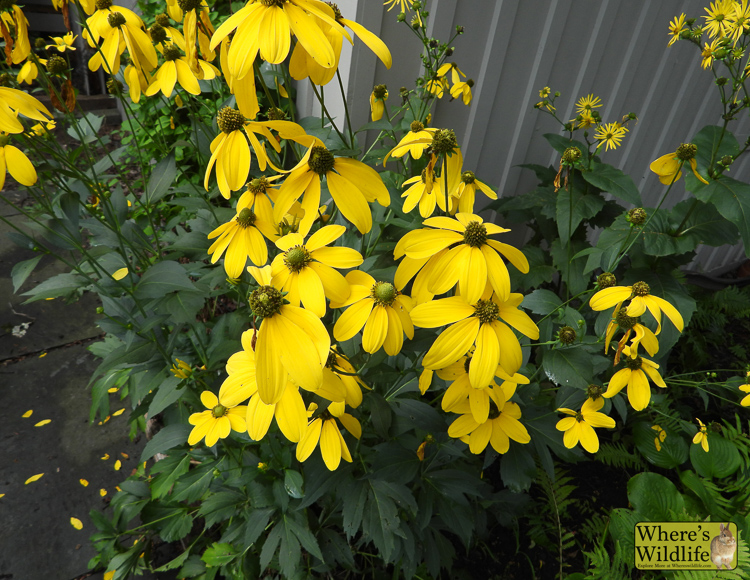
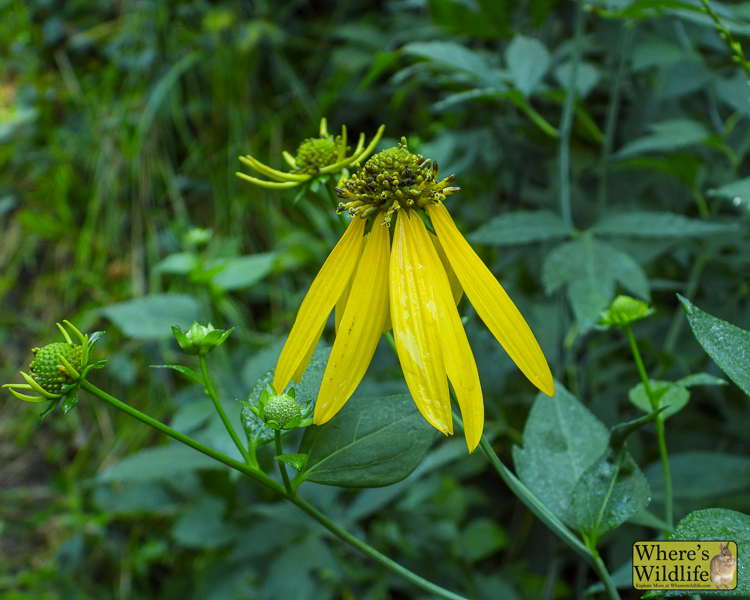
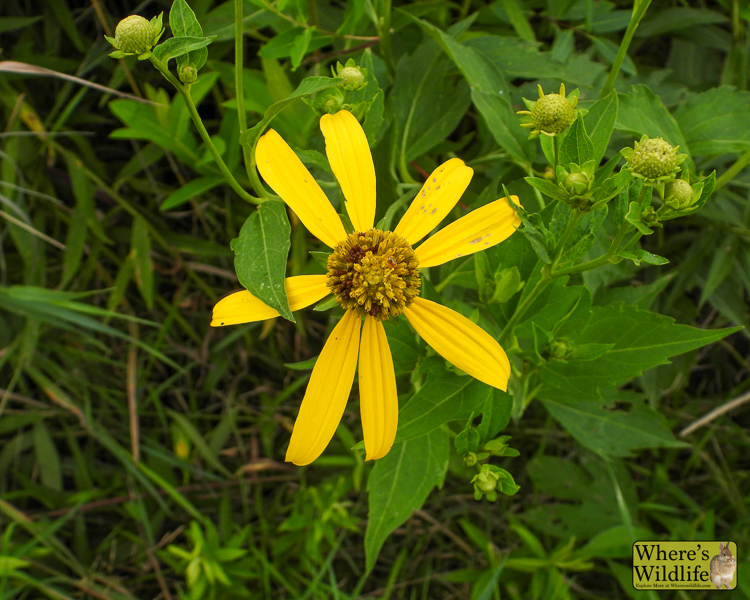
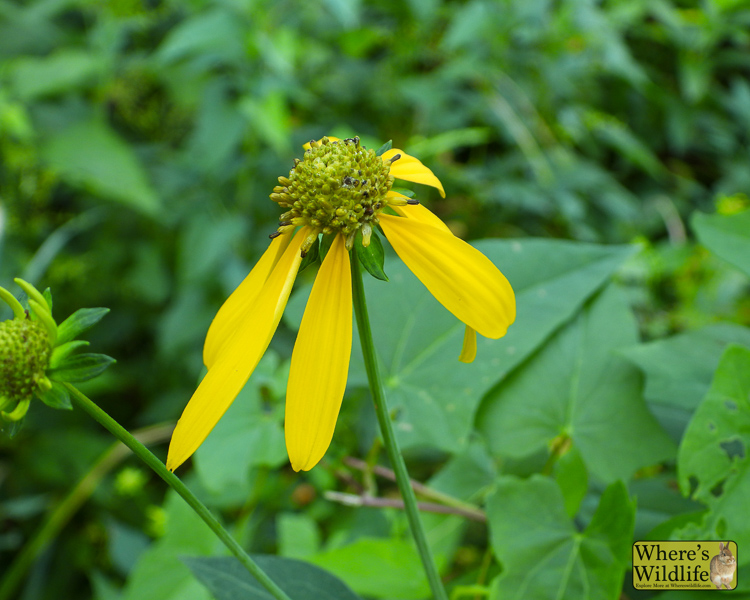
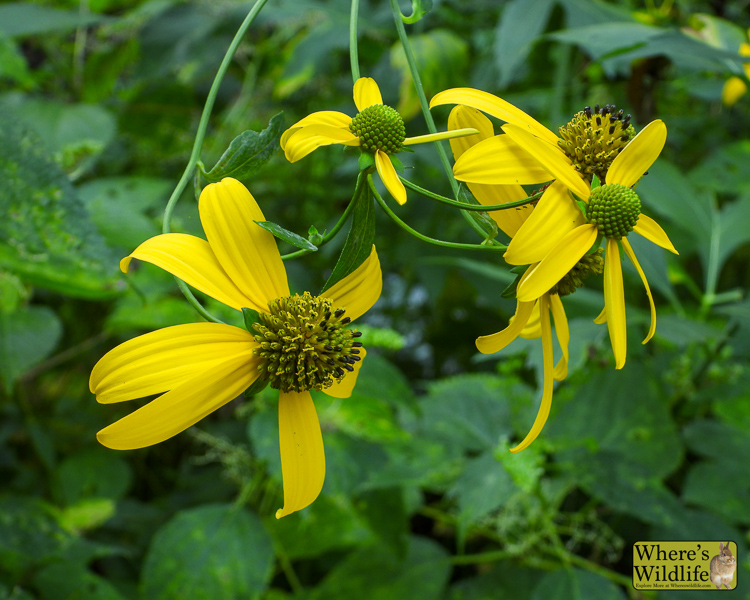
Look for drooping yellow rays, a green dome that becomes more rounded as its tiny disk flowers open, and large lower leaves divided into three to seven segments.
Family Asteraceae · aster family
Life cycle Perennial
Blooms July–September (Upper Midwest)
Height 2–10 feet
Light & habitat Part shade, sun; moist fields, woodland edges, along shores, floodplains, swamps, wet ditches
Common names
Cutleaf Coneflower · Green-headed Coneflower · Tall Coneflower · Golden Glow
Bloom timing and mature height vary with location and growing conditions. Sources: Minnesota Wildflowers.
Explore photographed sightings and their locations.
Compare flowers, foliage and the plant in its habitat. Select any photo to enlarge it.
Look for drooping yellow rays, a green dome that becomes more rounded as its tiny disk flowers open, and large lower leaves divided into three to seven segments.
Savanna & Thicket Wildflower
Blooms: July – September
Habitat: Cutleaf Coneflower prefers partial sun with moist conditions and fertile loam or silt-loam. Look for Cutleaf Coneflower in open bottomland forests, moist meadows in wooded areas, woodland borders, moist thickets, sloughs in partially shaded areas, low areas along rivers, partially shaded river banks, calcareous seeps, margins of poorly drained fields, and pastures.
Native to parts of North America, including the United States.
Reported U.S. distribution
AL, AR, AZ, CO, CT, DC, DE, FL, GA, IA, ID, IL, IN, KS, KY, LA, MA, MD, ME, MI, MN, MO, MS, MT, NC, ND, NE, NH, NJ, NM, NY, OH, OK, PA, RI, SC, SD, TN, TX, UT, VA, VT, WA, WI, WV, WY
State records describe documented distribution, not presence in every county. A state record alone does not establish that every population there is native. The observation map shows reported sightings and may include cultivated plants.
Distribution source: USDA PLANTS.
Observations show reported sightings; they do not define the plant’s complete native range.
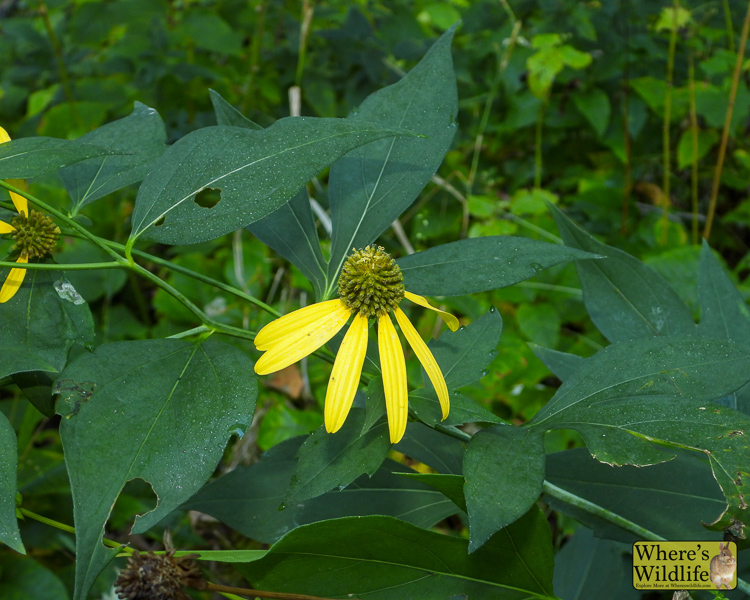
Large, divided lower leaves give way to smaller upper leaves that may be unlobed. Basal leaves can disappear before flowering. Photograph several levels to show the range within one plant.
The center contains many small tubular disk flowers. Its appearance changes as they bloom. Comparing young and older heads reveals more than using one cone shape as a fixed identification rule.
Long spreading rhizomes can produce groups of stems. Later, the central disks become dark heads of dry fruits without fluffy plumes. Return after flowering to connect those heads with the summer display.
Gray-headed Coneflower has proportionately narrower leaf divisions, hairy foliage and stems, and a more oval cone with dark disk flowers. Compare both the head and a lower leaf.
Study the photographs and field notes for Cutleaf Coneflower, then practice identifying this and other wildflowers in the quiz.
Transparent PNG clipart. Select a design for file specifications, licensing and download details. Purchased files do not include the preview watermark.
Clipart savings: 1–5 files $1.99 each · 6–10 files $1.66 each · 11+ files $1.25 each. Discounts are applied automatically to eligible clipart in the cart.
Explore wildlife guides, educational posters, and PNG clipart. Use the filters to narrow your results.