Also published as Bidens coronata. Kew and Flora of North America use Bidens trichosperma. You may find the same plant under Crowned Beggarticks in regional guides.
Explore photographed sightings and their locations.
View photos & full species guideHide photos & full species guide
Field photographs
Eight field photographs by Brian Woolman, including three from Illinois Beach State Park. Select a photo to enlarge it and move between views of the flowers, foliage and ambush bugs.
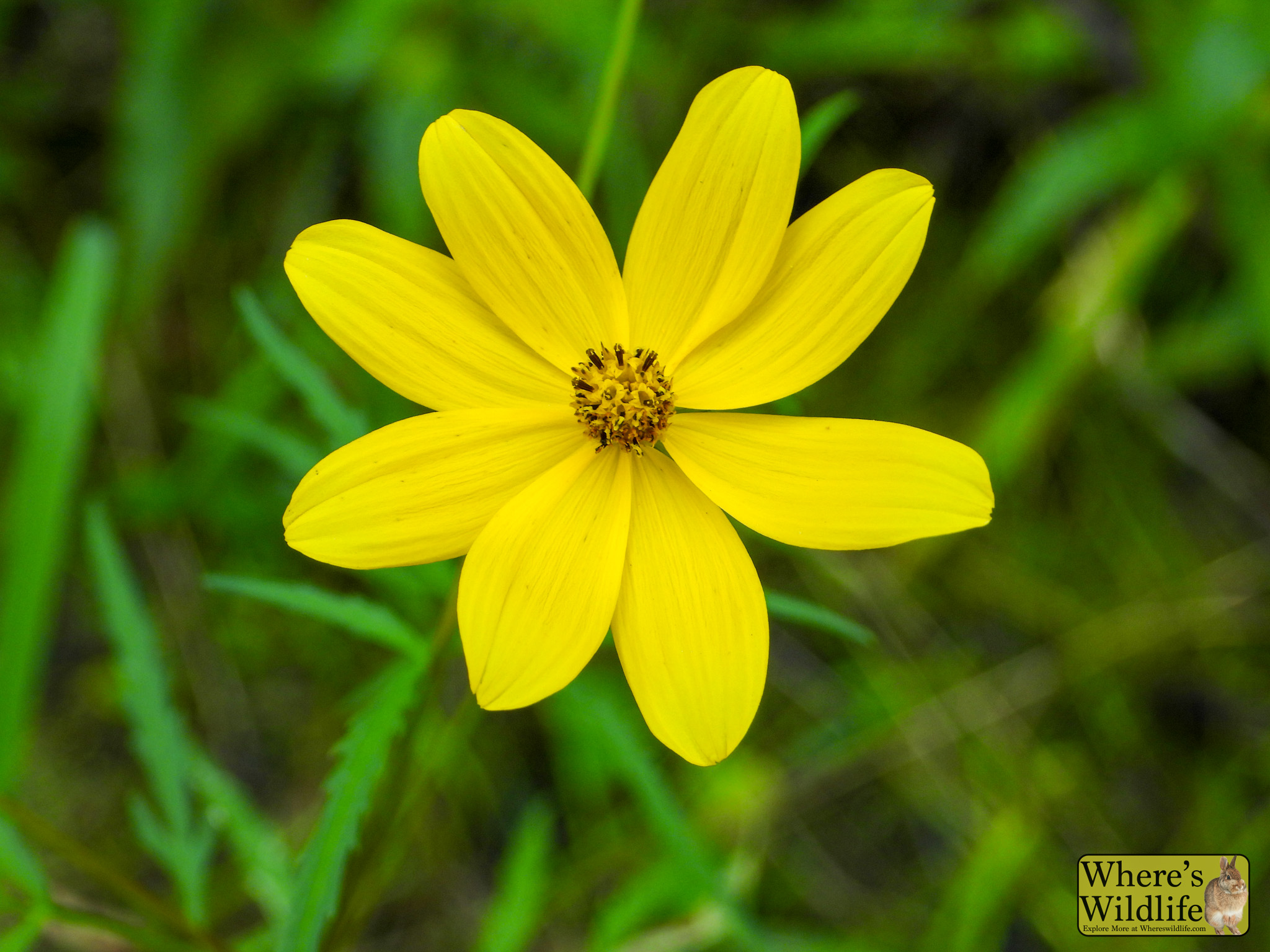
An open Marsh Tickseed head showing its ray and disk flowers.
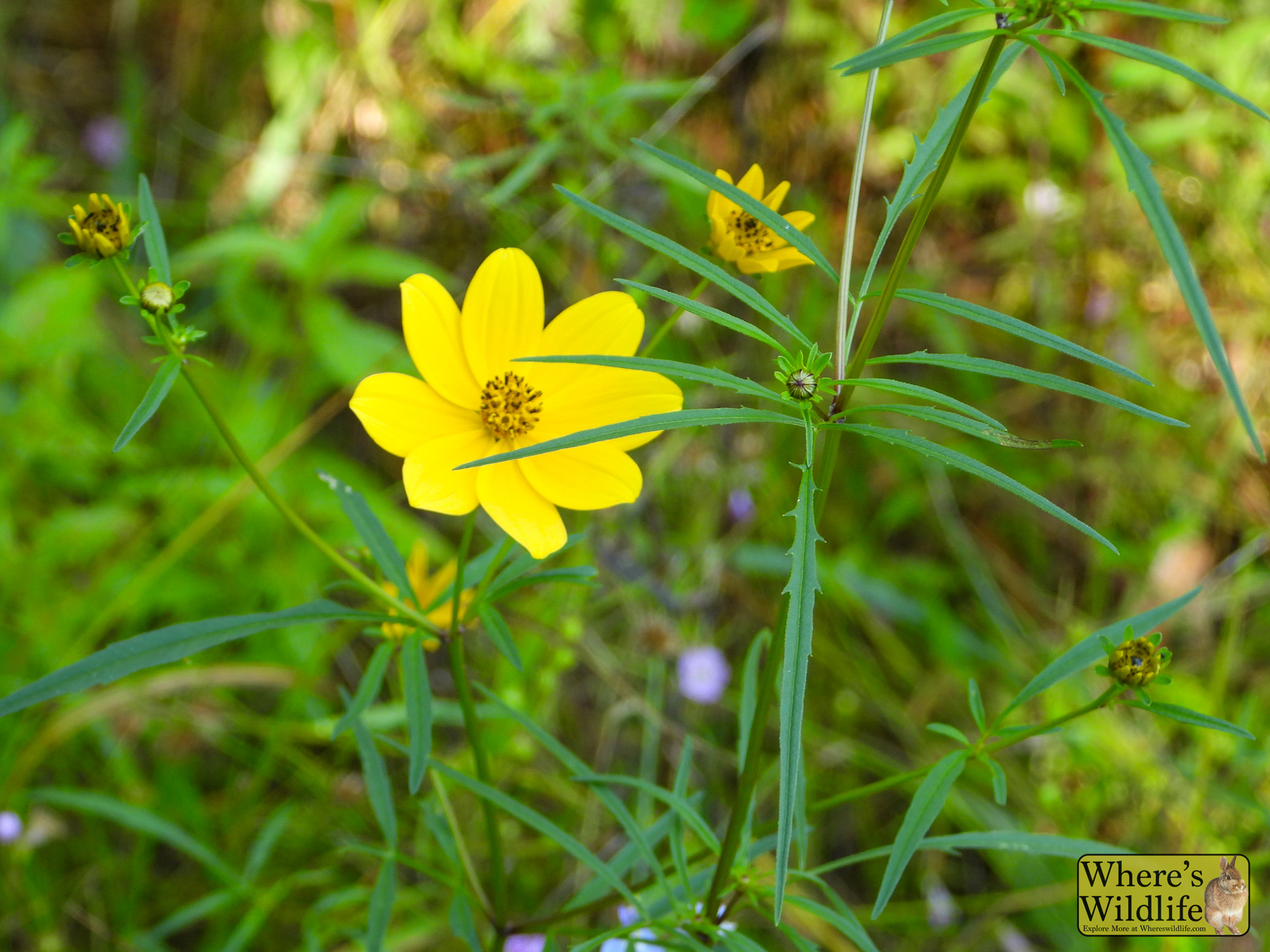
Divided leaves, developing heads and an open Marsh Tickseed flower.
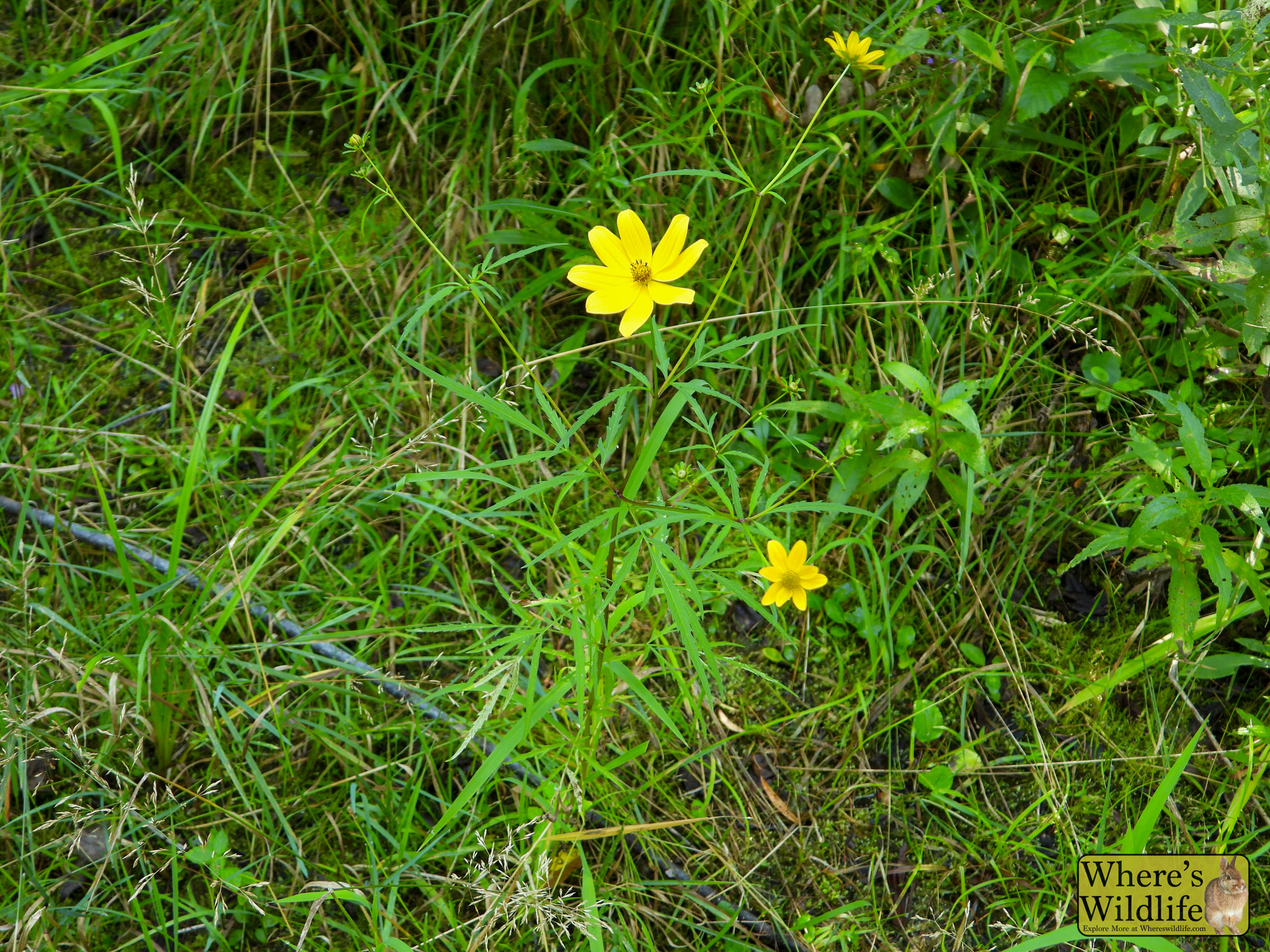
A wider view of Marsh Tickseed growing among taller vegetation.
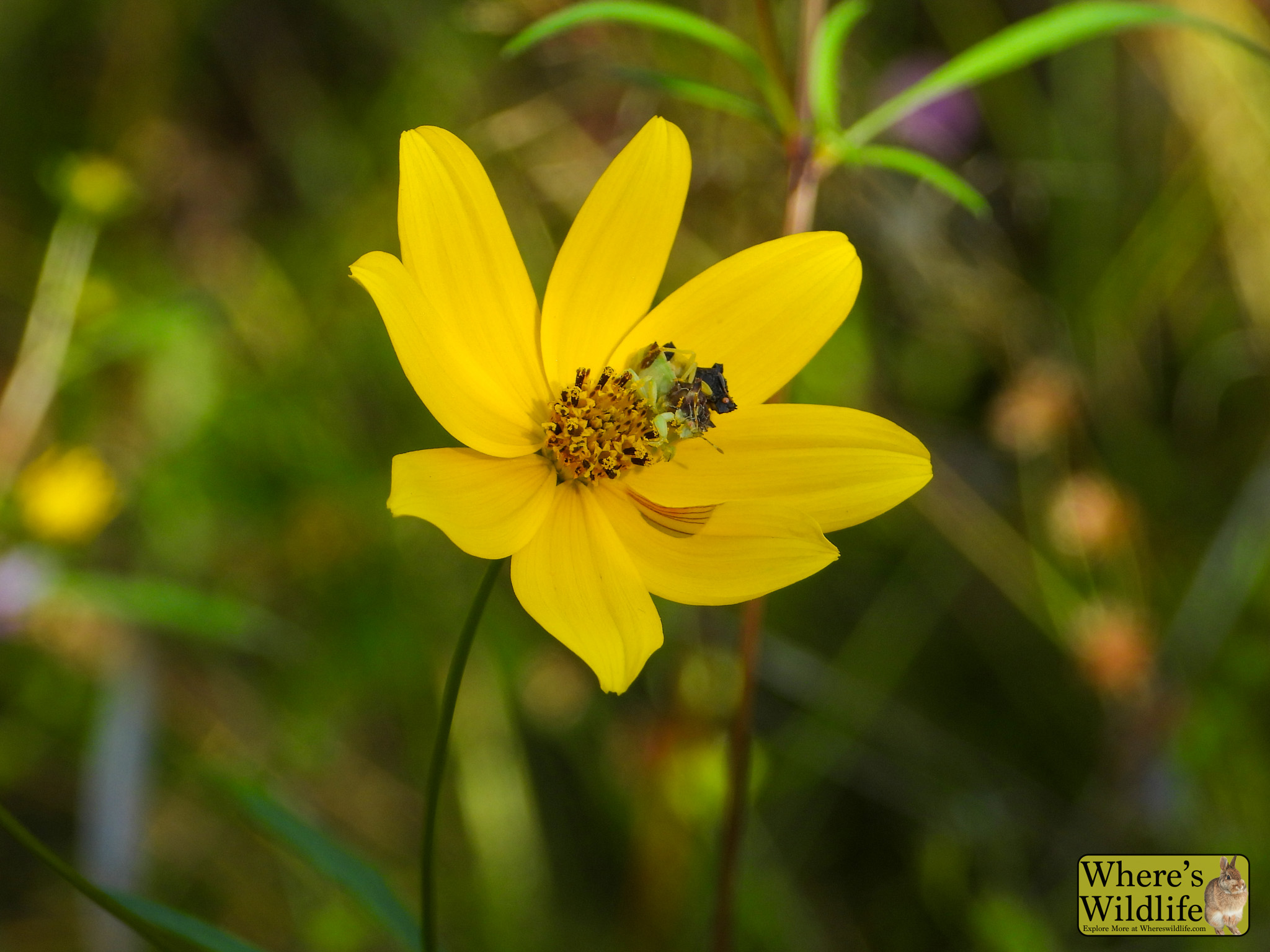
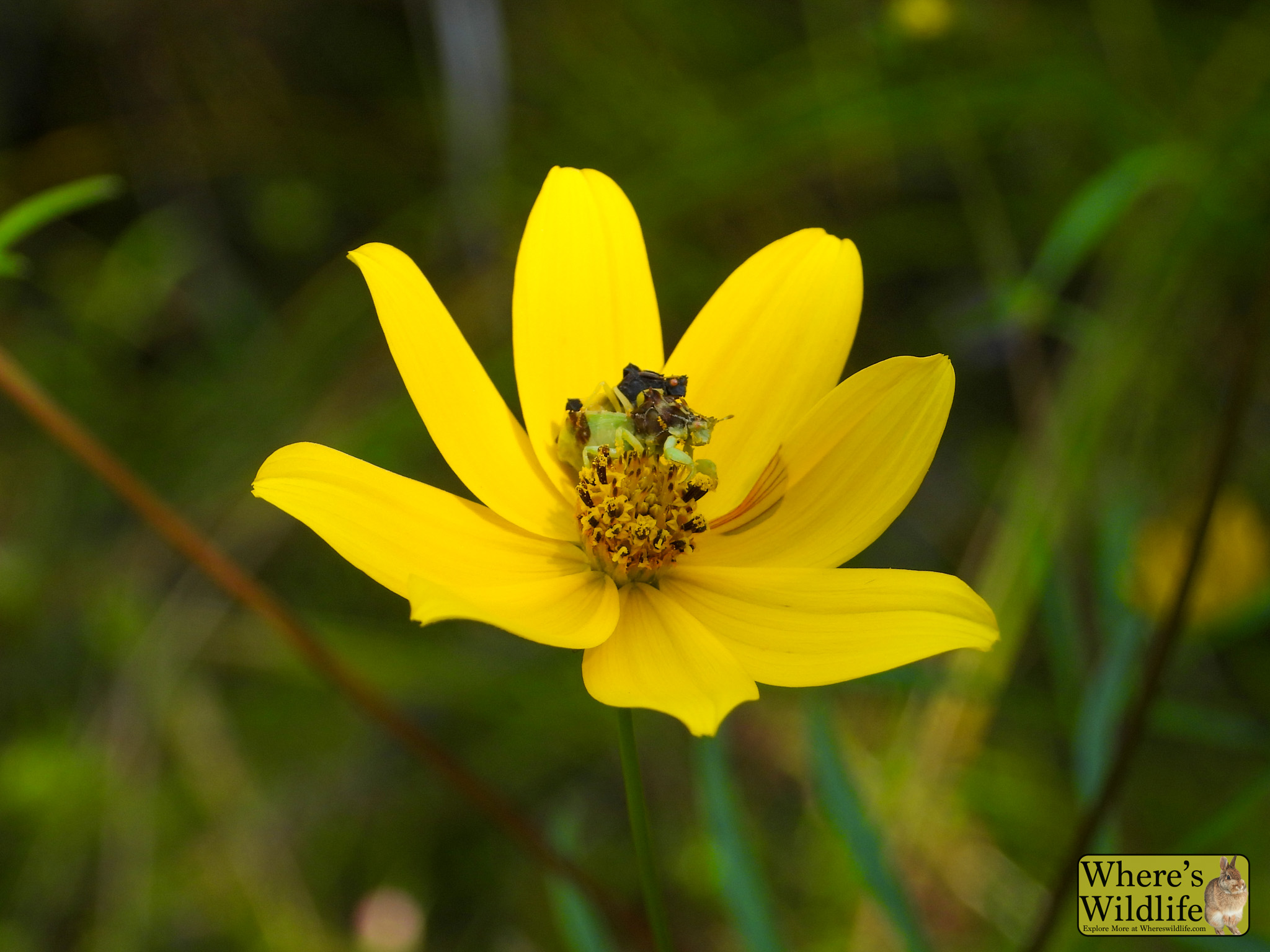
Ambush bugs on a Marsh Tickseed flower head.
A pair of ambush bugs camouflaged among the disk flowers.
Marsh Tickseed in bloom.
Marsh Tickseed among grasses.
A flower head and a developing head.
How to recognize Marsh Tickseed
On a flowering stem, look for the broad yellow rays, the thin divisions of the opposite leaves, and the narrow green bracts tucked beneath each head.
Flower heads on slender stalks
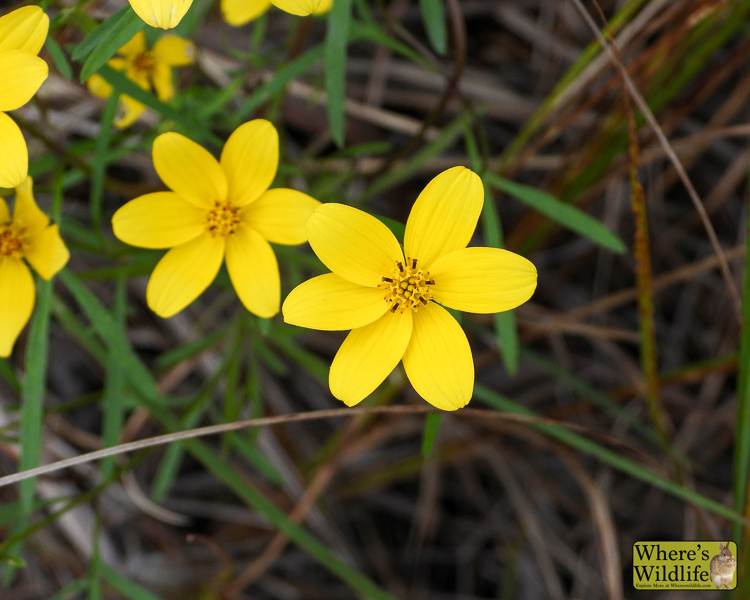
The stem branches near the top. At the end of each long stalk, a head opens with a small golden disk and usually about eight yellow rays. From behind, a narrow outer ring of green bracts is visible at the base.
A sunny wetland swale
Look in shallow depressions that stay wet, along marsh edges and on sunny shores. In late summer the flower heads rise above the sedges. The thin leaves below can disappear among neighboring grass blades.
Many flowers in one head
Each yellow strap around the rim is a ray flower. Enlarge the center to see the cluster of tiny tubular disk flowers. Several are open in this photograph, with dark anthers visible at their tips.
Trace one divided leaf
Two leaves attach at the same level on the stem. Each usually splits into three to five long, narrow segments, sometimes more. Some segments have small teeth or additional lobes near the base.
Find the flowering stem
Follow the stalk below the tallest golden head in this photo. The divided leaves belong to the branching plant, while many of the long blades crossing it belong to neighboring grasses. A wider view helps connect flowers and foliage.
Ambush bugs among the florets
Look just above the center of the disk for two angular insects. Bees visit Marsh Tickseed for nectar or pollen. Ambush bugs use the same flower heads as hunting perches, catching visiting insects with their thick front legs.
The botanical portrait and wetland scene are AI-generated watercolors based on Brian Woolman’s photographs. The detail cards, comparison and gallery use his field photographs.
Marsh Tickseed or Bearded Beggarticks?
Both species have yellow heads and opposite, divided leaves. These photographs show why they can look alike. For a closer field check, turn over a head to examine its outer bracts, then compare ripe fruits if they are available.
Marsh Tickseed
Bidens trichosperma typically has relatively straight outer bracts with blunt tips and few hairs along their edges. Its ripe fruits are narrow wedges, usually about 2½–4 times as long as wide.
Bearded Beggarticks
The outer bracts of Bidens aristosa often bend back and have a more obvious fringe of hairs. Its ripe fruits are broader wedges, usually about 1½–2½ times as long as wide.
Through the season
Marsh Tickseed completes its life cycle in one growing season. In bloom, an upright stalk may carry buds and open heads at the same time. After the rays fade, the disk produces flattened, narrow fruits, each usually tipped by two erect awns. A ripe fruit photographed face-on beside a scale is especially useful for comparison.
Range & sightings
Marsh Tickseed is native from eastern Canada into the north-central and eastern United States, including Wisconsin and Illinois. [4]
Reported U.S. distribution AL, CT, DE, GA, IA, IL, IN, KY, MA, MD, MI, MN, MO, MS, NC, NE, NJ, NY, OH, PA, RI, SC, SD, TN, VA, WI, WV
State records describe documented distribution, not presence in every county. A state record alone does not establish that every population there is native. The observation map shows reported sightings and may include cultivated plants.
Distribution source: USDA PLANTS. USDA lists this plant as Bidens coronata (L.) Britton.