How to recognize it
Check the inflated calyx
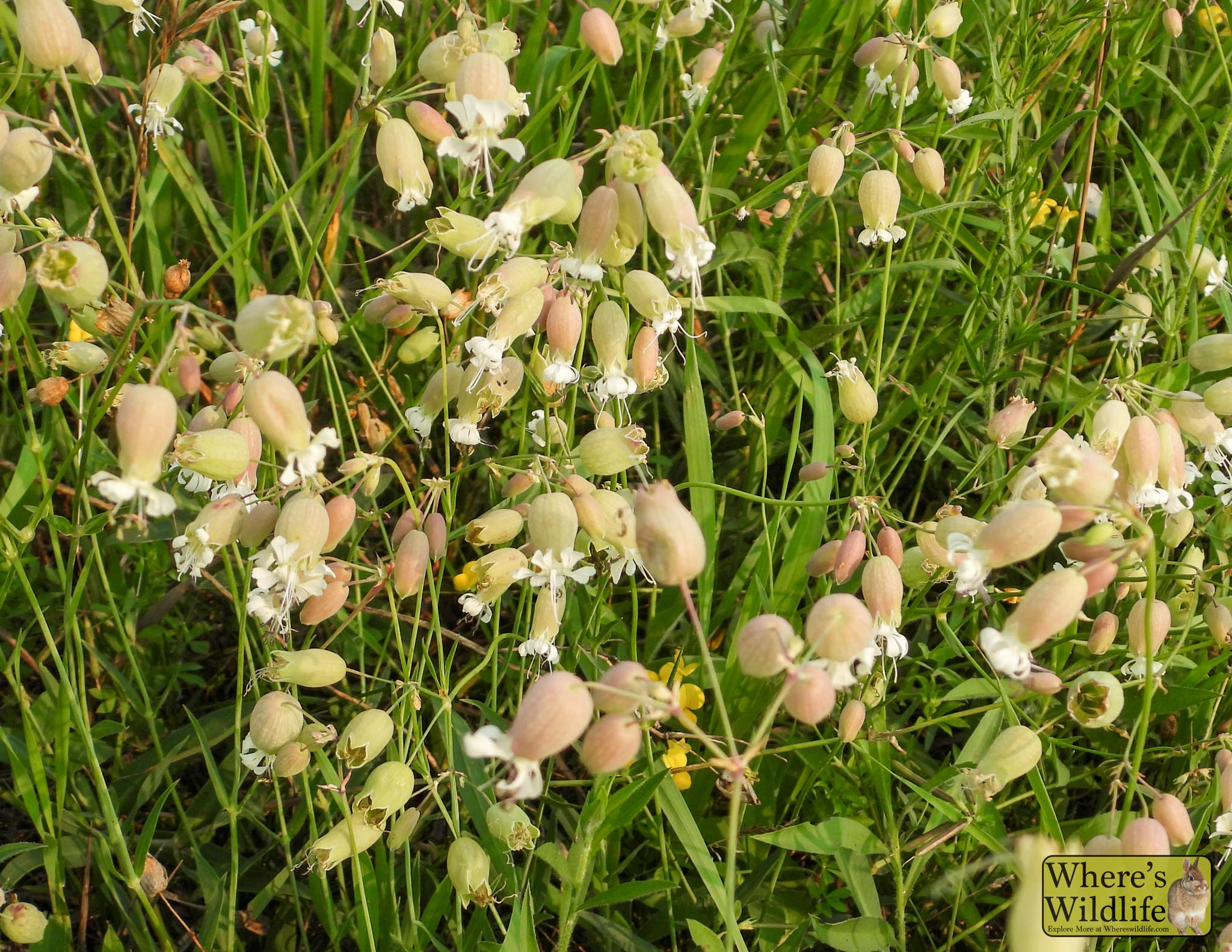
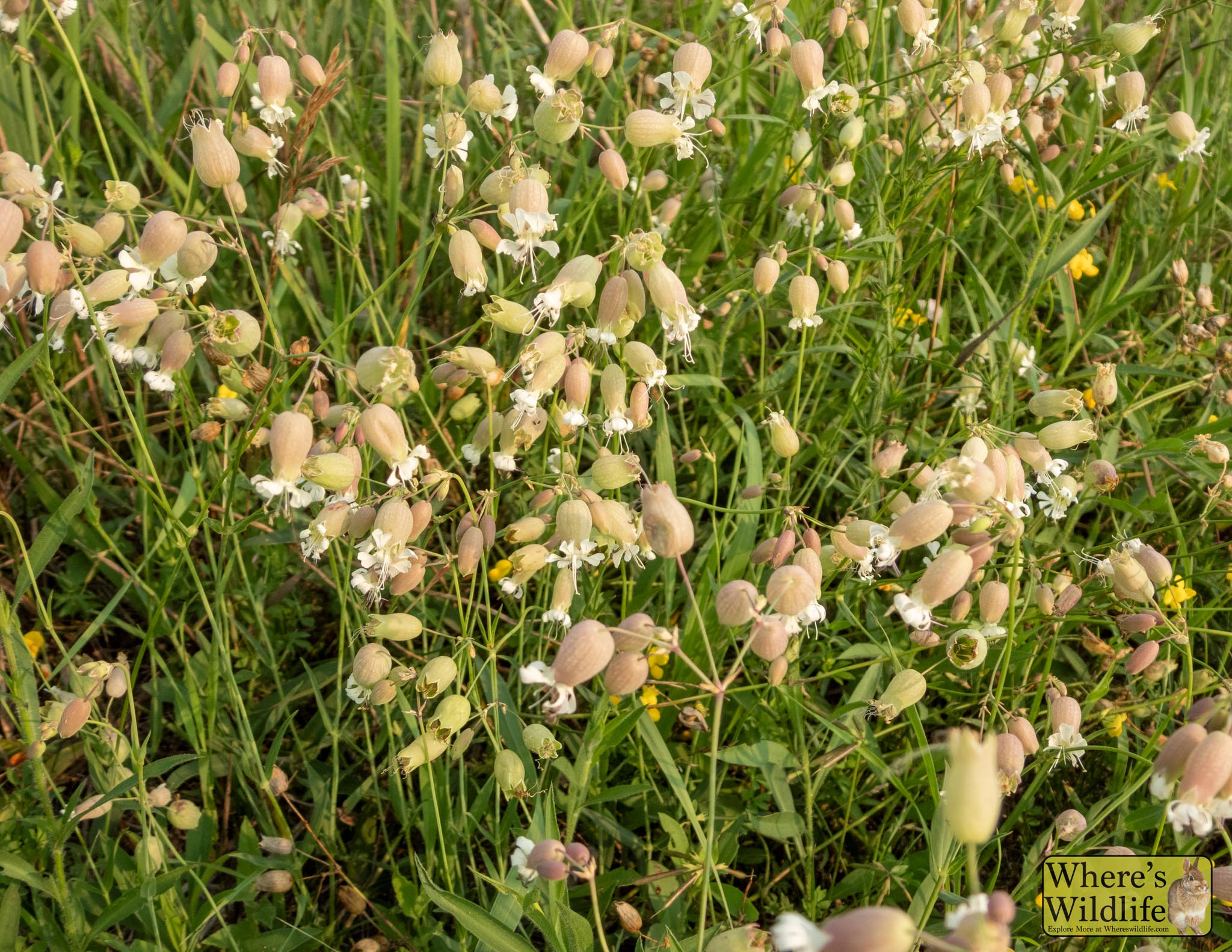
Look for five white petals, each divided into two lobes, above a smooth inflated calyx. Leaves grow in opposite pairs, have smooth edges, and attach with little or no stalk.


Family Caryophyllaceae · pink family
Life cycle Short-lived perennial
Blooms June–October (Upper Midwest)
Height 8–30 inches
Light & habitat Part shade, sun; sandy or gravelly disturbed soil; agricultural fields, roadsides, gravel pits, waste areas
Common names
Bladder Campion
Bloom timing and mature height vary with location and growing conditions. Sources: Minnesota Wildflowers.
Explore photographed sightings and their locations.
Compare flowers, foliage and the plant in its habitat. Select any photo to enlarge it.

Look for five white petals, each divided into two lobes, above a smooth inflated calyx. Leaves grow in opposite pairs, have smooth edges, and attach with little or no stalk.
Blooms: June – October
Habitat: Bladder Campion prefers full to partial sun, mesic to dry-mesic conditions, and calcareous soil containing some gravel or sand. Looks for Bladder Campion agricultural fields, roadsides, gravel pits, and waste areas.
Non-native in the United States; introduced populations are documented here.
Reported U.S. distribution
AK, AR, CA, CO, CT, DE, GA, IA, ID, IL, IN, KS, KY, MA, MD, ME, MI, MN, MO, MT, NC, ND, NE, NH, NJ, NM, NY, OH, OR, PA, RI, SC, SD, TN, UT, VA, VT, WA, WI, WV, WY
State records describe documented distribution, not presence in every county. A state record alone does not establish that every population there is native. The observation map shows reported sightings and may include cultivated plants.
Distribution source: USDA PLANTS.
Observations show reported sightings; they do not define the plant’s complete native range.
The deeply divided petals can make a flower appear to have ten petals. Follow each pair of lobes toward its base to see the five-part structure above the swollen cup.
Narrow leaves sit in pairs along smooth, pale stems that often branch near the base. Include the upper leaf bases in photographs to show how closely they meet the stem.
The developing capsule remains inside the calyx. At maturity, six teeth at its tip spread apart to expose the opening through which seeds leave. A dried fruit adds a useful seasonal identification clue.
Balkan Catchfly has a less swollen calyx with less obvious veins and usually broader, more egg-shaped leaves. Compare the cup, foliage, and branching pattern together.
Study the photographs and field notes for Bladder Campion, then practice identifying this and other wildflowers in the quiz.
Explore wildlife guides, educational posters, and PNG clipart. Use the filters to narrow your results.